

How Long Does CBD Topical Take to Work? 2026 Guide
Table of Contents
- CBD Topical Onset: What to Expect in the First 60 Minutes
- Factors Affecting CBD Absorption and Speed of Relief
- CBD vs CBD/CBC for Inflammation: Does the Blend Matter?
- CBD Topical Application Best Practices for Faster Results
- How Long Do the Effects Last, and When Should You Reapply?
- Common Mistakes That Slow Down Topical CBD Absorption
- Final Verdict: Setting Realistic Expectations for Topical CBD
- Frequently Asked Questions
Last Updated: September 7, 2026
If you have ever smoothed a CBD lotion into an aching knee and wondered whether the relief will arrive in five minutes or fifty, you are asking the right question. The honest answer is that most CBD topicals begin to take effect within 15 to 30 minutes, but the speed depends heavily on the formula you choose and how you apply it (peer-reviewed research). The science of how long does cbd topical take to work comes down to skin permeability, product potency, and application technique. At Railroad Remedies (RXR), we provide expertly formulated, non-greasy, and easily absorbed lotions, and we have learned that managing expectations is just as important as managing inflammation. Below, we will show you exactly what the onset timeline looks like, which factors speed it up or slow it down, and how to get faster results from every application.

CBD Topical Onset: What to Expect in the First 60 Minutes
Most users feel the first signs of relief from a quality cbd topical within 15 to 30 minutes of application. This is not an instant effect like a numbing spray; it is a gradual easing that builds as the cannabidiol penetrates the upper layers of your skin and interacts with nearby cannabinoid receptors.
The first 60 minutes typically unfold in three phases. In the first 5 to 10 minutes, you may notice a cooling or warming sensation from the carrier ingredients, but not yet pain relief. Between 15 and 30 minutes, the active cannabinoids begin binding with receptors in the epidermis and dermis, and you will start to feel genuine localized relief. By the 45-to-60-minute mark, the full therapeutic effect for that application is usually reached.
Factors Affecting CBD Absorption and Speed of Relief
Several variables determine how quickly a topical delivers therapeutic effects, and the most overlooked is the delivery system itself. The stratum corneum, your skin's outermost layer, is a lipophilic (fat-loving) barrier built from dead cells held together by lipids (the NIH). For a cannabinoid to reach the living tissue below, it must navigate this brick-and-mortar structure. A product formulated with organic coconut oil, shea butter, and other skin-compatible oils will absorb far faster than one sitting in a heavy petroleum base, but the real speed difference comes down to the carrier technology.
Carrier oils and penetration enhancers change the game. Here is where most articles stop short. The base oil is not just a vehicle; it is the throttle. Common carriers and their effects on absorption speed include:
- MCT oil (fractionated coconut oil): A lightweight, medium-chain triglyceride that penetrates the stratum corneum quickly because its molecules are small enough to slip between skin cells. It is a fast-acting base, typically delivering noticeable onset at the 15-minute mark.
- Menthol or camphor: These are not just cooling agents. They act as counterirritants that increase local blood flow and temporarily disrupt the lipid packing of the stratum corneum, which can pull cannabinoids deeper, faster. A menthol-containing topical may produce a sensation within 5 minutes, though the CBD itself still takes 15-30 minutes to engage receptors.
- DMSO (dimethyl sulfoxide): A powerful penetration enhancer used in clinical transdermal research. It can shuttle compounds through the skin in minutes, but it is rarely used in consumer products because it can cause skin irritation and an unpleasant garlic-like taste in the mouth. If a product contains DMSO, expect faster onset, but also expect a trade-off in skin tolerance.
- Liposomes or nano-emulsions: These are lipid-based spheres that encapsulate CBD molecules, allowing them to merge with your skin's own lipid barrier and release their contents directly into the dermis. Nano-emulsified CBD topicals are a newer category designed to shorten onset to the 10-15 minute range. They cost more to formulate, which is why they are less common on the shelf.
Skin type and barrier health are the second major variable. The stratum corneum is not uniform across your body or your life. The skin on your face is thinner than the skin on your heels, which is why the same topical will feel faster on your jaw than on your foot. Age matters too: after age 50, lipid production in the skin declines, making the barrier drier and less permeable. Well-hydrated skin, whether from a warm shower, a humid environment, or a humectant ingredient like glycerin in the formula, allows cannabinoids to pass through more readily. Damaged, thickened, or calloused skin, common with psoriasis or repeated friction, can double the onset time.
Potency is a factor, but not the one you think. A 2000mg formula delivers more active CBD per square inch than a 500mg lotion, which can shorten onset time simply by saturating the tissue faster. But if the carrier oil is heavy and the skin is dry, even a high-milligram product will sit on the surface. The formulation, not the label, is the true determinant of speed.
CBD vs CBD/CBC for Inflammation: Does the Blend Matter?
The blend of cannabinoids in your topical can meaningfully change how quickly and thoroughly it addresses inflammation. CBD alone is effective, but research into the endocannabinoid system suggests that combining CBD with Cannabichromene (CBC) may enhance anti-inflammatory and analgesic properties through what is known as the entourage effect.
CBC is a minor cannabinoid that binds differently to receptors than CBD does, and early evidence points to its particular strength in soothing inflammation and pain (PubMed). For users with chronic joint inflammation or nerve discomfort, a CBD/CBC blend may offer enhanced anti-inflammatory and analgesic properties. This is why Railroad Remedies (RXR) developed its 2000mg CBD/CBC Pain Relief Lotion, pairing the two cannabinoids in a base of organic MCT oil, shea butter, and jojoba oil. The result is a formula designed for those seeking advanced relief.

| Product | Potency | Key Cannabinoids | Best For |
|---|---|---|---|
| CBD Relief Lotion 500mg | 500mg | Full-spectrum CBD | Everyday comfort, mild irritation |
| CBD/CBC 2000mg Pain Relief Lotion | 2000mg | CBD + CBC | Chronic pain, joint inflammation |
CBD Topical Application Best Practices for Faster Results
How you apply the product matters as much as what is in it, but the standard advice to 'massage it in' is not enough. The difference between a 15-minute onset and a 40-minute onset often comes down to preparation and technique. Here are some best practices for getting faster results from any topical.
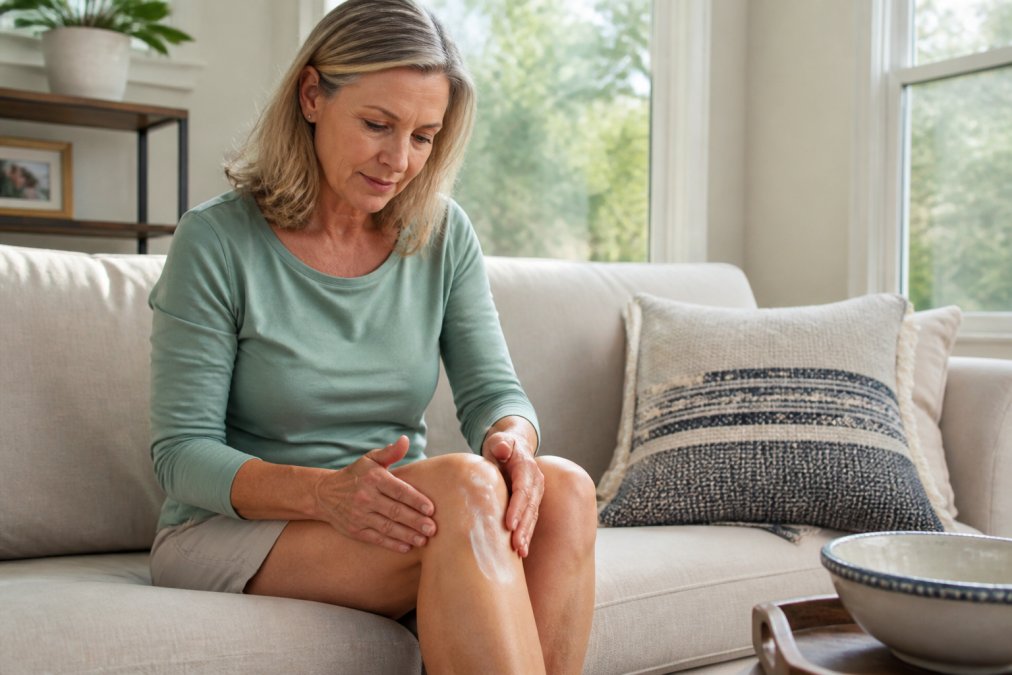
Step 1: Cleanse the skin, then exfoliate if needed. Dirt, sweat, and residual body oils trap the product on the surface. Wash the area with mild soap and warm water, then pat dry. If you are applying to an area with thick skin, like the bottom of the foot, the elbow, or a knee with years of wear, a gentle exfoliation with a washcloth or a mild sugar scrub removes the top layer of dead cells that would otherwise block the CBD. Do not exfoliate broken or irritated skin.
Step 2: Apply to slightly damp skin. Warmth and moisture open the stratum corneum. Applying the topical immediately after a warm shower or bath, while the skin is still slightly damp, can help with absorption. The water hydrates the skin cells, causing them to swell slightly and loosen the gaps between them, which allows the CBD to slip through more easily. If you cannot shower first, hold a warm, damp washcloth over the area for 60 seconds before applying.
Step 3: Massage for 90 seconds, not 30. The friction from massage generates heat and increases local blood flow, which helps push the cannabinoids past the epidermis into the dermis where the CB2 receptors are concentrated. Massaging for a longer duration may help drive the cannabinoids into the dermal layers more effectively. Use firm, circular motions with the pads of your fingers, not a light spreading motion. You are not rubbing the product in; you are driving it in.
Step 4: Use a thin layer, not a thick coat. Your skin can only absorb so much at once. A thick layer sits on the surface, evaporates, or rubs off on clothing. A thin, even layer, about the size of a quarter for a knee or shoulder, massaged thoroughly is more effective than a heavy coat. If you need more coverage, apply a second thin layer after the first has fully absorbed (usually 2-3 minutes).
Step 5: Understand what the topical is doing, and not doing. One of the most common misconceptions is that a topical will produce systemic effects like an oral tincture. It will not. CBD topicals act on local cannabinoid receptors in the skin, muscles, and superficial nerves. They do not enter the bloodstream in meaningful amounts, research shows that transdermal absorption of CBD is minimal, with most of the compound remaining in the skin layers. This is why you should apply the product exactly where you feel the pain, not to a general area like your chest or arm. The relief is localized, and the application should be equally precise.
How Long Do the Effects Last, and When Should You Reapply?
A single application of a CBD topical typically provides localized relief for 2 to 4 hours, though this window varies with the product's potency and the severity of your discomfort.
Reapplication timing should follow your pain, not the clock. If you feel the ache returning, that is your signal to apply again. For chronic conditions like osteoarthritis, many users find that a morning application and an evening application provide steady coverage throughout the day. Keep in mind that topical application produces localized relief only; the cannabinoids do not reach systemic circulation in meaningful amounts, so you will not feel whole-body effects like you would with an oral tincture.
Common Mistakes That Slow Down Topical CBD Absorption
The most frequent error is applying the lotion to skin that has not been cleansed. Dirt, dead skin cells, and residual body oils form a barrier that traps the product on the surface. Washing the area with mild soap and warm water before application removes this obstacle and noticeably improves absorption.
Skipping the massage is the second mistake. Merely spreading the lotion across the skin leaves most of the product on the surface to evaporate. The friction from a proper massage is what drives the cannabinoids into the dermal layers. A third issue is impatience: users who reapply every ten minutes because they do not feel instant relief are not giving the product time to work. As discussed, the onset window is 15 to 30 minutes, so wait at least that long before judging effectiveness.
Final Verdict: Setting Realistic Expectations for Topical CBD
A cbd topical is a tool for localized symptom relief, not an instant cure. Expect onset within 15 to 30 minutes, effects lasting 2 to 4 hours, and the best results when you pair a high-quality formula with proper application technique. If you are managing joint inflammation or chronic muscle soreness, the blend of cannabinoids matters, and a CBD/CBC formula may offer enhanced benefits. For a deeply hydrating, non-greasy option, the Railroad Remedies (RXR) 500mg CBD Relief Lotion offers everyday comfort, while the 2000mg CBD/CBC blend delivers maximum support for stubborn discomfort. Your skin absorbs what you give it, so choose a product that respects that process and give it the full hour to show what it can do.
Frequently Asked Questions
Does topical CBD actually help with pain?
Yes, for localized pain. Topical CBD interacts with cannabinoid receptors in the skin and underlying tissues without entering systemic circulation in significant amounts. This makes it effective for joint pain, muscle soreness, and nerve discomfort in specific areas. The endocannabinoid system in your dermal layers responds to the compound, reducing inflammation and pain signals at the source. For best results, choose a product with a potency that matches your pain level and apply it consistently.
How long do the effects of CBD topicals typically last?
Most users experience relief for 2 to 4 hours per application, though this varies based on product formulation, potency, and your individual skin barrier. Factors such as how often you move the area, your skin's hydration level, and whether you massage the product in thoroughly all affect duration. Plan to reapply when you feel the original relief beginning to fade.
Does topical CBD cream enter the bloodstream?
Not in meaningful amounts. Topical CBD is designed for localized relief, meaning it penetrates the epidermis and dermis layers of your skin to interact with nearby cannabinoid receptors. Unlike transdermal patches formulated for systemic delivery, creams and lotions generally do not reach systemic circulation in significant quantities. This is actually an advantage for targeted pain management because you get concentrated relief exactly where you need it without whole-body effects.
What is the difference between CBD and CBD/CBC blends for inflammation?
CBC (cannabichromene) is a minor cannabinoid that appears to enhance the anti-inflammatory and analgesic properties of CBD through the entourage effect. A CBD/CBC blend like Railroad Remedies' 2000mg formula uniquely incorporates Cannabichromene (CBC), known for its enhanced anti-inflammatory and analgesic properties, delivering a superior wellness experience. If you have chronic joint inflammation or nerve pain that hasn't responded to standard CBD topicals, a blend with CBC is worth trying.
Managing chronic pain is a daily challenge, and finding a topical that actually absorbs and delivers relief makes all the difference. Railroad Remedies (RXR) formulates its lotions with organic coconut oil, shea butter, and kukui nut oil for deep hydration, and the 2000mg CBD/CBC blend adds enhanced anti-inflammatory support where you need it most. Continue shopping with Railroad Remedies (RXR) and find a formula that works with your skin, not against it.
