

Shea Butter for Skin: 7 Science-Backed Benefits
Table of Contents
- What Is Shea Butter and Why It Matters for Skin Health
- Top Benefits of Shea Butter for Skin Care
- Unrefined Shea Butter Benefits vs. Refined Varieties
- How to Use Shea Butter on Skin: Application Methods and Best Practices
- Shea Butter for Eczema, Psoriasis, and Dermatitis Relief
- Shea Butter vs. Cocoa Butter: Which Is Better for Your Skin?
- Side Effects, Precautions, and Skin Sensitivity Considerations
- Sustainability and Ethical Sourcing: What to Look For
Last Updated: July 28, 2026
Shea butter has become a staple in skincare routines worldwide. According to the American Academy of Dermatology, natural moisturizers like shea butter are among the most recommended ingredients for maintaining healthy skin barriers. At Railroad Remedies (RXR), we recognize that quality ingredients like shea butter form the foundation of effective skincare products, which is why our CBD relief lotions incorporate this powerful natural ingredient alongside other organic components to support both skin health and overall wellness.
What Is Shea Butter and Why It Matters for Skin Health
Shea butter is a fat extracted from the nuts of the shea tree, native to West Africa. This creamy, naturally pale-colored substance has been used in skincare for centuries, and modern dermatology has validated many of its traditional applications. The benefits of shea butter for skin stem from its unique composition of fatty acids, vitamins, and natural compounds that work synergistically to nourish and protect the skin.
The Composition: Fatty Acids and Vital Nutrients
Shea butter contains oleic acid, linoleic acid, and stearic acid, three essential fatty acids that restore and maintain skin integrity. These triglycerides penetrate the skin barrier without clogging pores, making shea butter an exceptional emollient for nearly all skin types. Beyond fatty acids, shea butter delivers vitamin A, vitamin E, and natural antioxidants that combat oxidative stress. Vitamin A promotes cell regeneration and collagen production, while vitamin E provides protection against environmental damage.
The non-comedogenic rating of shea butter (typically 0-2 on the comedogenic scale) makes it suitable even for acne-prone skin when used appropriately. Unlike heavier oils, shea butter's molecular weight allows it to hydrate without trapping impurities.
Top Benefits of Shea Butter for Skin Care
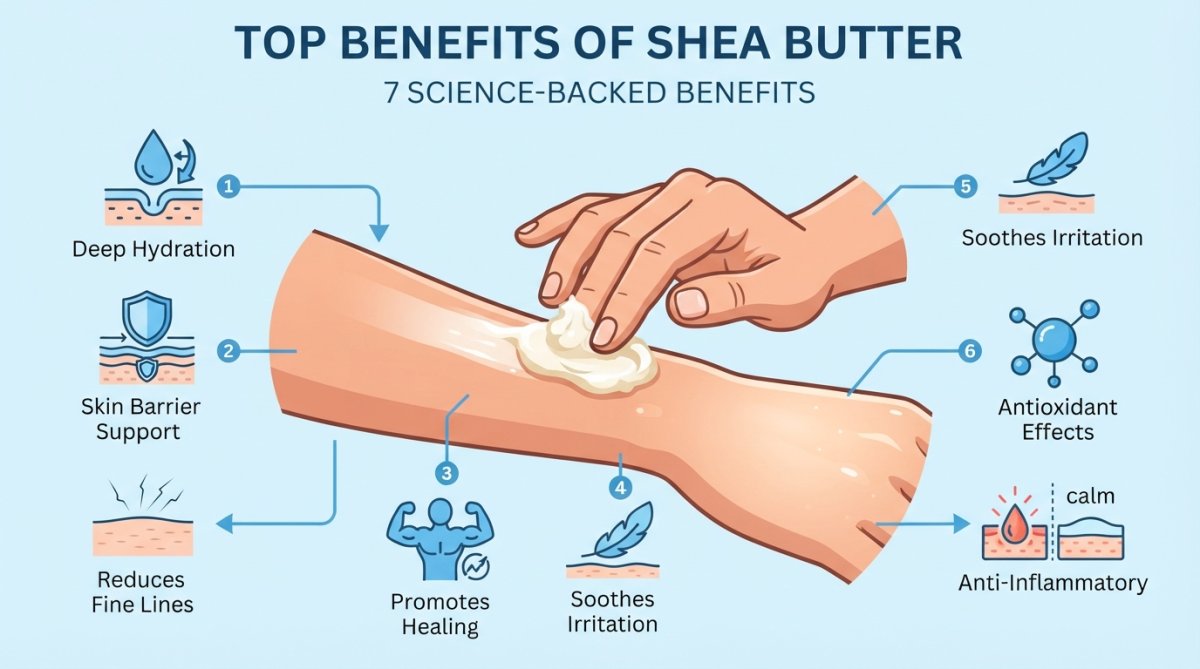
The benefits of shea butter for skin extend across multiple skin concerns, from basic hydration to advanced anti-aging support.
Deep Hydration and Moisture Retention
Shea butter excels at delivering and maintaining hydration at the skin's deepest layers. The fatty acid profile reduces transepidermal water loss by up to 25% when applied consistently, keeping skin supple and hydrated even in dry climates or during winter months. The oleic and linoleic acids penetrate the stratum corneum and create a protective film that seals in moisture without feeling greasy. This is particularly valuable for individuals with dry skin or those recovering from harsh treatments. Consistent application yields increasingly noticeable results within 2-3 weeks.
Anti-Inflammatory and Soothing Properties
One of the most underrated benefits of shea butter for skin is its anti-inflammatory capacity. The natural compounds in shea butter, particularly cinnamic acid and lupeol, actively reduce redness, swelling, and irritation. This makes shea butter an effective choice for calming inflamed skin without the side effects of topical corticosteroids. Shea butter's soothing properties work within hours, providing relief that continues to improve with repeated application.
Anti-Aging: Collagen Support and Fine Line Reduction
Shea butter supports collagen production through its vitamin A content and antioxidant profile. Vitamin A stimulates fibroblasts, the cells responsible for producing collagen and elastin. Over 8-12 weeks of consistent use, users often notice improved skin elasticity and a visible reduction in fine lines, particularly around the eyes and mouth. The antioxidants also prevent collagen degradation by neutralizing free radicals, making shea butter a valuable addition to any anti-aging skincare routine.
Non-Comedogenic and Acne-Safe Benefits
Despite its richness, shea butter ranks as non-comedogenic, meaning it won't clog pores or trigger acne breakouts in most users. The linoleic acid in shea butter actually helps regulate sebum production, preventing the excess oil that contributes to acne formation. For acne-prone individuals, use shea butter in moderation on damp skin to ensure absorption without buildup.
Unrefined Shea Butter Benefits vs. Refined Varieties
Unrefined (raw, cold-pressed) shea butter retains all its natural compounds, including beneficial cinnamic acid, lupeol, and the full fatty acid profile, delivering maximum anti-inflammatory and antioxidant benefits. Refined shea butter undergoes processing that removes some compounds to create a whiter color, lighter texture, and neutral scent. While this makes refined shea butter more cosmetically elegant, it sacrifices some of the ingredient's most powerful benefits.
For serious skin concerns like eczema or severe dryness, unrefined shea butter consistently outperforms refined versions. If you prioritize maximum therapeutic benefit and don't mind the natural nutty scent, unrefined shea butter is the clear winner. If you prefer a lighter feel or are blending shea butter into other products, refined shea butter offers convenience with acceptable benefits.
How to Use Shea Butter on Skin: Application Methods and Best Practices
Proper application technique determines whether you'll experience shea butter's full benefits or end up with a greasy residue.
Daily Moisturizing Routine
For daily moisturizing, apply shea butter to damp skin immediately after cleansing. Use a pea-sized amount for your face and a walnut-sized amount for your neck and décolletage. Warm the shea butter between your palms for 3-5 seconds before pressing it gently into your skin using upward motions. Allow 2-3 minutes for full absorption before applying sunscreen or makeup. If shea butter leaves a residue, you're likely using too much, start with smaller amounts.
For body application, use shea butter immediately after showering while skin is still slightly damp. This locks in hydration and prevents the tight feeling that often follows bathing.
Patch Testing and Allergy Protocols
Before applying shea butter to your entire face, conduct a patch test to rule out sensitivity or allergic reactions. Apply a small amount to your inner arm or behind your ear and wait 24-48 hours. If you have a history of tree nut allergies, exercise extra caution. Symptoms of an allergic reaction include localized itching, redness, hives, or in severe cases, swelling of the lips or throat.
For those with sensitive skin from conditions like radiation therapy or severe dermatitis, patch testing becomes even more important. Start with the smallest possible amount and gradually increase frequency to build tolerance.
Shea Butter for Eczema, Psoriasis, and Dermatitis Relief
For individuals with eczema, psoriasis, or dermatitis, shea butter offers therapeutic benefits that conventional treatments sometimes cannot match. The anti-inflammatory compounds directly address chronic inflammation, while the emollient properties repair the damaged skin barrier. Research from the National Eczema Association emphasizes the importance of maintaining skin barrier integrity through proper moisturization, making shea butter an ideal therapeutic agent.
For eczema sufferers, applying unrefined shea butter 2-3 times daily can reduce itching, redness, and flaking within 1-2 weeks. Consistency is key; the skin barrier requires continuous nourishment to maintain its protective function. For psoriasis, shea butter addresses inflammation and dryness when used alongside prescribed treatments. For contact dermatitis or irritant dermatitis, shea butter provides immediate soothing relief while supporting healing.
Shea Butter vs. Cocoa Butter: Which Is Better for Your Skin?
Both shea butter and cocoa butter offer legitimate skincare benefits, but they excel in different applications. Shea butter contains more linoleic acid, making it superior for addressing dryness and barrier repair. Cocoa butter contains higher levels of stearic acid and oleic acid, giving it a richer, more occlusive feel.
For facial skincare, shea butter typically outperforms cocoa butter because it absorbs more readily and feels less heavy. The linoleic acid content also makes shea butter more effective for anti-aging applications and for treating conditions like eczema. Cocoa butter's heavier texture makes it better suited for body moisturizing. The comedogenic rating also differs: shea butter scores 0-2 (non-comedogenic), while cocoa butter scores 4 (moderately comedogenic). For acne-prone skin, shea butter is clearly the better choice.
| Characteristic | Shea Butter | Cocoa Butter |
|---|---|---|
| Linoleic acid content | Higher | Lower |
| Absorption rate | Faster | Slower |
| Comedogenic rating | 0-2 | 4 |
| Best for face | Yes | No |
| Best for body | Good | Excellent |
| Anti-inflammatory | Strong | Moderate |
Side Effects, Precautions, and Skin Sensitivity Considerations
Shea butter is generally well-tolerated, but certain individuals should exercise caution. The most common side effect is a greasy residue when too much product is applied or when it's applied to already-oily skin. The solution is simple: use less product and apply only to damp skin.
True allergic reactions to shea butter are rare but possible, particularly in individuals with tree nut allergies. Symptoms include localized itching, redness, hives, or in severe cases, facial swelling. Patch testing before full application prevents this issue entirely. Some individuals report that shea butter causes breakouts, typically because they're using too much product or applying it to already-oily skin. If breakouts persist after reducing the amount, you may have a sensitivity to shea butter specifically.
During pregnancy, shea butter is considered safe for topical use and may help prevent stretch marks when applied consistently. However, always consult your healthcare provider before introducing new skincare products during pregnancy. For individuals with compromised immune systems or severe skin conditions, consult a dermatologist before using shea butter.
Sustainability and Ethical Sourcing: What to Look For
When purchasing shea butter, prioritize products with fair trade certification, which ensures that producers receive equitable compensation and work in safe conditions. Look for certifications from organizations like Fair Trade USA or the Fair Trade Foundation. Supporting fair trade shea butter contributes to economic development in the regions where shea trees naturally grow.
Environmental sustainability is equally important. Sustainable harvesting practices preserve shea trees and the ecosystems they support. Look for products that specify sustainable sourcing or that source from organizations committed to reforestation efforts. Cold-pressed or raw processing methods also matter from a sustainability perspective because they require less energy than refined processing.
For individuals seeking comprehensive skincare support that combines the benefits of shea butter with additional therapeutic compounds, Railroad Remedies (RXR) offers premium CBD relief lotions formulated with organic shea butter alongside coconut oil and kukui nut oil. The CBD Relief Lotion 500mg provides deep hydration and anti-inflammatory support for general skin health and comfort, while those requiring advanced relief can explore the [CBD/CBC 2000mg Pain Relief Lotion](https://4ch1j6-1c.myshopify.com/products/cbd-cbc-2000mg-pain-relief-lotion-3-3oz), which combines shea butter's nourishing properties with full-spectrum cannabinoids for comprehensive skin support. Whether addressing everyday dryness or managing more complex skin concerns, shea butter, particularly when sourced ethically and formulated with complementary ingredients, remains one of nature's most effective skincare solutions.
Frequently Asked Questions
What are the main benefits of shea butter for skin?
Shea butter delivers multiple benefits for skin health: it provides deep hydration through emollient fatty acids (linoleic, oleic, and stearic acid), reduces inflammation and irritation, supports collagen production for anti-aging effects, and strengthens the skin barrier by reducing transepidermal water loss. Its non-comedogenic rating makes it safe for acne-prone skin, and it contains vitamin A and E for antioxidant protection. Many people use it to soothe eczema, psoriasis, and dermatitis while maintaining supple, radiant skin.
Is unrefined shea butter better for your skin than refined shea butter?
Unrefined (raw, cold-pressed) shea butter retains more of its natural vitamins, antioxidants, and fatty acids compared to refined varieties, which are bleached and deodorized. Unrefined shea butter typically has a stronger nutty scent and may provide superior anti-inflammatory and cell regeneration benefits. However, refined shea butter is hypoallergenic and better for sensitive skin. Choose unrefined if you want maximum nutrient density; choose refined if you have fragrance sensitivity or prefer a neutral scent.
Can I use shea butter if I have acne-prone or sensitive skin?
Yes. Shea butter has a low comedogenic rating (typically 0-2 on a scale of 0-5), meaning it is unlikely to clog pores or trigger acne. Its anti-inflammatory properties can actually help calm irritation and redness. For sensitive skin, start with a patch test on a small area (inner arm or behind the ear) and wait 24-48 hours to rule out allergic reactions. If you have extremely reactive skin or active acne, use shea butter sparingly and consider blending it with lighter oils to reduce its occlusive effect.
How should I apply shea butter to get the best results for my skin?
Apply shea butter to damp skin (within 3 minutes of cleansing or showering) to lock in hydration and maximize absorption. Use a small amount, shea butter is concentrated, so a dime-sized portion covers the face. Warm it between your palms before gently pressing it into skin rather than rubbing. For body use, apply after bathing. If you find it too heavy as a standalone moisturizer, blend it with lighter oils like coconut or kukui nut oil. Avoid applying to soaking wet skin, as excess water can prevent proper absorption.
Does shea butter help with wrinkles and anti-aging?
Shea butter supports anti-aging through multiple mechanisms: its fatty acids and vitamin E boost skin elasticity and cell regeneration, reducing the appearance of fine lines and wrinkles over time. The emollient properties plump the skin and improve hydration, which naturally diminishes fine lines. Vitamin A content supports collagen production, essential for maintaining skin firmness. While shea butter is not a substitute for sunscreen or prescription retinoids, consistent use can improve skin texture, radiance, and elasticity, making it a valuable part of an anti-aging routine.
This article was written using GrandRanker
