

Non-Greasy CBD Lotion for Arthritis: A 2026 Guide
Table of Contents
- How Non-Greasy CBD Lotion Works for Arthritis Pain
- Full-Spectrum CBD Lotion for Arthritis: Benefits and Science
- CBD Dosage for Arthritis Topical Applications
- CBD Cream with Menthol for Arthritis: Enhanced Comfort
- CBD for Inflammation: Targeting Joint Discomfort
- What to Look for in Non-Greasy CBD Lotion for Arthritis
- How to Apply CBD Lotion for Maximum Arthritis Relief
- Safety, Side Effects, and Drug Interactions
Non-Greasy CBD Lotion for Arthritis: A 2026 Guide
Last Updated: July 16, 2026
Topical CBD applications have gained significant traction among individuals managing joint discomfort. A non-greasy CBD lotion for arthritis represents a shift toward lightweight formulations that absorb quickly without residue. At Railroad Remedies (RXR), we've developed expertly formulated non-greasy CBD lotions combining cannabidiol with complementary botanicals to deliver therapeutic relief. Below, we'll show you how to evaluate, select, and apply non-greasy CBD lotion for arthritis relief.
How Non-Greasy CBD Lotion Works for Arthritis Pain
When you apply CBD cream to arthritic joints, cannabidiol penetrates the skin barrier through transdermal absorption, reaching localized tissue and nerve endings without entering systemic circulation. This targets pain and inflammation exactly where it occurs, knee, wrist, ankle, or shoulder, rather than distributing the compound throughout your body.
Topical Application and Localized Relief
Topical CBD works through interaction with cannabinoid receptors in peripheral tissue. Unlike systemic approaches, topical application creates high local concentration of cannabidiol in the affected area without requiring bloodstream travel. Research from the Journal of Cannabis Research indicates topical cannabinoid formulations deliver therapeutic concentrations to localized areas within 15-30 minutes of application.
The endocannabinoid system in your skin responds to CBD by modulating inflammatory signals and pain perception. Joint inflammation involves inflammatory cytokines and pain signaling that CBD addresses at the source of discomfort.
Why Non-Greasy Formulas Matter for Daily Use
A greasy CBD cream discourages consistent application. People stop using products that stain clothing, leave residue, or require waiting before touching anything. Consistency matters more than potency, a lighter formula applied twice daily outperforms a heavy cream used once weekly.
Non-greasy formulations use fast-absorbing carrier oils like coconut oil, shea butter, and kukui nut oil rather than heavier bases. At Railroad Remedies (RXR), our formulas use organic coconut oil combined with shea butter and kukui nut oil for rapid absorption.
Full-Spectrum CBD Lotion for Arthritis: Benefits and Science
Full-spectrum CBD lotion contains cannabidiol plus other cannabinoids, terpenes, flavonoids, and plant compounds from hemp. The "entourage effect" theory suggests multiple compounds working together produce stronger therapeutic effects than isolated cannabidiol alone.
Full-Spectrum vs. Isolate: Which Works Better
Full-spectrum products retain the complete cannabinoid profile, including trace amounts of CBC (Cannabichromene), CBG (Cannabigerol), and CBN (Cannabinol). Broad-spectrum removes THC but retains other cannabinoids. CBD isolate contains pure cannabidiol only.
For arthritis, full-spectrum formulations may offer advantages. CBC shows promise for anti-inflammatory and analgesic properties. Railroad Remedies (RXR)'s 2000mg CBD/CBC blend specifically incorporates Cannabichromene alongside cannabidiol because the combination targets both inflammation and pain perception through different mechanisms.
Full-spectrum products tend to produce more noticeable effects for some users, particularly those with inflammatory conditions like rheumatoid arthritis. However, individual response varies significantly. Testing both formulations on your joints and tracking results determines which works better for you.
Third-party testing is essential with full-spectrum products. A certificate of analysis (COA) from an independent lab should document all cannabinoids present, terpene profiles, and contaminant screening.
CBD Dosage for Arthritis Topical Applications
Topical CBD dosing differs from oral dosing. You're considering the concentration of cannabidiol in the product and the size of the area being treated, not body weight.
Finding Your Optimal Strength
Most topical CBD products range from 250mg to 5000mg per container. A typical application uses enough lotion to cover the joint area, roughly a quarter to half-dollar depending on joint size, massaged in for 30-60 seconds.
For someone new to topical CBD, starting with 500-1000mg total cannabidiol is reasonable. If managing multiple arthritic joints, a higher-potency product (2000mg or more) becomes more practical. Railroad Remedies (RXR)'s 2000mg CBD/CBC blend allows treating multiple areas without depleting the container quickly.
Frequency matters as much as strength. Many users find twice-daily application produces better results than single daily applications, even at higher potency. Consistent dosing keeps cannabinoid levels elevated in target tissue throughout the day.
Individual factors influence optimal dosage: inflammation severity, specific joint affected, body weight, and cannabinoid sensitivity. Start conservatively and increase frequency or strength based on observed results.
CBD Cream with Menthol for Arthritis: Enhanced Comfort
Adding menthol to CBD lotion creates complementary therapeutic experience. Menthol provides cooling sensation through interaction with TRPM8 receptors in nerve tissue, the same receptors responding to cold temperatures.
The Cooling Sensation and Complementary Ingredients
CBD and menthol address arthritis through two mechanisms. CBD targets inflammation and underlying pain signaling. Menthol provides immediate sensory relief through cooling, which many users find soothing. This dual approach explains why CBD cream with menthol often produces stronger perceived relief than CBD alone.
Arnica montana, another common addition, complements CBD through its own anti-inflammatory properties. When combined with CBD and menthol, arnica adds a third therapeutic layer.
The best formulations balance these ingredients thoughtfully. Too much menthol creates overwhelming cooling; too little provides minimal benefit. Railroad Remedies (RXR)'s formulations include menthol at levels producing noticeable cooling without intense sensation.
Essential oils like lavender, eucalyptus, and wintergreen contribute therapeutic properties and pleasant scent. These aren't marketing additions, essential oils contain compounds with documented anti-inflammatory and analgesic effects.
CBD for Inflammation: Targeting Joint Discomfort
Inflammation is the root cause of arthritis pain. Whether osteoarthritis or rheumatoid arthritis, reducing inflammatory signals translates directly to pain reduction and improved mobility.
CBD interacts with the endocannabinoid system to modulate inflammatory responses. Research from Frontiers in Immunology demonstrates cannabinoids reduce production of pro-inflammatory cytokines like TNF-alpha and IL-6. By applying CBD topically to inflamed joints, you engage anti-inflammatory mechanisms at the pathology site.
Topical application achieves high local cannabinoid concentration without systemic effects. You can apply CBD lotion to inflamed knees without affecting cognitive function or energy levels.
Consistent application matters for inflammation management. A single application provides temporary relief. Regular twice-daily application for two weeks or longer allows cumulative anti-inflammatory effects to develop. Many users report inflammation decreases noticeably after consistent use.
What to Look for in Non-Greasy CBD Lotion for Arthritis
Selecting effective non-greasy CBD lotion requires understanding key evaluation criteria. The difference between mediocre and excellent formulations often determines whether you experience meaningful relief.
Key Ingredients and Texture Testing
The carrier oil base determines whether your lotion feels greasy or lightweight. Look for formulations using coconut oil, shea butter, kukui nut oil, or jojoba oil as primary ingredients. Avoid products listing heavy mineral oils or petroleum-derived ingredients.
A non-greasy CBD lotion should contain meaningful amounts of cannabidiol, typically 250mg minimum per container, ideally 500mg or more. Beyond CBD, evaluate complementary ingredients: menthol for cooling, arnica for anti-inflammatory support, essential oils for scent and therapeutic properties.
Dermatological testing matters for skin sensitivity. Look for products labeled dermatologically tested, especially if you have sensitive skin or existing conditions.
Third-Party Testing and Certificate of Analysis
Third-party lab testing is non-negotiable. An independent laboratory should verify:
- Actual cannabinoid content
- Absence of contaminants (pesticides, heavy metals, microbial contamination)
- THC levels (confirming legal compliance)
- Terpene and cannabinoid profiles (for full-spectrum products)
A certificate of analysis (COA) should be available for every batch. Reputable brands publish COAs on websites or provide upon request. If a company cannot produce third-party testing documentation, that's a red flag.
Look for testing from labs accredited by organizations like the Association of Commercial Labs (ACL), indicating standardized testing protocols and quality control.
Cost-Per-Milligram Comparison Across Brands
Rather than comparing absolute prices, compare cost-per-milligram. Divide total price by milligrams of CBD. A $40 product containing 1000mg costs $0.04 per milligram. A $50 product containing 500mg costs $0.10 per milligram.
However, cost-per-milligram doesn't tell the complete story. A higher-cost product with superior ingredients, faster absorption, and better sensory experience may deliver better value than a cheaper product used inconsistently. Factor in absorption speed, application frequency, container longevity, and complementary ingredient quality.
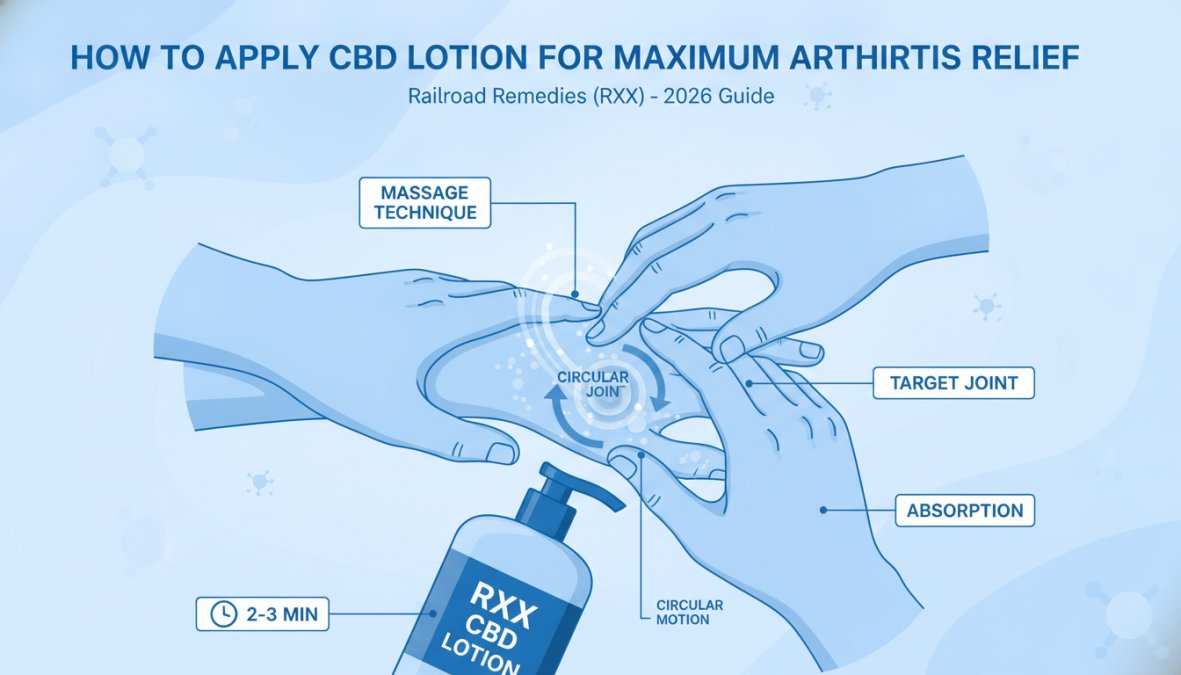
How to Apply CBD Lotion for Maximum Arthritis Relief
Application technique directly impacts therapeutic benefit. Proper technique ensures maximum skin penetration and cannabinoid delivery.
Application Techniques for Specific Joints
For knee arthritis: Apply directly to the affected area, front, sides, and back. Use both hands to massage in circular motions, working from center outward. Spend 60-90 seconds on application. Gentle range-of-motion movements during application help distribute lotion and promote absorption.
For wrist and hand arthritis: Apply to the back of the hand, between knuckles, and along the wrist. Use your opposite hand to massage in circular motions around each joint.
For shoulder arthritis: Apply to front and back of shoulder, working lotion into the joint area. Consider having a partner help with back shoulder application.
For ankle arthritis: Apply around the ankle joint, front, sides, and back. Use a quarter-sized amount for this small joint.
Use enough lotion to cover the area thoroughly without excessive product. A quarter-sized amount works for most joints; larger joints like knees might require a half-dollar-sized amount.
Timing and Frequency for Best Results
Most users experience best results with twice-daily application: morning and evening. Morning application helps you move through the day with improved mobility. Evening application provides relief during rest and overnight recovery.
Many people apply CBD lotion before activities that typically trigger joint pain or after exertion to manage resulting pain and inflammation. Experiment with both approaches to find what works best.
Allow 10-15 minutes after application before washing hands or touching clothing. Most non-greasy formulas absorb within this timeframe. If applying to a joint covered by clothing, wait until absorption before dressing.
Consistency matters more than perfection. Maintain regular twice-daily application for at least two weeks to assess whether the product produces meaningful relief. Many people notice gradual improvement over time rather than dramatic relief from the first application.
Safety, Side Effects, and Drug Interactions
Topical CBD is generally well-tolerated, but understanding potential side effects and safety considerations helps you use products responsibly.
Topical CBD Safety Profile
Topical CBD has an excellent safety profile compared to many arthritis medications. Minimal systemic absorption means cannabidiol remains concentrated in skin and local tissue rather than entering your bloodstream significantly.
Localized side effects are rare but possible. Some people experience mild skin irritation, redness, or itching at the application site, typically indicating sensitivity to complementary ingredients rather than CBD itself. If irritation occurs, discontinue use and try a different formulation.
Allergic reactions to CBD are uncommon but possible, particularly in people with hemp or cannabis allergies. If you have known plant allergies, exercise caution and consider patch testing before full application.
The cooling sensation from menthol-containing products can feel intense to some people, particularly on sensitive skin. If uncomfortable, choose a non-menthol formulation or apply a smaller amount.
Drug Interaction Warnings for Topical CBD
While topical CBD has minimal systemic absorption, certain drug interactions remain theoretically possible, particularly with medications metabolized by the CYP3A4 enzyme system.
Medications with potential interaction risk include immunosuppressants, certain NSAIDs, blood thinners, anti-seizure medications, and certain heart medications. The risk is low with topical application because systemic CBD concentration remains minimal. However, discussing topical CBD with your healthcare provider is prudent if you take any of these medications.
Research from the National Institutes of Health on cannabinoid drug interactions indicates topical cannabinoid applications produce significantly lower systemic exposure than oral CBD, reducing interaction risk substantially.
Pregnancy and breastfeeding represent situations where topical CBD warrants caution. While topical application is safer than oral CBD during pregnancy, safety data remains limited. Most healthcare providers recommend avoiding CBD products during pregnancy and breastfeeding.
Managing arthritis requires addressing both inflammation and lifestyle limitations that joint pain creates. A non-greasy CBD lotion tackles both challenges simultaneously, reducing inflammatory signals while providing a product you'll actually use consistently. Railroad Remedies (RXR)'s formulations combine organic coconut oil, shea butter, and kukui nut oil for rapid absorption, with their 2000mg CBD/CBC blend offering enhanced anti-inflammatory support. If arthritis pain has limited your mobility or quality of life, consistent application of a properly formulated topical CBD lotion represents a practical, evidence-informed approach worth exploring.
Frequently Asked Questions
Does non-greasy CBD lotion actually help with arthritis pain?
Non-greasy CBD lotion for arthritis works through topical application to deliver cannabidiol directly to affected joints. While clinical research on topical CBD specifically for arthritis is still developing, many users report localized pain relief and reduced stiffness when applying quality formulations. The non-greasy aspect ensures comfortable daily use without residue, making it practical for consistent application. Results vary based on CBD potency, ingredient quality, and individual response to cannabidiol.
What ingredients should I look for in a non-greasy CBD lotion for arthritis?
Look for non-greasy formulas containing organic coconut oil, shea butter, and quick-absorbing carriers like kukui nut oil. Complementary ingredients like menthol provide cooling sensation, while arnica montana and essential oils offer soothing support. Ensure third-party lab testing and a certificate of analysis (COA) verify potency and purity. Full-spectrum or broad-spectrum CBD formulations may offer enhanced anti-inflammatory benefits compared to isolate, though all three types can provide therapeutic relief when properly formulated.
How much CBD dosage do I need for arthritis topical applications?
CBD dosage for arthritis topical use depends on lotion strength and affected area size. Most effective topicals range from 500mg to 2000mg per container. Start with smaller amounts on a test area to assess your response. Higher-potency formulations like 2000mg CBD blends with CBC may offer enhanced anti-inflammatory properties for significant joint discomfort. Apply directly to the affected joint, adjusting frequency based on symptom relief. Consult product instructions and consider starting with lower concentrations if you have sensitive skin.
Is topical CBD safe for older adults with arthritis?
Topical CBD is generally considered safe for older adults with arthritis, as it doesn't enter the bloodstream in significant amounts. However, check for potential drug interactions if taking medications, topical CBD may interact with certain prescriptions. Perform a patch test first to rule out skin sensitivity. Avoid application near broken skin or open wounds. Dermatologically tested formulations reduce irritation risk. Consult your healthcare provider before use, especially if you take blood thinners or other arthritis medications, to ensure compatibility with your current treatment plan.
| Application | Frequency | Duration | Best Results Timeline |
|---|---|---|---|
| Morning application | Once daily | 60-90 seconds per joint | Immediate sensory relief |
| Evening application | Once daily | 60-90 seconds per joint | Cumulative effect over 2 weeks |
| Twice daily (morning + evening) | Twice daily | 60-90 seconds per application | Noticeable improvement by week 2-3 |
| As-needed for acute pain | Variable | 60-90 seconds | 15-30 minutes for localized relief |
This article was written using GrandRanker
