

Natural Alternatives to NSAID Pain Creams: 7 Proven Options
Table of Contents
- Why People Are Switching From NSAID Pain Creams
- How Natural Alternatives to NSAID Pain Creams Work
- CBD Cream for Pain: Full-Spectrum and Broad-Spectrum Options
- Capsaicin Cream for Pain Relief and Counterirritant Action
- Natural Anti-Inflammatory Creams: Turmeric, Arnica, and Ginger
- Essential Oils for Pain Relief Topical Applications
- Comparison: Cost-Benefit Analysis and Efficacy Per Dose
- Drug Interactions and Safety Considerations
Natural Alternatives to NSAID Pain Creams: 7 Proven Options
Last Updated: July 23, 2026
When over-the-counter NSAID pain creams stop working or cause stomach issues, natural alternatives offer real relief without the risks. At Railroad Remedies (RXR), we've tracked how thousands of customers transition away from topical diclofenac and ibuprofen-based creams toward plant-based and cannabinoid solutions that deliver comparable or superior results for chronic joint pain, arthritis, and muscle soreness.
NSAIDs work by blocking inflammation globally but come with documented cardiovascular and gastrointestinal risks, especially with long-term use. Natural alternatives work through counterirritant sensations, targeted anti-inflammatory botanicals, and cannabinoid science that address pain at the source without systemic absorption concerns.
Why People Are Switching From NSAID Pain Creams
Most users don't abandon NSAIDs by choice, they switch because risks accumulate. According to FDA guidance on topical NSAID safety, prolonged use of diclofenac and other topical NSAIDs increases the risk of cardiovascular events and gastrointestinal bleeding.
NSAIDs suppress inflammation through a single pathway, becoming less effective over time as tolerance builds. Natural alternatives operate on multiple pathways simultaneously: capsaicin depletes substance P (the pain-signal neurotransmitter), curcumin and ginger modulate inflammatory cytokines without systemic load, CBD and CBC interact with endocannabinoid receptors, and menthol and camphor trigger cold-sensitive nerve receptors. This multi-pathway approach explains why many users report improved pain management after switching.
How Natural Alternatives to NSAID Pain Creams Work
Topical Absorption vs. Oral Delivery
The skin is a selective barrier that prevents most molecules from penetrating, eliminating the primary risk factor of oral NSAIDs. Penetration depth varies by ingredient: menthol and camphor create immediate cooling sensations at the skin surface, while capsaicin penetrates deeper to reach nerve endings in the dermis. Curcumin faces bioavailability challenges, which is why formulations include black pepper extract (piperine) to boost absorption.
CBD and CBC interact with CB1 and CB2 receptors in peripheral nerves and immune cells without significant systemic circulation, activating local anti-inflammatory and analgesic pathways. The key difference: NSAIDs suppress inflammation everywhere they circulate, while natural topical alternatives reduce inflammation where applied with minimal systemic effects.
Anti-Inflammatory Mechanisms in Natural Ingredients
Turmeric's curcumin inhibits NF-κB, a transcription factor activating pro-inflammatory cytokines. Ginger contains gingerols and shogaols that suppress COX-2 and LOX enzymes, similar to NSAIDs but with lower systemic absorption. White willow bark contains salicin, which converts to salicylic acid (aspirin's precursor), but remains localized in topical form.
CBD modulates the endocannabinoid system, regulating immune response and pain perception. CBC shows enhanced binding affinity to immune receptors, making it more potent than CBD alone. Railroad Remedies (RXR)'s 2000mg CBD/CBC blend incorporates both cannabinoids, targeting inflammation through complementary pathways. Arnica montana contains sesquiterpenes and flavonoids that reduce swelling by modulating inflammatory mediators. Menthol and camphor block pain signal transmission through TRPM8 and TRPA1 ion channels, creating cooling relief that overrides pain perception.
CBD Cream for Pain: Full-Spectrum and Broad-Spectrum Options
CBD topicals activate local endocannabinoid receptors without requiring systemic circulation, making them effective for localized joint and muscle pain. Full-spectrum includes all cannabinoids, terpenes, and plant compounds, including trace THC (under 0.3%), while broad-spectrum removes THC while retaining other cannabinoids and terpenes. Full-spectrum often delivers stronger effects due to the "entourage effect", synergistic interaction of multiple cannabinoids.
How CBD Reduces Systemic Inflammation
Topical CBD activates CB2 receptors on immune cells and peripheral nerves, suppressing pro-inflammatory cytokines like TNF-α and IL-6. It also increases anandamide, the body's endogenous cannabinoid, further dampening inflammatory signaling. For arthritis and joint pain, topical CBD reduces both inflammatory response and pain signal transmission. Users report reduced morning stiffness, improved range of motion, and decreased pain during activity, with relief typically beginning within 15-30 minutes and lasting 4-6 hours per application.
Railroad Remedies (RXR)'s CBD Relief Lotion (500mg) combines full-spectrum CBD with organic coconut oil, shea butter, and kukui nut oil, enhancing skin penetration and providing additional anti-inflammatory benefits.
CBC: The Enhanced Anti-Inflammatory Cannabinoid
CBC (cannabichromene) is the third most abundant cannabinoid in hemp. Recent research shows CBC has higher binding affinity for TRPV1 receptors (involved in pain perception) than CBD and activates 5-HT1A serotonin receptors, which modulate pain and mood.
For topical pain relief, CBC is more potent than CBD at reducing inflammation and blocking pain signals. Combined with CBD, the two cannabinoids work synergistically. Railroad Remedies (RXR)'s CBD/CBC 2000mg Pain Relief Lotion incorporates both, delivering 1000mg CBD and 1000mg CBC for more powerful anti-inflammatory and analgesic effects than CBD alone. Users report relief comparable to prescription topical NSAIDs without cardiovascular and gastrointestinal risks.
| Option | Strength | Best For | Typical Cost |
|---|---|---|---|
| CBD 500mg | Entry-level | Mild to moderate pain | $40-$50 |
| CBD 1000mg | Mid-range | Moderate pain, daily use | $60-$80 |
| CBD/CBC 2000mg | Maximum strength | Severe arthritis, chronic pain | $70-$90 |
| Full-spectrum | Enhanced effect | Users seeking entourage benefit | $50-$100 |
| Broad-spectrum | THC-free | Users avoiding any THC | $45-$90 |
Capsaicin Cream for Pain Relief and Counterirritant Action
Capsaicin, the compound making chili peppers hot, creates a warming sensation at 0.025% to 0.1% concentrations that overrides pain signals through "gate control theory." The heat sensation literally closes the neural gate transmitting pain to the brain.
Capsaicin works immediately and has long-term effects. With repeated application, it depletes substance P, the neuropeptide transmitting pain signals. This dual action explains why capsaicin creams often outperform other topical alternatives for chronic pain. CVS Health Deep Penetrating Capsaicin Cream (0.1%) is widely available and affordable, delivering noticeable warming sensation without intense burning. Most users report relief within 5-10 minutes, lasting 4-8 hours per application.
Application Techniques for Maximum Efficacy
Capsaicin works best with consistent, moderate applications 3-4 times daily for 2-4 weeks to achieve full substance P depletion. Apply a thin layer (about pea-sized) and massage gently for 30-60 seconds. Wash hands immediately afterward to avoid transferring capsaicin to eyes or sensitive areas. Initial burning sensation is normal and typically fades within 5-10 minutes. The key insight: capsaicin requires consistency. Daily applications for 2-4 weeks produce cumulative effects as substance P depletes.
Contraindications and Sensitivity Considerations
Never apply capsaicin to broken or irritated skin. Don't apply capsaicin under heating pads or before hot baths, as combined heat can cause burns. Avoid using capsaicin with topical NSAIDs on the same area. Pregnancy presents a gray area; most practitioners recommend avoiding it during pregnancy. Capsaicin can also interact with blood pressure medications by increasing local blood flow. If on blood pressure medication, monitor response carefully when starting capsaicin.
Natural Anti-Inflammatory Creams: Turmeric, Arnica, and Ginger
These three botanicals represent the most-studied natural anti-inflammatory agents in topical form, reducing inflammation through biochemical pathways similar to NSAIDs but with far lower systemic toxicity.
Curcumin Bioavailability in Topical Formulations
Curcumin has poor bioavailability, your body absorbs only 1-3% of ingested curcumin without enhancers. The best topical curcumin formulations include black pepper extract (piperine), which increases bioavailability up to 2000% by inhibiting glucuronidation, the metabolic pathway rapidly eliminating curcumin.
One Farm Turmeric Relief Cream combines 1250mg hemp extract (CBD) with turmeric, black pepper, cayenne, and 10 additional botanical ingredients, addressing inflammation through multiple pathways. Turmeric-based creams work best for chronic inflammatory conditions like arthritis, with slower onset (30-45 minutes) but longer duration (6-8 hours) and effects that compound with repeated use.
Arnica Montana and Traditional Herbal Approaches
Arnica montana has been used in traditional medicine for centuries, and modern research validates its anti-inflammatory effects. Arnica contains sesquiterpenes that inhibit NF-κB and reduce TNF-α production. Boiron Arnicare Cream is the most recognized arnica formulation in the U.S. market, delivering measurable anti-inflammatory effects in clinical studies.
Arnica reduces bruising and is equally effective for muscle soreness, joint pain, and inflammation from overuse. Lakota Made Arnica & Turmeric Pain Relieving Balm combines arnica with turmeric and ginger in a vegan formulation using sunflower oil and beeswax. Arnica-based creams are gentle, rarely causing skin irritation, making them suitable for sensitive skin.
Essential Oils for Pain Relief Topical Applications
Essential oils are concentrated plant extracts that penetrate skin quickly and deliver powerful anti-inflammatory and analgesic effects. Being lipophilic (fat-soluble), they cross the skin barrier efficiently and reach deep tissue.
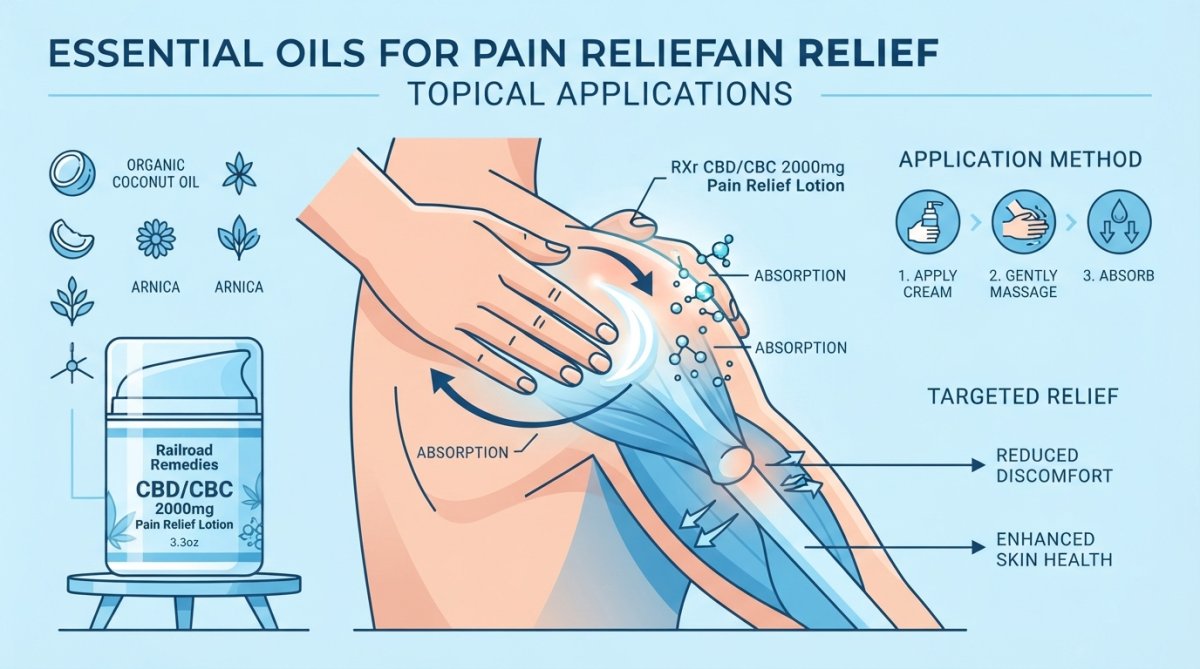
The most effective essential oils for pain relief are menthol (from peppermint), camphor (from camphor tree), eucalyptus, lavender, and rosemary.
Menthol and Camphor: Cooling and Warming Sensations
Menthol creates a cooling sensation by activating TRPM8 ion channels on sensory nerves, triggering coldness perception that overrides pain signals. Camphor works similarly but activates different receptors (TRPA1) and creates warming sensation instead. The combination in a single formulation creates a cycling hot-cold sensation more effective than either alone.
Icy Hot Advanced Pain Relief Cream combines menthol (16%) and camphor (11%) at maximum over-the-counter concentrations, providing immediate relief for acute pain, muscle strains, sprains, and joint pain from injury. Apply a thin layer and allow it to dry before covering with clothing. Some users apply menthol creams before bed, as cooling effect can reduce nighttime pain and improve sleep quality.
Eucalyptus, Lavender, and Rosemary for Muscle Aches
Eucalyptus oil contains eucalyptol, reducing inflammation and improving blood flow, particularly effective for muscle soreness and tension. Lavender provides mild analgesic and anxiolytic effects, reducing pain perception while calming the nervous system. Rosemary contains carnosic acid and rosmarinic acid, potent anti-inflammatory compounds that improve circulation and accelerate healing.
Frankincense & Myrrh Arthritis Pain Therapy Lotion includes menthol alongside nine essential oils, creating comprehensive topical pain relief. Essential oil creams offer aromatic benefits, as lavender and eucalyptus scents activate olfactory pathways enhancing relaxation and pain perception reduction.
Comparison: Cost-Benefit Analysis and Efficacy Per Dose
The real question isn't which natural alternative is "best," but which delivers the best value for your specific pain type and budget.
DIY vs. Store-Bought Formulations
DIY formulations present challenges: inconsistent potency, stability issues, skin irritation risk from improper ratios, time investment, and limited shelf life (2-4 weeks). Store-bought formulations offer standardized concentrations, professional formulation balancing active ingredients with skin-safe carriers, longer shelf life (6-12 months), quality control, and time savings. For most users, store-bought formulations deliver better value despite higher per-unit cost.
Long-Term Value and Consistency
True cost is per day of pain reduction. A $50 CBD cream lasting 30 days providing 6 hours relief costs $1.67 daily. A $10 menthol cream lasting 10 days providing 4 hours relief costs $1 daily but requires more frequent applications and shorter relief duration.
CBD and CBC formulations show real value through longer relief duration (6-8 hours per application) and improved cumulative effects. After 4-6 weeks of daily use, many CBD users need fewer applications daily because underlying inflammation is more effectively controlled. Capsaicin and herbal formulations show similar cumulative benefits, with relief improving significantly by week 3-4 as substance P depletes. Menthol and camphor provide immediate but temporary relief without cumulative effects, making them ideal for acute pain but less suitable for long-term chronic pain solutions.
| Product Type | Cost Per Bottle | Typical Duration | Relief Per Application | Best For | Long-Term Value |
|---|---|---|---|---|---|
| Menthol/Camphor | $8-$15 | 10-15 days | 4-5 hours | Acute pain, sports injuries | Moderate |
| Capsaicin (0.1%) | $12-$20 | 20-30 days | 4-8 hours | Chronic pain, arthritis | High (cumulative) |
| Herbal (turmeric, arnica) | $20-$35 | 30-45 days | 6-8 hours | Chronic inflammation, sensitive skin | High (cumulative) |
| CBD 500mg | $40-$50 | 30-40 days | 6-8 hours | Moderate chronic pain | Very High |
| CBD/CBC 2000mg | $70-$90 | 40-60 days | 8+ hours | Severe chronic pain | Highest |
Drug Interactions and Safety Considerations
Natural doesn't mean risk-free. While topical alternatives are far safer than oral NSAIDs, they can interact with medications and cause adverse effects in certain populations.
Contraindications With Common Medications
Blood Pressure Medications: Capsaicin, menthol, and warming/cooling agents increase local blood flow. If on ACE inhibitors, beta-blockers, or calcium channel blockers, combined vasodilatory effects can cause excessive blood pressure drops. Monitor blood pressure for the first week after starting any warming topical.
Blood Thinners: Ginger, turmeric, and garlic have mild anticoagulant properties. If on warfarin, apixaban, or other blood thinners, large-area or frequent application could theoretically increase bleeding risk, though the risk is low with topical application.
Topical NSAIDs: Never use natural pain creams simultaneously with topical NSAIDs on the same area. Combined effects cause excessive skin irritation and increase systemic NSAID absorption.
CBD/CBC with CYP3A4 Inhibitors: CBD and CBC are metabolized by the CYP3A4 enzyme. If taking medications inhibiting this enzyme (certain statins, antifungals, antiretrovirals), topical CBD absorption could be affected, though this is less of a concern with topical application than oral CBD.
Skin Sensitivity and Patch Testing Protocols
Before applying any new pain cream to a large area, perform a patch test. Apply a small amount to an inconspicuous area and wait 24 hours for redness, itching, burning, or irritation.
Some users develop sensitivity to specific ingredients: menthol sensitivity creates intense burning instead of cooling; capsaicin sensitivity causes disproportionate burning or skin damage; essential oil sensitivity can trigger contact dermatitis. If you have a history of contact dermatitis or sensitive skin, start with hypoallergenic formulations like Boiron Arnicare Cream or Railroad Remedies (RXR)'s CBD Relief Lotion.
The shift from NSAID pain creams to natural alternatives reflects understanding that pain management doesn't require systemic anti-inflammatory suppression. Topical solutions activating local anti-inflammatory pathways, blocking pain signal transmission, and supporting skin health offer comparable relief without cardiovascular and gastrointestinal risks.
For those managing chronic pain, arthritis, neuropathy, or repetitive strain, Railroad Remedies (RXR)'s CBD/CBC 2000mg Pain Relief Lotion represents the most comprehensive approach. The dual-cannabinoid formula, combined with organic coconut oil, shea butter, and kukui nut oil, delivers maximum anti-inflammatory potency while nourishing skin. Users report relief comparable to prescription topical NSAIDs, with added benefits of skin hydration and improved long-term pain control. Get started with Railroad Remedies (RXR) and experience sustained relief that builds with consistent use.
Frequently Asked Questions
What are the safest natural alternatives to NSAID pain creams for sensitive skin?
Natural alternatives like arnica, menthol-based creams, and CBD formulations are gentler than NSAIDs. Arnica is non-greasy and paraben-free, making it suitable for sensitive skin. Menthol creams provide cooling relief without systemic absorption. CBD creams with organic ingredients like shea butter and coconut oil offer anti-inflammatory benefits while hydrating skin. Always patch test first, especially if you have radiation therapy-related sensitivity or eczema.
How does CBD cream for pain compare to capsaicin cream for effectiveness?
CBD cream reduces systemic inflammation through endocannabinoid signaling, making it effective for chronic joint pain and arthritis. Capsaicin works as a counterirritant by blocking pain signals (substance P), providing faster warming relief for acute muscle soreness. CBD suits long-term inflammation management, while capsaicin excels for localized, immediate pain. Many users combine both for comprehensive relief, CBD for baseline inflammation, capsaicin for flare-ups.
What makes a natural anti-inflammatory cream different from over-the-counter NSAIDs?
Natural anti-inflammatory creams like turmeric, ginger, and arnica target localized inflammation without systemic absorption, avoiding gastrointestinal and cardiovascular risks associated with oral NSAIDs. They work through plant compounds (curcumin, gingerol, helenalin) rather than inhibiting COX enzymes. Topical application means lower doses, reduced side effects, and no drug interactions, ideal for long-term use, especially for those with NSAID-sensitive stomachs.
Can I use essential oils for pain relief topical creams on broken or irritated skin?
No. Essential oils and menthol-based creams should not be applied to broken, damaged, or severely irritated skin as they may sting or cause additional irritation. For radiation therapy-related skin sensitivity or open wounds, use gentle formulations like arnica or CBC-infused creams specifically designed for compromised skin. Always patch test on healthy skin first, and consult a dermatologist if you have active skin conditions before applying any topical pain relief product.
Will a topical natural pain cream reach nerve pain, or is it only for surface muscle soreness?
Topical creams, including natural alternatives, primarily address localized pain in muscles and joints near the skin surface. For deep nerve pain (neuropathy), systemic approaches like oral CBD tinctures or supplements may be more effective than topicals alone. However, many chronic pain sufferers use topicals for flare-ups combined with oral supplements or physical therapy. For nerve pain specifically, consult a healthcare provider about combining modalities rather than relying solely on topical creams.
This article was written using GrandRanker
