

Is CBD Safe for Senior Dogs? A Complete Guide
Table of Contents
- Is CBD Safe for Senior Dogs? The Short Answer
- How CBD Works in the Canine Body
- Benefits of CBD for Aging Dogs
- CBD Dosage for Senior Dogs: Weight-Based Guidelines
- Potential Side Effects and Risks for Older Dogs
- Drug Interactions and Liver/Kidney Health Considerations
- How to Choose CBD Oil for Dogs: Quality and Safety Standards
- Consulting Your Veterinarian Before Starting CBD
Last Updated: August 17, 2026
Is CBD Safe for Senior Dogs? The Short Answer
Is CBD safe for senior dogs? The answer is nuanced. CBD itself has not been shown to cause severe toxicity in dogs when sourced from reputable suppliers, but safety depends entirely on product quality, dosage, and your dog's individual health status. Many veterinarians acknowledge CBD's potential for managing pain and anxiety in aging dogs, though the FDA has not formally approved CBD for veterinary use. Before introducing CBD to your senior dog, consultation with your veterinarian is essential, especially if your dog takes other medications or has liver or kidney concerns.
The endocannabinoid system in dogs functions similarly to humans, meaning CBD interacts with cannabinoid receptors throughout your dog's body to support homeostasis. Senior dogs metabolize substances differently than younger animals, and their organs may process CBD more slowly, making careful dosing and quality assurance critical.
At Railroad Remedies (RXR), we understand pet owners' desire to find natural relief for their aging companions. While our expertise centers on premium CBD and CBD/CBC pain relief lotions for human use, we recognize the growing interest in CBD for dogs and want to provide evidence-based guidance on safety considerations specific to geriatric canines.
How CBD Works in the Canine Body
CBD interacts with your dog's endocannabinoid system, a biological network of cannabinoid receptors distributed throughout the brain, nervous system, and peripheral tissues. When CBD binds to these receptors, it may help regulate pain perception, inflammatory responses, and anxiety levels. Dogs metabolize cannabinoids through hepatic metabolism, meaning the liver processes and breaks down the compound. For senior dogs with declining liver function, this metabolic process may be slower, potentially extending how long CBD remains active in the bloodstream.
The therapeutic index of CBD appears relatively wide in dogs, meaning there's generally a reasonable margin between too little and too much. However, bioavailability matters, how your dog receives CBD affects how much active cannabinoid reaches the bloodstream. Sublingual administration typically offers better bioavailability than swallowing, though most dog CBD products come as flavored tinctures designed for oral consumption.
Senior dogs often experience cognitive dysfunction, chronic pain, and anxiety. CBD's anxiolytic effects and potential anti-inflammatory properties make it appealing for these conditions. Joint mobility issues from arthritis are particularly common in aging dogs, and many owners report improved comfort after starting CBD. However, most research on CBD's effectiveness in dogs remains limited, with most studies conducted in vitro or on small sample sizes.
Benefits of CBD for Aging Dogs
Senior dogs frequently struggle with arthritis, joint pain, and reduced mobility. CBD's anti-inflammatory properties may ease these discomforts without the gastrointestinal side effects associated with long-term NSAID use. Many aging dogs also experience anxiety, separation anxiety, or noise sensitivity, which can worsen quality of life. CBD's anxiolytic effects may help calm these behavioral issues.
Chronic pain management becomes increasingly important as dogs age. Some owners report their senior dogs become more active and engaged after starting CBD, suggesting improved comfort and reduced pain perception. Cognitive dysfunction in aging dogs, characterized by disorientation and sleep disruption, is another area where CBD shows promise, though more research is needed.

By reducing inflammation, supporting pain relief, and calming anxiety simultaneously, CBD addresses several age-related issues at once. However, individual responses vary significantly. Some senior dogs show noticeable improvement within days; others take weeks to demonstrate benefits. Consistency and proper dosing are key to observing real effects.
CBD Dosage for Senior Dogs: Weight-Based Guidelines
Determining the right CBD dosage for your senior dog requires understanding weight-based dosing principles. Most veterinary CBD guidance suggests starting with 1-2 mg of CBD per pound of body weight, given once or twice daily. For a 50-pound senior dog, this translates to a starting dose of 50-100 mg daily, divided into morning and evening doses.
Dosage titration is crucial. Start at the lower end and gradually increase over 1-2 weeks while observing your dog's response. Many owners find their senior dog's optimal dose falls between 2-5 mg per pound of body weight daily. Track your observations carefully, noting changes in mobility, pain responses, anxiety levels, and appetite. A simple log helps identify whether your dog is improving, staying stable, or experiencing adverse reactions.
Senior dogs with liver or kidney concerns may require lower doses or more frequent monitoring, as their reduced ability to metabolize substances means CBD may accumulate if dosed too aggressively.
The difference between full-spectrum, broad-spectrum, and isolate CBD products matters for dosing. Full-spectrum products contain all cannabinoids and terpenes from the hemp plant, offering an "entourage effect" that may enhance therapeutic benefits. Isolate products contain only pure CBD. Broad-spectrum products fall between these, containing multiple cannabinoids but with THC removed. Full-spectrum and broad-spectrum products may require lower doses to achieve the same effect as isolate products due to synergistic interactions.
Potential Side Effects and Risks for Older Dogs
While CBD is generally well-tolerated, senior dogs can experience side effects, particularly at higher doses or with prolonged use. Lethargy is the most commonly reported side effect; some dogs become unusually drowsy. This typically resolves as their body adjusts. Ataxia (loss of coordination or wobbly gait) can occur, particularly at high doses, but is usually temporary and reversible upon dose reduction.
Dry mouth is another potential issue, as CBD may reduce saliva production, leading to increased thirst and urination. Ensure your senior dog has constant access to fresh water. Appetite changes and gastrointestinal upset, including diarrhea or mild nausea, can occur, especially when first introducing CBD. Starting with a very low dose and increasing gradually minimizes this risk.
The most serious concern for senior dogs involves liver and kidney function. CBD undergoes hepatic metabolism, meaning the liver processes it. Dogs with pre-existing liver disease may struggle to metabolize CBD efficiently, leading to accumulation and potential toxicity. Similarly, dogs with kidney dysfunction may experience complications. This is why veterinary consultation and baseline organ function testing are essential before starting CBD in senior dogs.
Drug Interactions and Liver/Kidney Health Considerations
Senior dogs often take multiple medications for pain, heart conditions, seizures, or other concerns. CBD can interact with these medications by competing for liver metabolism, potentially increasing drug levels in the bloodstream. The cytochrome P450 enzyme system in the liver metabolizes both CBD and many common dog medications. When both substances require processing simultaneously, drug levels may become elevated, increasing side effects or toxicity risk.
Common medications that interact with CBD include NSAIDs (like carprofen or meloxicam), corticosteroids, anticonvulsants (like phenobarbital), and cardiac medications. If your senior dog takes any of these, CBD could intensify their effects. This doesn't necessarily mean CBD is unsafe; it means dosing adjustments may be necessary, and monitoring becomes critical.
Liver and kidney function testing before starting CBD is strongly recommended for senior dogs. A baseline blood panel measuring liver enzymes (ALT, AST, ALP) and kidney values (creatinine, BUN) establishes your dog's baseline organ function. After 4-6 weeks on CBD, repeat testing helps identify whether the supplement is affecting organ function.
If your senior dog has existing liver disease, hepatic metabolism may be significantly impaired, and CBD could accumulate to harmful levels. In these cases, CBD may be contraindicated entirely, or only very low doses under close veterinary supervision might be appropriate. Never abruptly stop your dog's medications in favor of CBD. Work with your veterinarian to develop a gradual transition plan, reducing pharmaceutical doses slowly while introducing CBD at appropriate levels.
How to Choose CBD Oil for Dogs: Quality and Safety Standards
The CBD market for dogs lacks FDA regulation, meaning quality varies dramatically. Third-party lab testing is the gold standard for verifying product safety and potency. Reputable manufacturers provide a Certificate of Analysis (CoA) from an independent laboratory, documenting CBD concentration, absence of contaminants, and verification that THC levels are below 0.3% (the legal limit for hemp-derived products).
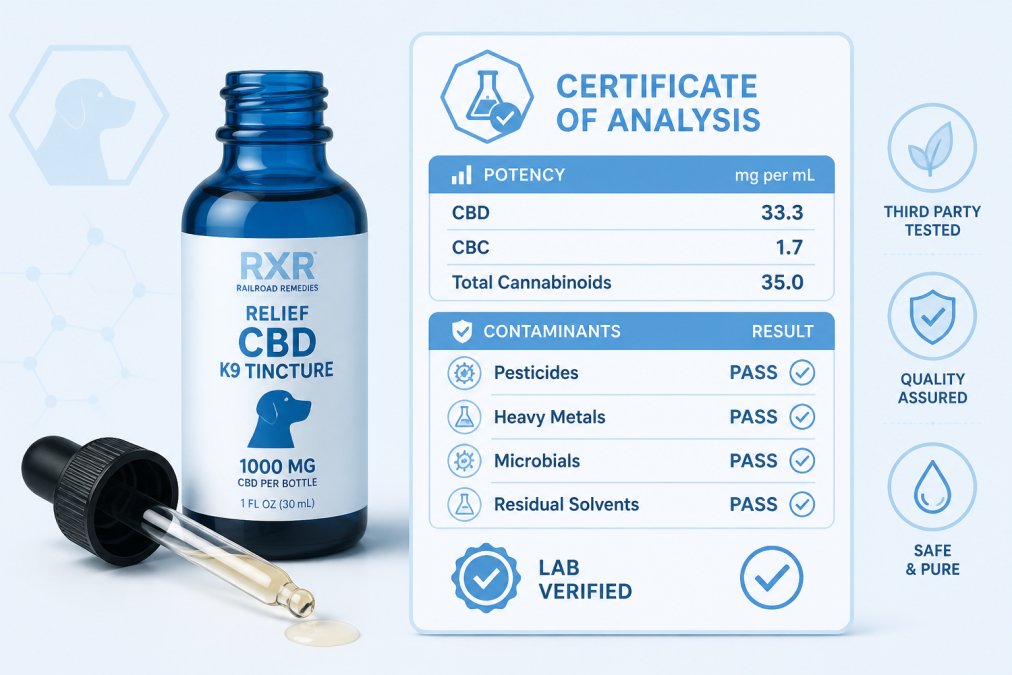
Look for products that specify the total CBD content per dose, not just per bottle. Third-party testing should verify absence of heavy metals, pesticides, microbial contaminants, and mold. Hemp-derived CBD is legal under federal law (the 2018 Farm Bill), but sourcing matters. Products derived from organically-grown hemp in regulated facilities are safer than those from unknown sources.
Full-spectrum products offer potential advantages through the entourage effect, but contain trace amounts of THC, which some owners avoid. Broad-spectrum products remove THC while retaining other cannabinoids, offering a middle ground. Isolate products contain only CBD, making dosing more straightforward but potentially reducing therapeutic effectiveness.
Palatability matters for senior dogs. Many struggle with taste and smell, so flavored tinctures using bacon or peanut butter are more likely to be consumed fully. Quality CBD for dogs typically reflects the care taken in production and third-party verification. Railroad Remedies (RXR) offers Relief CBD K9 Tinctures for $25.00, available in bacon or peanut butter flavors, which are excellent for arthritis pain, hip and joint pain, anxiety, seizures, skin conditions, and rashes. You can continue shopping for these at rxrremedies.com.

Consulting Your Veterinarian Before Starting CBD
Your veterinarian should be your first stop before introducing CBD to your senior dog. They have access to your dog's complete medical history, current medications, and baseline health status. A knowledgeable vet can identify potential drug interactions, assess whether your dog's liver and kidney function can handle CBD metabolism, and recommend appropriate dosing.
Not all veterinarians are equally informed about CBD. Some embrace it as a complementary therapy; others remain skeptical due to limited clinical evidence. Finding a veterinarian open to discussing CBD and willing to monitor your dog's response is valuable. Many holistic or integrative veterinary practices have more experience with CBD than conventional practices.
Prepare for your veterinary consultation by documenting your dog's current symptoms, medications, and health concerns. Ask your vet about baseline testing before starting CBD and discuss dosing recommendations, potential interactions, and a monitoring plan. Schedule follow-up appointments 4-6 weeks after starting CBD to assess your dog's response and consider repeat organ function testing.
Be transparent with your veterinarian about any adverse effects you observe. Your vet may adjust dosing, recommend a different product, or determine that CBD isn't appropriate for your dog's situation. This collaborative approach prioritizes your senior dog's safety and wellbeing.
Choosing to explore CBD for your senior dog reflects your commitment to their comfort and quality of life. The decision requires careful consideration of safety, quality, and individual health factors. Work closely with your veterinarian to establish baseline health metrics, choose a high-quality product with third-party testing, start with conservative dosing, and monitor your dog's response carefully. Senior dogs deserve thoughtful, evidence-based approaches to pain management and wellness, and when done right, CBD can be a valuable part of that strategy. If you're exploring natural relief options for yourself as well, Railroad Remedies (RXR) offers premium CBD and CBD/CBC pain relief lotions with organic ingredients like coconut oil and shea butter, designed for deep absorption and skin nourishment without greasiness. Continue shopping
Frequently Asked Questions
Should I give my senior dog CBD?
CBD may benefit senior dogs with joint pain, anxiety, or cognitive dysfunction, but only after veterinary consultation. Your vet can assess your dog's health history, current medications, and liver/kidney function to determine if CBD is appropriate. Senior dogs metabolize compounds differently than younger dogs, so professional guidance is essential before starting any CBD regimen.
What is the best CBD dosage for senior dogs by weight?
Most veterinarians recommend starting with 0.25 mg per pound of body weight twice daily, then adjusting based on response. For example, a 50-pound dog would begin at approximately 12.5 mg twice daily. Senior dogs often require lower doses than younger dogs due to slower hepatic metabolism. Always start low and increase gradually under veterinary supervision, monitoring for adverse reactions or changes in behavior.
Is CBD hard on a dog's liver and kidneys?
CBD is metabolized by the liver's cytochrome P450 enzyme system, which can be slower in senior dogs. While CBD itself is not inherently toxic to liver or kidney tissue, it can interact with medications and elevate liver enzymes in some cases. Senior dogs with pre-existing liver or kidney disease require baseline bloodwork and periodic monitoring. Discuss hepatic and renal function testing with your veterinarian before starting CBD.
What should I look for in quality CBD products for dogs?
Choose products with third-party lab testing and a certificate of analysis (CoA) verifying cannabinoid content and absence of contaminants. Look for full-spectrum or broad-spectrum hemp-derived CBD from reputable manufacturers. Avoid products with artificial additives, high sugar, or unclear sourcing. Verify the product is formulated specifically for pets, human topicals and tinctures may contain ingredients unsafe for dogs. Railroad Remedies offers Relief CBD K9 Tinctures in bacon and peanut butter flavors, specifically designed for senior dogs with arthritis and joint pain.
This article was written using GrandRanker
