

Is CBD Pain Cream Worth It for Athletes
Table of Contents
- What Athletes Need to Know About CBD Pain Cream
- How CBD Works for Inflammation and Muscle Recovery
- CBD vs. Ibuprofen for Athletes: Which Delivers Better Results
- How to Use CBD Cream for Muscle Soreness and Recovery
- What the Science Actually Shows About CBD Topicals
- Choosing a Quality CBD Pain Cream: What to Look For
- Is CBD Pain Cream Worth the Investment for Your Training
- Frequently Asked Questions
Last Updated: August 30, 2026
What Athletes Need to Know About CBD Pain Cream
Is CBD pain cream worth it for athletes? It depends on your injury type, recovery timeline, and willingness to test a product showing promise but lacking the clinical depth of traditional options. For many active individuals, CBD pain cream has become a legitimate alternative to NSAIDs and ice therapy alone.
At Railroad Remedies (RXR), we provide premium CBD and CBD/CBC pain relief lotions. The CBD market is flooded with overhyped products and weak formulations. This guide cuts through that noise and shows you exactly what CBD topicals can and cannot do for athletic recovery.

The real question is whether a topical application delivers enough cannabidiol to your muscles and joints to make a practical difference in training. Application technique, product potency, and realistic expectations matter enormously.
How CBD Works for Inflammation and Muscle Recovery
CBD interacts with your body's endocannabinoid system, a network of receptors that helps regulate pain signaling, immune response, and inflammation. When applied topically, CBD penetrates the skin and reaches localized tissue, muscles, and joints where inflammation concentrates after intense exercise.
CBD binds to CB1 and CB2 receptors in your nervous system and immune cells, potentially reducing the inflammatory cascade following muscle damage (peer-reviewed research). Delayed-onset muscle soreness (DOMS) occurs when exercise creates micro-tears in muscle fibers, triggering inflammation as part of the repair process. A topical CBD cream applied directly to sore areas may help modulate that inflammatory response without systemic side effects.
Inflammation isn't always bad, it's part of how your muscles adapt and grow stronger. But excessive inflammation can prolong soreness, limit range of motion, and delay your return to training. Managing inflammation aggressively in the first 24-48 hours after hard workouts helps many athletes train more frequently without compromising recovery quality.
Topical CBD differs from oral forms in bioavailability. When you ingest CBD, your digestive system and liver process it, reducing the amount reaching your bloodstream. Topical application bypasses that process, delivering CBD directly to tissue beneath your skin. However, transdermal absorption depends heavily on formulation, carrier oils, emulsifiers, and CBD molecule size all affect penetration depth.
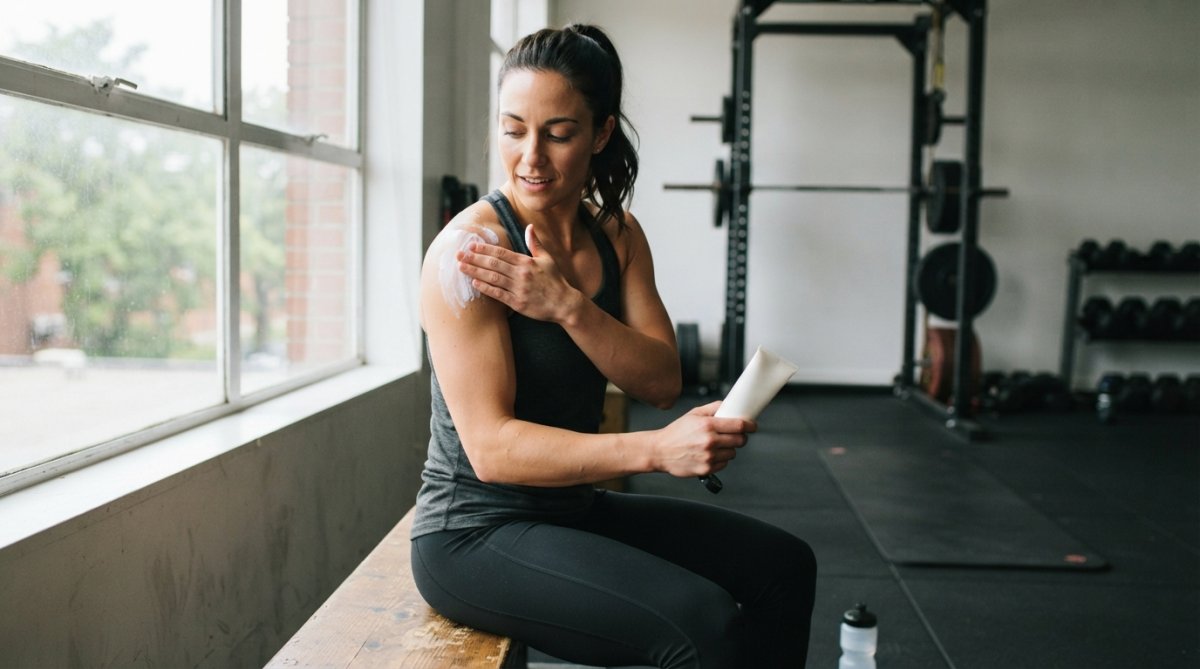
A poorly formulated CBD cream might sit on your skin without absorbing meaningfully. A well-formulated topical with organic coconut oil and shea butter, like Railroad Remedies (RXR)'s CBD Relief Lotion 500mg, absorbs quickly and reaches the tissue where inflammation concentrates. The difference between a product that works and one that doesn't often comes down to formulation, not just CBD content.
CBD vs. Ibuprofen for Athletes: Which Delivers Better Results
Ibuprofen works fast and reliably. It's a nonsteroidal anti-inflammatory drug (NSAID) that blocks prostaglandin production, shutting down inflammation within 30-60 minutes of ingestion (peer-reviewed research). But long-term NSAID use carries real risks: stomach lining damage, increased cardiovascular risk, and impaired kidney function (the FDA).
CBD topicals don't carry those systemic risks. When applied to skin, CBD doesn't enter your bloodstream in significant quantities, so you're not exposing your stomach, kidneys, or heart to the compound. The safety profile of topical CBD is well-tolerated, with minimal adverse effects reported in the available literature.
The trade-off is speed and consistency. Ibuprofen delivers predictable, measurable pain relief. CBD topicals work more gradually and inconsistently, partly because absorption varies based on skin type, formulation quality, and application technique.
For acute injuries like a sprained ankle or pulled muscle, ibuprofen is the more reliable first choice. For chronic soreness, training-related inflammation, and long-term pain management, CBD cream offers a lower-risk alternative that avoids the stomach damage and cardiovascular concerns of sustained NSAID use. Many athletes use both: ibuprofen for acute flare-ups, CBD cream for ongoing recovery and maintenance.
How to Use CBD Cream for Muscle Soreness and Recovery
Application technique determines whether CBD cream reaches your sore tissue or just sits on your skin. Most athletes apply CBD cream once and expect immediate relief, then abandon it when they feel nothing within 15 minutes. That's the wrong expectation.
Start by applying the cream to clean, dry skin. Massage the cream into the affected area using firm, circular motions for 2-3 minutes. This friction increases blood flow and helps the cream penetrate deeper.
Apply CBD cream 2-3 times daily for 7-10 days before evaluating whether it's working. You're looking for a gradual reduction in soreness, improved range of motion, and less stiffness when you wake up.
For muscle soreness after training, apply CBD cream within 2-4 hours of finishing your workout, when inflammation is beginning to build. For joint pain or chronic soreness, apply twice daily consistently. Morning application helps with stiffness; evening application supports overnight recovery. If you're using Railroad Remedies (RXR)'s 2000mg CBD/CBC blend, the added Cannabichromene (CBC) enhances the anti-inflammatory effect.

Use a quarter-sized amount massaged thoroughly into a 4x4 inch area. Excess cream just sits on your skin without adding benefit.
What the Science Actually Shows About CBD Topicals
The clinical evidence for topical CBD is limited compared to oral CBD or pharmaceutical pain relievers. Most research on CBD has focused on oral ingestion, not topical application. The studies that do exist on topical CBD are often small and measure surrogate markers of inflammation rather than actual pain relief.
That doesn't mean CBD topicals don't work. It means the evidence is anecdotal and observational rather than rigorously clinical. Many athletes report genuine pain reduction and faster recovery using CBD cream. The endocannabinoid system is well-documented, and CBD's interaction with CB1 and CB2 receptors is understood at the molecular level. What's missing is large-scale, placebo-controlled trials specifically measuring pain reduction in athletes using topical CBD over 4-8 week training cycles.
This gap between theoretical potential and clinical proof is important. You're making a decision based partly on mechanism and partly on anecdotal evidence, not on ironclad clinical data. That's not unusual in sports recovery, many athletes use ice baths, compression garments, and massage techniques that lack strong clinical backing but have become standard practice.
The best available evidence suggests that CBD topicals are well-tolerated and unlikely to cause harm. They appear to reduce inflammation in animal models and in vitro studies. Athlete testimonials consistently report pain reduction and improved recovery.
Choosing a Quality CBD Pain Cream: What to Look For
The CBD market is largely unregulated. A product labeled "500mg CBD" might contain 500mg, 250mg, or virtually nothing. Third-party testing is non-negotiable. A legitimate CBD cream manufacturer sends samples to an independent lab for analysis. That lab tests for actual CBD content, checks for contaminants like heavy metals and pesticides, and verifies that the product contains no more than 0.3% THC. The manufacturer then publishes the results as a Certificate of Analysis (COA).
Before buying any CBD cream, ask for the COA. Reputable brands like Railroad Remedies (RXR) provide these publicly. If a company won't share third-party testing results, that's a red flag.
Look for full-spectrum CBD products when possible. Full-spectrum contains not just CBD but also other cannabinoids, terpenes, and plant compounds from the hemp plant. These compounds work synergistically, a phenomenon called the "entourage effect," and often deliver better results than isolated CBD alone. Railroad Remedies (RXR)'s 2000mg CBD/CBC blend includes Cannabichromene (CBC), a lesser-known cannabinoid with its own anti-inflammatory properties that complement CBD's effects.
Formulation quality matters as much as CBD content. Organic coconut oil and shea butter are excellent carriers that nourish skin while delivering CBD. They're non-greasy and absorb quickly. Cheap CBD creams often use mineral oil or petroleum-based carriers that sit on your skin without absorbing meaningfully.
Check the ingredient list for additives. Avoid products with synthetic fragrances, parabens, or unnecessary chemicals. A quality CBD cream should have a short, recognizable ingredient list.
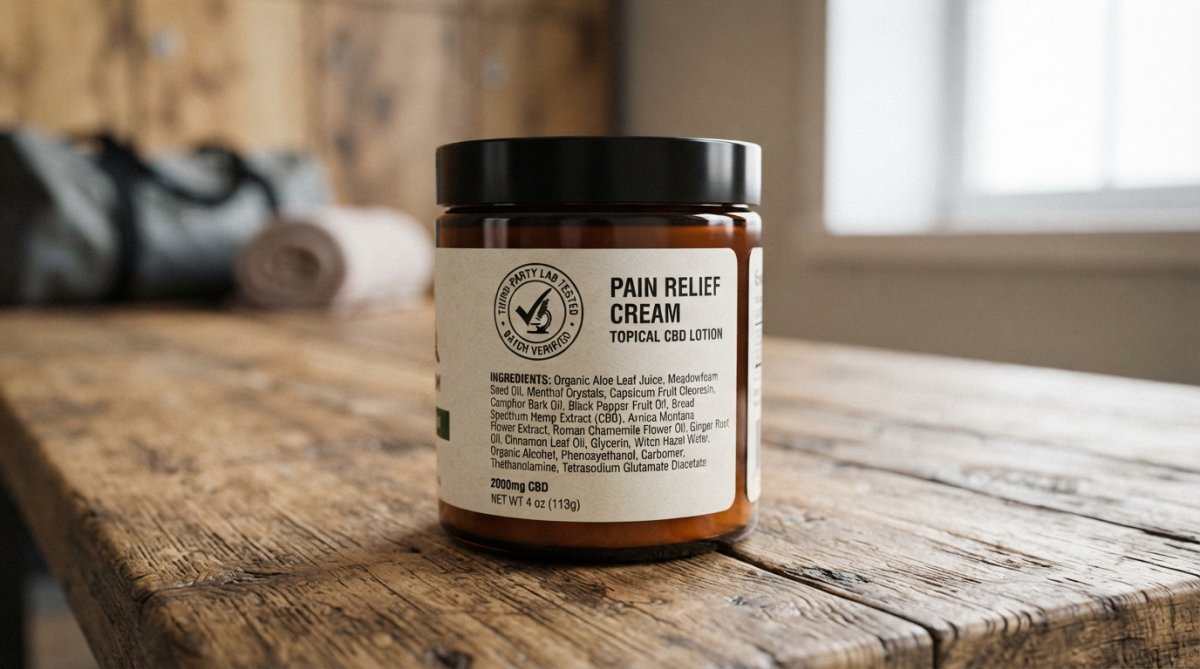
Price is a legitimate quality indicator. Quality CBD cream costs more because extraction, testing, and formulation all cost money. Railroad Remedies (RXR)'s CBD Relief Lotion 500mg ($39.99) and the 2000mg CBD/CBC blend ($69.99) are priced in the range you'd expect for verified, well-formulated products. If you find CBD cream for $15, it's likely underpotent or poorly formulated.
Is CBD Pain Cream Worth the Investment for Your Training
Whether CBD cream is worth the cost depends on your specific situation. For athletes training hard multiple times per week, managing chronic soreness without NSAIDs, or recovering from injuries where inflammation is the limiting factor, the investment often pays off. You're buying the ability to train more consistently without the long-term health costs of sustained ibuprofen use.
For casual athletes or weekend warriors dealing with occasional soreness, a quality CBD cream is a reasonable addition to your recovery toolkit, but not essential.
A quality CBD cream costs $40-70 per bottle and typically lasts 3-4 weeks with regular use. That's roughly $10-18 per week. Compare that to the cost of regular ibuprofen plus the long-term health risks, or the cost of professional massage and physical therapy. For many athletes, CBD cream is a cost-effective recovery tool.
Individual response to CBD varies. Some athletes feel significant relief within days. Others see gradual improvement over weeks. A few don't notice much difference. The only way to find out is to commit to consistent use for 7-10 days and pay attention to how your soreness and recovery actually change.
The key is choosing a product you can verify through third-party testing, transparent ingredients, and reasonable pricing, then committing to proper application for at least a week before deciding whether it works for your recovery. CBD cream isn't a miracle product, but for athletes looking to manage inflammation without the risks of chronic NSAID use, it's a legitimate investment in sustainable training and long-term health.
Managing athletic recovery without relying on NSAIDs requires finding topical solutions that actually work. Railroad Remedies (RXR) offers premium CBD and CBD/CBC pain relief lotions formulated specifically for athletes and active individuals. Our non-greasy formulations with organic coconut oil and shea butter absorb quickly while delivering verified CBD potency. The 2000mg CBD/CBC blend provides enhanced anti-inflammatory support for serious training demands. Get started with Railroad Remedies (RXR) and recover smarter without compromising your long-term health.
Frequently Asked Questions
Does CBD pain cream really work for muscle soreness after training?
CBD topicals interact with cannabinoid receptors in the skin and underlying tissues, potentially reducing localized inflammation and discomfort. Athletes report faster recovery when applying CBD cream for muscle soreness within hours after workouts, though individual results vary. The transdermal absorption depends on product quality, potency, and application technique. Clinical evidence is still emerging, but many active individuals find it effective for delayed onset muscle soreness (DOMS) when combined with proper recovery practices.
Is CBD pain cream safe for professional athletes competing in drug-tested sports?
Most full-spectrum CBD products contain only trace amounts of THC (below 0.3%), which typically won't trigger positive drug tests. However, professional athletes should verify third-party testing results before use, as some products may contain higher THC levels. Many sports organizations now permit CBD use, though policies vary by sport and governing body. Always check your specific league or competition rules before incorporating any CBD product into your training regimen.
How does CBD cream compare to ibuprofen for athletes managing pain?
CBD and ibuprofen work differently: ibuprofen reduces inflammation systemically throughout your body, while CBD cream targets localized areas where you apply it. Ibuprofen works faster for acute pain but carries gastrointestinal risks with long-term use. CBD topicals avoid those systemic side effects and may be better for chronic joint pain or nerve discomfort. Some athletes use both strategically, ibuprofen for immediate relief and CBD cream for ongoing recovery support, though you should consult a healthcare provider before combining treatments.
What makes a CBD pain cream worth the higher price?
Premium CBD creams like Railroad Remedies' 2000mg CBD/CBC blend justify higher costs through potency, ingredient quality, and bioavailability. The CBC (Cannabichromene) addition enhances anti-inflammatory and analgesic properties beyond standard CBD alone. Third-party testing, organic ingredient sourcing, and non-greasy formulations that absorb quickly also add value. A 500mg cream at $39.99 suits mild soreness, while the 2000mg blend at $69.99 targets serious joint pain and chronic inflammation, making it cost-effective when it reduces your need for other pain management methods.
This article was written using GrandRanker
