

Is CBD Cream Safe for Dogs: A Pet Owner's Guide
Table of Contents
- What Is CBD and How Does It Work in Dogs
- Is CBD Cream Safe for Dogs: The Safety Profile
- How to Apply CBD Balm to Dog Paws and Affected Areas
- Human CBD vs Pet CBD Products: Key Differences
- Signs of CBD Overdose in Dogs: What to Watch For
- Choosing a Quality CBD Product for Your Dog
- When to Consult Your Veterinarian
- Conclusion
Last Updated: August 10, 2026
What Is CBD and How Does It Work in Dogs
Cannabidiol (CBD) is a naturally occurring compound from hemp plants that interacts with a dog's endocannabinoid system, regulating pain, inflammation, mood, and immune function. Unlike THC, CBD does not produce a "high" in dogs or humans.
When applied topically, CBD cream must penetrate the skin barrier to reach underlying tissues. Absorption depends on formulation quality, active ingredient concentration, and skin condition. Railroad Remedies (RXR) formulates their CBD products with organic coconut oil, shea butter, and kukui nut oil for enhanced transdermal absorption and skin conditioning. For dogs with arthritis, sensitive skin, or joint discomfort, understanding how CBD interacts with their system helps you make informed decisions about topical application.
Is CBD Cream Safe for Dogs: The Safety Profile
CBD cream is generally safe for topical use on dogs when sourced from reputable manufacturers. Topical application bypasses the digestive system, reducing gastrointestinal side effects that can occur with oral CBD products.
The critical distinction is that not all CBD products are created equal. Many human CBD creams contain ingredients safe for human skin but inappropriate for dogs. Since dogs groom themselves by licking their paws and skin, any topical product could be ingested. This is where pet-specific formulations become essential.
Research on CBD in dogs remains limited, but veterinary professionals increasingly recognize that well-formulated, third-party tested CBD products appear well-tolerated by most dogs. Many veterinarians now recommend CBD for chronic arthritis pain, hip and joint issues, anxiety, and skin conditions, provided the product meets quality standards.
Potential Side Effects and Adverse Reactions
While serious adverse effects are rare, some dogs experience mild side effects from CBD, including sedation, mild ataxia (wobbly gait), and appetite changes. These effects are typically dose-dependent and resolve when dosing is reduced or discontinued.
Liver enzyme elevation has been observed in some dogs receiving oral CBD at high doses over extended periods. This is why veterinary consultation matters, your vet can monitor liver function if your dog is on long-term CBD therapy, particularly if taking other medications metabolized by the liver. Topical CBD carries lower liver risk since skin absorption is more limited than oral ingestion, but the concern isn't irrelevant for dogs that lick the cream off their paws.
Skin irritation is possible, though uncommon, especially with sensitive skin or ingredient allergies. Always do a small patch test before applying a new CBD cream to larger areas. Watch for redness, excessive scratching, or swelling at the application site.
Liver Function and Long-Term Safety
Liver enzyme elevation concerns stem primarily from studies of oral CBD at high doses, not topical application. However, if your dog licks the CBD cream off their paws, they're essentially ingesting it. Dogs with pre-existing liver disease, those taking medications metabolized by the liver, or senior dogs should have baseline liver function tests before starting any CBD regimen.
Most dogs tolerate well-formulated CBD products without issue over months or years of use. The key is choosing products from manufacturers who conduct third-party testing for potency, purity, and contaminants. A certificate of analysis (CoA) from an independent laboratory provides evidence that the product contains what it claims and is free from heavy metals, pesticide residue, and microbial contaminants.
How to Apply CBD Balm to Dog Paws and Affected Areas
Proper application technique ensures maximum absorption and minimizes the risk of your dog ingesting excess product through grooming. CBD cream works best when applied to clean, dry skin and gently massaged into the affected area.
Step-by-Step Application Instructions
Step 1: Prepare the area (Time: 2 minutes) Gently clean the affected paw or area with warm water and pat dry completely. Moisture can dilute the CBD cream and reduce absorption.
Step 2: Dispense the appropriate amount (Time: 1 minute) Start with a small amount, roughly the size of a pea for a single paw, or a dime-sized amount for larger areas like joints or hips. Check the product's dosage guidelines, as concentration varies by brand.
Step 3: Apply and massage gently (Time: 3-5 minutes) Warm the cream slightly between your fingers, then apply directly to the affected area. Use gentle, circular massage motions to work the cream into the skin. For paws, pay special attention to the pad and spaces between the toes. Massage for at least 2-3 minutes to allow absorption.
Step 4: Prevent immediate licking (Time: varies) After application, keep your dog occupied for at least 15-20 minutes to allow the cream to absorb before they lick the area. A short walk, playtime, or a chew toy works well.
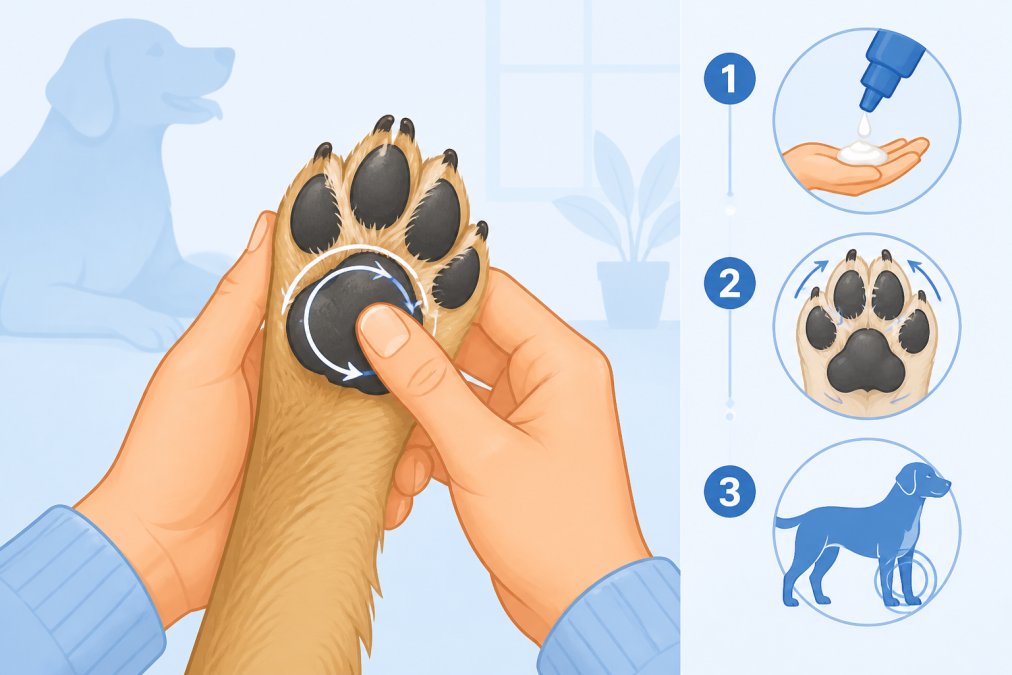
Expected Result: After 15-20 minutes, your dog can safely lick the area without concern. Most active ingredients will have absorbed into the skin by this point. Apply CBD cream consistently, typically once or twice daily, to see cumulative benefits, particularly for chronic conditions like arthritis.
Preventing Ingestion and Licking Safety
The biggest challenge with topical CBD for dogs is preventing them from licking it off immediately. Apply the cream when your dog is calm and you can supervise them. Avoid applying it right before bed or when your dog is unsupervised. Immediately after application, engage your dog with a favorite toy, a walk, or a training session. Consider applying the cream to areas less accessible to licking, such as the shoulder or upper leg.
For persistent groomers, apply the cream in the evening after your dog's last walk, when they're naturally winding down and less likely to engage in active grooming.
Human CBD vs Pet CBD Products: Key Differences
Human CBD creams are formulated for human skin, which has different pH, barrier function, and thickness than dog skin. Many human formulations contain essential oils, fragrances, menthol, or other active ingredients potentially problematic if ingested by a dog through grooming.
Pet-specific CBD products are formulated with the assumption that dogs will lick the application site. This changes ingredient selection entirely. A quality pet CBD cream uses ingredients safe if ingested in small amounts and avoids anything toxic to dogs. The CBD concentration is typically lower in pet products than human products, reflecting the smaller size and different pharmacokinetics of dogs.
Railroad Remedies (RXR) produces CBD lotions designed for human use. If considering using an RXR product on your dog, consult your veterinarian first. The formulation uses organic, food-grade ingredients like coconut oil and shea butter, generally safe for dogs, but wasn't specifically formulated with canine grooming behavior in mind.
For dogs, products specifically labeled as pet CBD, such as Railroad Remedies' Relief CBD K9 Tinctures ($25.00 for 30ml in bacon or peanut butter flavor), are formulated with your dog's safety as the primary design principle.

Signs of CBD Overdose in Dogs: What to Watch For
True CBD overdose in dogs is rare, but recognizing signs of excessive dosing helps you adjust quickly. Most overdose symptoms are mild and resolve within a few hours to a day.
The most common signs include excessive sedation, ataxia (wobbly gait or difficulty walking), and dry mouth. Some dogs experience mild gastrointestinal upset, including decreased appetite or loose stools. These symptoms typically appear within 30 minutes to 2 hours of ingestion and are dose-dependent.
Severe overdose is extremely rare with topical CBD cream because the amount absorbed through the skin is limited. Risk increases if your dog ingests a large quantity of the cream itself. In this case, contact your veterinarian or an animal poison control center immediately.
If your dog shows signs of overdose, stop the CBD product immediately and contact your veterinarian. There's no antidote for CBD overdose, so treatment is supportive. Most dogs recover fully within 24 hours without intervention.
Choosing a Quality CBD Product for Your Dog
Quality is the single most important factor in CBD safety for dogs. A poorly manufactured product may contain contaminants, inaccurate CBD concentration, or unsafe ingredients. A high-quality product provides transparency, third-party verification, and ingredients that prioritize your dog's health.
Third-Party Testing and Certificate of Analysis
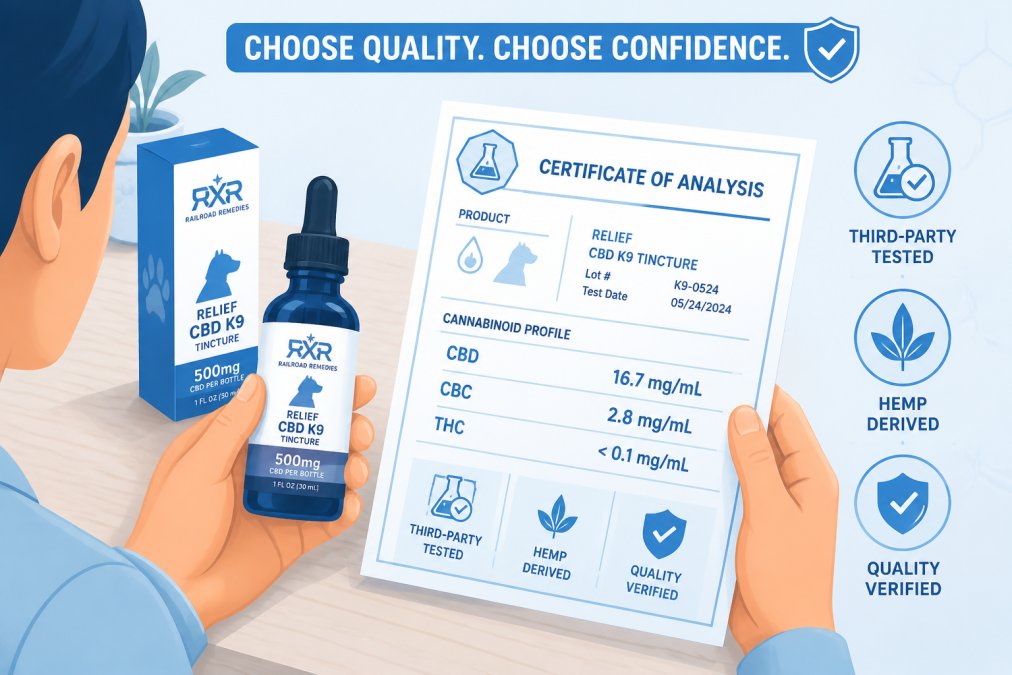
The gold standard for CBD product quality is third-party laboratory testing. An independent lab tests the product and provides a certificate of analysis (CoA), verifying the actual CBD concentration matches the label claim, the product is free from heavy metals and pesticide residue, and the product is free from harmful microbial contaminants.
When evaluating a CBD product for your dog, ask the manufacturer for their CoA. Reputable brands make this document readily available on their website or provide it upon request. The CoA should include:
- Potency verification: Confirmation that the product contains the claimed amount of CBD (industry standard allows ±10%)
- Contaminant screening: Results showing the product is free from heavy metals, pesticide residue, and microbial contaminants
- Full-spectrum, broad-spectrum, or isolate designation: Clarification of what type of CBD extract the product contains
For dogs, broad-spectrum or isolate is often preferred to eliminate any THC exposure, though trace amounts in full-spectrum products are unlikely to cause problems.
Ingredient Sourcing and Transparency
A quality CBD product should disclose ingredient sourcing clearly. Hemp grown in the United States is subject to USDA oversight and state regulations. A transparent manufacturer will tell you their hemp source and extraction method (CO2 extraction is considered safer than solvent-based extraction).
For topical products, carrier oils matter significantly. Coconut oil, shea butter, and plant-based oils are safe and beneficial for dogs. Avoid products with mineral oil, petroleum-derived ingredients, or essential oils that could be problematic if ingested through grooming. Read the full ingredient list carefully.
A quality CBD brand provides clear dosing guidance and acknowledges that individual dogs respond differently to CBD. They don't promise miraculous results or claim to treat specific diseases. Instead, they explain how CBD may support wellness and encourage you to work with your veterinarian.
When to Consult Your Veterinarian
Your veterinarian should be your first conversation before starting any CBD regimen for your dog. Your vet knows your dog's medical history, current medications, and health status, information critical for making the right decision.
Consult your veterinarian if your dog has pre-existing liver disease, kidney disease, or is taking medications that interact with CBD. Certain medications, particularly those metabolized by the liver, may interact with CBD. Also consult if your dog shows any unexpected reactions to CBD, including persistent sedation, loss of appetite, or behavioral changes.
Your veterinarian can help you establish realistic expectations. CBD is not a cure for arthritis or other chronic conditions; it's a supportive therapy that may help manage pain and inflammation alongside other treatments like exercise, weight management, and prescribed medications.
Choosing the right CBD product for your dog requires balancing safety, quality, and effectiveness. The decision to use CBD cream should be made in consultation with your veterinarian, who understands your dog's individual health needs. Railroad Remedies (RXR) offers premium, organic-based topical solutions designed with quality and absorption in mind, and their Relief CBD K9 Tinctures provide a pet-specific alternative formulated directly for canine wellness. Start with a small dose, monitor your dog's response carefully, and adjust based on what you observe. With the right product and proper application, CBD cream can be a safe and effective addition to your dog's pain management and wellness routine.
Frequently Asked Questions
Is CBD cream safe for dogs to lick?
CBD cream applied topically is generally safe if ingested in small amounts, but licking can lead to excessive consumption. To minimize risk, apply the cream to areas your dog cannot easily reach, like between shoulder blades or on paws after a brief containment period. Watch for signs of overdose such as sedation, ataxia, or vomiting. If your dog ingests a large amount, contact your veterinarian immediately. Always use products specifically formulated for pets, as human CBD creams may contain ingredients unsuitable for canine ingestion.
Can I use human CBD cream on my dog?
Human CBD and pet CBD products differ significantly in formulation and concentration. Human CBD creams often contain ingredients like essential oils, menthol, or other compounds that may irritate a dog's skin or cause toxicity if ingested through licking. Pet-specific CBD products are formulated with canine safety in mind, using food-grade ingredients and appropriate dosages. Additionally, human products lack the veterinary guidance for safe animal use. Always choose a product labeled specifically for dogs to ensure proper safety and efficacy for your pet.
What are the signs of CBD overdose in dogs?
Signs of CBD overdose in dogs include sedation, lethargy, ataxia (loss of coordination), vomiting, diarrhea, and in severe cases, liver enzyme elevation. Dogs may appear unusually drowsy, have difficulty walking, or show loss of appetite. Some dogs experience dry mouth or increased thirst. If you notice these symptoms after applying CBD cream or suspect your dog has ingested too much, contact your veterinarian or emergency animal clinic immediately. Most cases resolve with supportive care, but prompt veterinary attention is essential to rule out other health issues.
How do I know if a CBD product is safe for my dog?
Look for products with third-party laboratory testing and a certificate of analysis (COA) that verifies cannabidiol content, absence of heavy metals, and freedom from pesticide residue. Choose products made with food-grade, organic ingredients like coconut oil or shea butter. Verify the manufacturer's transparency about ingredient sourcing and manufacturing practices. Check that the product is specifically formulated for dogs and includes clear dosage guidelines based on weight. Consult your veterinarian before use, especially if your dog is on other medications, as CBD can interact with certain pharmaceuticals affecting liver enzymes.
This article was written using GrandRanker
