

How to Choose the Best CBD Topical: A 2026 Guide
Table of Contents
- Why the Best CBD Topical Starts With the Right Type
- How to Read a CBD Certificate of Analysis
- CBD for Inflammation: What Potency and Cannabinoids Matter
- A CBD Topical Dosage Guide for Different Pain Types
- Ingredient Transparency: What to Look For and Avoid
- How to Pick the Best CBD Topical for Your Skin and Lifestyle
- Conclusion
- Frequently Asked Questions
Last Updated: September 9, 2026
Why the Best CBD Topical Starts With the Right Type
Choosing the best CBD topical begins with a single decision: which hemp extract formula fits your needs. A CBD topical is a lotion, cream, or balm infused with hemp-derived cannabinoids that you apply directly to the skin for localized relief. Before comparing potencies or brands, you need to understand the three main extract types, because this choice determines how much of the hemp plant you actually get on your skin.
At Railroad Remedies (RXR), we formulate pain relief lotions. The distinction between extract types matters more than any other factor on the jar.
Full-Spectrum vs. Broad-Spectrum vs. Isolate
Full-spectrum extract retains every cannabinoid, terpene, and compound naturally found in the hemp plant, including trace amounts of THC within the federally legal limit of 0.3%. Broad-spectrum keeps the same beneficial profile but removes THC entirely. Isolate is pure cannabidiol with nothing else.
For most people managing joint discomfort or muscle soreness, full-spectrum or broad-spectrum formulas perform better because of the entourage effect, where cannabinoids and terpenes work together to enhance anti-inflammatory and analgesic benefits. Isolate suits those who want only CBD with zero risk of THC detection, though it often requires higher concentrations to match the relief of a full-spectrum product.
A common mistake is assuming "strongest" means "highest milligrams." In practice, the extract type determines how effectively your skin absorbs and uses those milligrams.
How to Read a CBD Certificate of Analysis
A certificate of analysis (COA) is a third-party lab report that verifies what is actually inside the product you are buying. Every reputable brand should provide one, and learning to read a CBD certificate of analysis is the single most reliable way to separate genuine products from marketing claims.
The COA confirms three critical things: cannabinoid potency, purity from contaminants, and THC content. When you request one, check that the batch number on the report matches the batch number on your product label. A mismatched or missing COA is a red flag that the brand skipped third-party testing.
Look specifically for the sections covering heavy metals, pesticides, and residual solvents. These contaminants can accumulate in hemp during cultivation, and a clean COA shows the manufacturer tested for them rather than assuming they are absent.
CBD for Inflammation: What Potency and Cannabinoids Matter
CBD for inflammation works by interacting with the endocannabinoid system found throughout your skin and underlying tissues. Cannabinoids bind to CB2 receptors on immune cells, which helps regulate your body's inflammatory response (peer-reviewed research). This is why topical application can reduce localized swelling and discomfort without the systemic side effects associated with oral CBD.
However, the skin is a formidable barrier. Its outermost layer, the stratum corneum, is designed to keep things out. For a topical to work, the CBD must penetrate this layer to reach the deeper dermis where pain receptors and inflammatory markers reside. This is where the science of formulation becomes critical.
The Carrier Oil Advantage
CBD is fat-soluble, meaning it needs a lipid-rich base to pass through the skin's lipid matrix. But not all oils are equal. Standard carrier oils like coconut or jojoba provide basic moisture. High-performance formulas often use penetration enhancers that temporarily disrupt the skin's lipid structure to shuttle cannabinoids deeper.
Look for ingredients like:
- Menthol or camphor: These create a cooling sensation that distracts from pain signals while also acting as vasodilators, increasing blood flow to the area and potentially enhancing absorption.
- DMSO (Dimethyl Sulfoxide): A powerful penetration enhancer used in clinical settings. While effective, it can cause skin irritation in some people, so it's not for everyone.
- Liposomal delivery systems: These encapsulate CBD in tiny lipid spheres that fuse with cell membranes, improving bioavailability.
Potency is Relative to Delivery
The milligram count alone is a poor indicator of efficacy. Instead, consider the ratio of CBD to the total volume of the product (e.g., mg per ounce) and the quality of the delivery system.
For chronic joint inflammation, a higher concentration like 2000mg is often necessary. For acute muscle soreness, a 500mg formula might provide faster relief due to the counterirritant effect, even if the total CBD is lower.

The Role of Minor Cannabinoids
While CBD is the star, it is not the only player. Cannabichromene (CBC) has shown promise in animal models for its anti-inflammatory properties, working synergistically with CBD to reduce pain signaling (PubMed). Similarly, CBG (Cannabigerol) is being studied for its potential to inhibit inflammation in conditions like inflammatory bowel disease, though its topical application is less researched.
For those with sensitive skin, be cautious with penetration enhancers like menthol or DMSO. Start with a small area to test tolerance. The goal is effective relief, not skin irritation.
A CBD Topical Dosage Guide for Different Pain Types
A CBD topical dosage guide must start with a practical truth: topical dosing is not one-size-fits-all. Unlike edibles or tinctures, topicals deliver relief locally, so the right amount depends on the size of the area and the severity of your pain.
Start with a small amount, roughly the size of a dime, and massage it into the affected area until absorbed. For mild muscle soreness after exercise, one application of a 500mg lotion often suffices. For chronic joint pain or nerve discomfort in the hands and feet, you may need a higher-potency product and more frequent application, two to three times daily.
Here is a practical reference for matching product strength to pain type:
| Pain Type | Recommended Potency | Application Frequency | Expected Onset |
|---|---|---|---|
| Mild muscle soreness | 500mg | Once daily | 15-30 minutes |
| Moderate joint stiffness | 500-1000mg | 1-2 times daily | 10-20 minutes |
| Chronic arthritis pain | 2000mg+ | 2-3 times daily | 5-15 minutes |
| Nerve pain in extremities | 2000mg+ | 2-3 times daily | 10-20 minutes |
A common mistake is expecting immediate results. Topical CBD absorbs through the skin barrier gradually, so give each application 30 minutes before judging its effectiveness. Consistency matters more than quantity, and most users find daily application outperforms occasional heavy use.
Ingredient Transparency: What to Look For and Avoid
The best CBD topical is only as good as its carrier ingredients. Cannabinoids need a lipid-rich base to penetrate the skin barrier, which is why carrier oils like coconut oil, shea butter, and jojoba oil appear in quality formulations. These ingredients also determine whether the product feels greasy or absorbs cleanly.
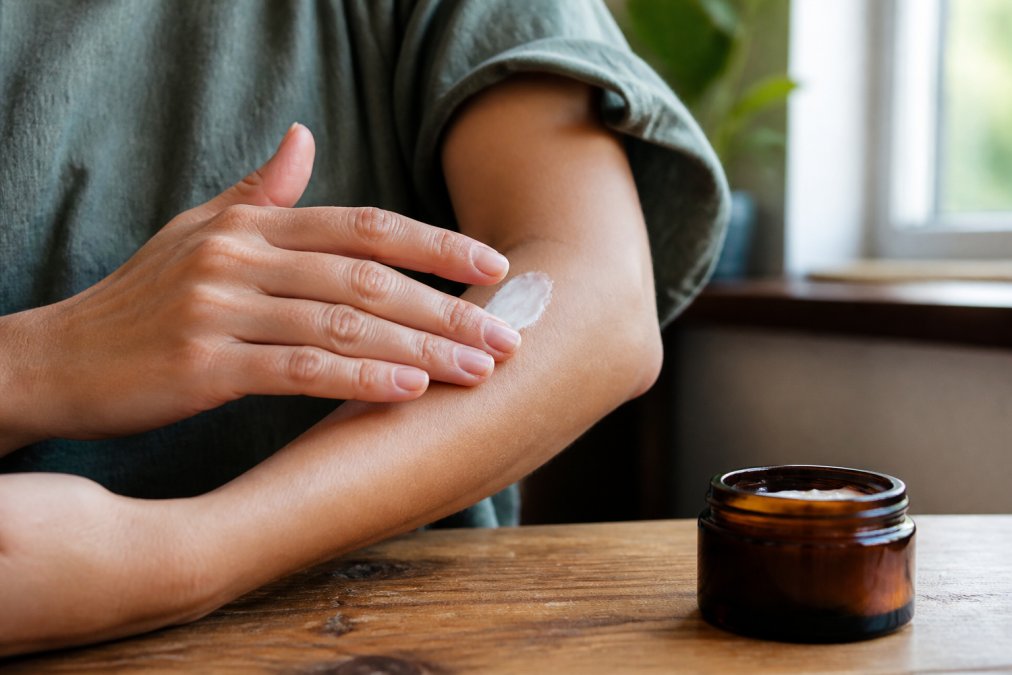
What you want to see on the label: organic carrier oils, clearly named botanical ingredients, natural preservatives, and explicit cannabinoid content. What should raise concerns: artificial fragrances, synthetic dyes, mineral oil, and vague terms like "hemp oil" without specifying whether it contains CBD.
Hemp extract versus hemp seed oil is a critical distinction. Hemp seed oil comes from the seeds and contains no cannabinoids, while hemp extract comes from the flowers and leaves and delivers the CBD (the FDA). A product that lists "hemp seed oil" prominently but never mentions "hemp extract" or "cannabidiol" likely contains no active CBD at all.
For sensitive skin, whether from radiation therapy or general reactivity, prioritize formulas with minimal ingredients and no essential oil fragrances. The Railroad Remedies (RXR) 500mg formula uses full-spectrum CBD with organic coconut oil and shea butter.
How to Pick the Best CBD Topical for Your Skin and Lifestyle
Your skin type and daily routine should guide the final decision. If you apply lotion in the morning before dressing, a non-greasy, fast-absorbing formula prevents that sticky feeling under clothing. If you need nighttime recovery, a richer balm with deeper moisturizing properties supports skin repair while you sleep.
But beyond texture and timing, the most overlooked factor is how your skin reacts to the product. CBD topicals contain more than just cannabinoids, they are complex emulsions of oils, butters, and botanical extracts, each a potential allergen.
The 48-Hour Patch Test Protocol
Before applying any new CBD topical to a large area like your back or knees, perform a simple patch test to rule out sensitivity. This is especially critical if you have a history of fragrance allergies, eczema, or reactive skin.
- Choose a discreet spot: Apply a dime-sized amount to the inside of your forearm, about two inches below the elbow crease.
- Cover and wait: Leave it uncovered for 48 hours. Do not wash the area or apply other products on top of it.
- Observe for reactions: Redness, itching, swelling, or a burning sensation indicates a sensitivity. Mild redness that fades within an hour is normal; persistent irritation is not.
- Check for delayed reactions: Some allergies take up to 72 hours to manifest. If you are prone to reactions, extend the test to three days.
Ingredient Red Flags for Sensitive Skin
Even "natural" ingredients can be problematic. Essential oils like peppermint, lavender, and citrus are common irritants, despite their pleasant scents. If you have sensitive skin, look for fragrance-free formulas that use fixed oils (like jojoba or squalane) instead of volatile essential oils.
Storage and Shelf-Life Degradation
Cannabinoids are fragile molecules. Exposure to heat, light, and oxygen accelerates their degradation into less effective compounds. A topical left in a sunny bathroom or a hot car will lose potency faster than one stored in a cool, dark cabinet. Check the expiration date, but also use your senses: if the product changes color, develops an off smell, or separates permanently, it's past its prime.
Layering with Other Skincare Products
Modern skincare routines are complex. If you use retinoids (like tretinoin) or alpha-hydroxy acids (AHAs) for anti-aging, be aware that these ingredients increase skin permeability and sensitivity. Applying a CBD topical over them can intensify absorption, potentially leading to irritation. A safe approach is to use CBD topicals on days you skip active acids, or apply them at least 30 minutes apart to allow each product to absorb fully.
Ultimately, the best CBD topical is one that works with your skin, not against it. Prioritize formulas with short, transparent ingredient lists and always test before committing to full-body use.
Conclusion
Choosing the right CBD topical comes down to verifying third-party lab results, matching potency to your pain type, and reading ingredient labels with an informed eye. The market is crowded with products that look identical on the shelf, but certificates of analysis and transparent formulations reveal which brands deserve your trust.
At Railroad Remedies (RXR), our relief lotions pair full-spectrum CBD with organic coconut oil, shea butter, and kukui nut oil for deep hydration and nourishment. The 2000mg CBD/CBC formula adds Cannabichromene for enhanced anti-inflammatory and analgesic support, while the 500mg option offers gentle everyday comfort. Both absorb quickly without grease, so relief fits naturally into your routine.

Continue shopping
Frequently Asked Questions
Do you need a prescription to get CBD cream?
No, you do not need a prescription for over-the-counter CBD topicals. Hemp-derived CBD products with less than 0.3% THC are federally legal in the United States. However, state laws can vary, so it's wise to check your local regulations. Always buy from brands that provide third-party lab results to confirm the product's cannabinoid profile and ensure it contains the legal amount of THC or is THC-free, depending on your preference.
What is the difference between CBD isolate, broad-spectrum, and full-spectrum topicals?
The difference comes down to what else is in the extract. Full-spectrum contains all cannabinoids, terpenes, and trace amounts of THC (under 0.3%). Broad-spectrum keeps the beneficial cannabinoids and terpenes but removes the THC. Isolate is pure CBD with no other hemp compounds. For inflammation and pain, full or broad-spectrum formulas often provide more noticeable relief due to the 'entourage effect,' where compounds work together.
How do I know if a CBD topical is third-party tested?
Look for a readily available Certificate of Analysis (COA) from an independent lab. A trustworthy brand will provide a link on their product page or a QR code on the label. The COA should confirm the CBD potency matches the label and show results for contaminants like heavy metals, pesticides, and residual solvents. If you cannot find a current COA easily, consider that a red flag and look for a more transparent option.
What concentration of CBD should I look for in a topical?
For mild muscle soreness, a 500mg lotion may be effective. For chronic conditions like arthritis or significant joint inflammation, a higher potency product, such as a 2000mg formula, may be considered. Consider your pain level and how your body responds. You can start with a standard dose and apply more frequently, but a higher concentration offers more relief per application for stubborn discomfort.
