

CBD and Opioid Withdrawal Pain Management
Table of Contents
- Understanding CBD and Opioid Withdrawal Pain Management
- What Clinical Research Says About CBD for Opioid Withdrawal
- Step 1: Talk to Your Healthcare Provider Before Starting CBD
- Step 2: Managing Opioid Withdrawal Symptoms at Home With CBD
- Step 3: Using Topical CBD for Pain Relief During Withdrawal
- The Benefits of CBD and CBC Blends for Recovery Support
- Common Mistakes to Avoid When Using CBD for Withdrawal
- Conclusion
- Frequently Asked Questions
Last Updated: October 3, 2026
Understanding CBD and Opioid Withdrawal Pain Management
CBD and opioid withdrawal pain management is a topic more people are asking about as the opioid crisis continues to affect families across the country. Cannabidiol (CBD) is a hemp-derived compound that some researchers believe may help ease certain withdrawal symptoms.
Opioid withdrawal syndrome happens when someone who is physically dependent on opioids stops or cuts back. Symptoms range from muscle aches and chills to anxiety, nausea, and intense cravings. Many people describe the pain as flu-like and overwhelming. The search for safer ways to manage these symptoms has led some patients and clinicians to explore CBD as an adjunctive treatment.
We want to be clear from the start: CBD is not a cure for opioid use disorder. It is not a replacement for medical care. But early research suggests it may play a supportive role when combined with evidence-based treatment.
How CBD Interacts With the Endocannabinoid System
The endocannabinoid system is a network of receptors and signaling molecules that helps regulate pain, mood, sleep, and immune response. CBD interacts with this system indirectly. It does not bind strongly to cannabinoid receptors the way THC does. Instead, it influences enzymes and other receptors that affect how the body processes pain signals.
Research from the National Center for Biotechnology Information suggests CBD may influence mu-opioid receptors, the same targets opioids act on. This interaction could help explain why some studies show CBD may reduce cravings and drug-seeking behavior.
Key points about how CBD works:
- It does not produce a euphoric high like delta-9-tetrahydrocannabinol
- It may support homeostasis in the body's pain and stress systems
- It has shown anxiolytic effects in some animal studies
- It may have analgesic properties, though human data is limited
- Bioavailability varies widely depending on how you take it
What Clinical Research Says About CBD for Opioid Withdrawal
Clinical research on CBD for opioid withdrawal is still early, but it is further along than most summaries suggest. The most-cited human work comes from a small randomized, double-blind, placebo-controlled trial of cannabidiol in individuals with heroin use disorder in abstinent withdrawal.
A separate line of research has looked at CBD in combination with naltrexone for opioid use disorder. Naltrexone blocks opioid receptors, which can reduce cravings but does nothing for the anxiety, insomnia, and physical discomfort that drive relapse in the first weeks.
What the evidence actually supports:
- Reduced cue-induced craving in some small human trials, particularly in the first days after opioid cessation
- Reduced anxiety scores in several studies, which matters because anxiety is one of the strongest predictors of early relapse
- Mild adverse events in most trials, most commonly drowsiness, fatigue, and gastrointestinal upset
- No consistent evidence that CBD reduces the acute physical symptoms of withdrawal, such as vomiting, diarrhea, or sweating
What the evidence does not support:
- CBD as a standalone treatment for opioid use disorder
- CBD as a replacement for buprenorphine, methadone, or naltrexone
- Any specific dose, because trials have used a wide range and no standard has emerged
- Long-term safety data, because most studies follow participants for weeks, not years
A common mistake is assuming that because CBD is natural, it is risk-free. That is not true. CBD inhibits several cytochrome P450 enzymes, including CYP3A4 and CYP2C19. Those same enzymes metabolize methadone, buprenorphine, and many anti-anxiety and antidepressant medications. In plain terms, adding CBD can raise the blood level of a drug you are already taking, or change how quickly your body clears it.
The National Center for Complementary and Integrative Health maintains a plain-language summary of what cannabinoid research does and does not show, which is a useful starting point for a conversation with your care team.
Step 1: Talk to Your Healthcare Provider Before Starting CBD
Before you buy anything, schedule a visit with your doctor. This step is not optional. Opioid withdrawal can be dangerous, and some symptoms need medical supervision. Your provider can help you decide if CBD is safe alongside your current treatment plan.
Bring these questions to your appointment:
- Am I safe to taper at home, or do I need supervised care?
- Will CBD interact with my current medications?
- What dose should I start with, and how often?
- Are there signs I should stop and call you?
- Can CBD support my Medication-Assisted Treatment (MAT) plan?
MAT, which includes medications like buprenorphine and methadone, is the standard of care for opioid use disorder. CBD should never replace it. If you are on MAT, ask whether adding CBD makes sense for your situation.
The Substance Abuse and Mental Health Services Administration offers a national helpline and treatment locator for anyone who needs immediate support.
Step 2: Managing Opioid Withdrawal Symptoms at Home With CBD
Managing opioid withdrawal symptoms at home with CBD works best when you match the product and timing to the specific symptom you are trying to address.
A symptom-by-symptom framework:
Anxiety and restlessness. This is where the human evidence is strongest. A common pattern is a moderate oral dose taken in the late afternoon or early evening, when anxiety tends to build. Because CBD's effects on anxiety appear to build over consecutive days rather than peak within an hour, consistency matters more than a single large dose.
Cravings. Cravings are episodic, not constant. Some patients take a smaller dose at the first sign of a craving rather than on a fixed schedule.
Muscle aches and physical discomfort. Oral CBD has poor bioavailability, often cited in the range of 6 to 20 percent depending on formulation, and it takes 60 to 90 minutes to peak.
CBD + CBC Relief Lotion 2000mg →
Insomnia. Sleep is the symptom most likely to persist after the acute phase. A slightly higher evening oral dose is a common approach, but CBD can be activating for some people, so timing matters.
Nausea and gastrointestinal distress. CBD is not a reliable antiemetic, and high doses can cause digestive upset on their own. Do not lean on CBD here. Standard supportive care and your prescriber's guidance should lead.
Symptoms that need medical attention:
- Severe vomiting or diarrhea
- Chest pain or heart palpitations
- Confusion or fainting
- High fever
How CBD fits alongside Medication-Assisted Treatment:
MAT, which includes buprenorphine, methadone, and naltrexone, is the standard of care for opioid use disorder. CBD is not a substitute for any of them. The practical question is sequencing and interaction, not replacement.
- Buprenorphine. Metabolized primarily by CYP3A4. CBD inhibits CYP3A4, so the theoretical risk is elevated buprenorphine levels. Report any new sedation, dizziness, or slowed breathing immediately.
- Methadone. Also CYP3A4-dependent, and methadone has a narrow therapeutic window. This is the combination that warrants the most caution and the closest monitoring.
- Naltrexone. Not a CYP3A4 substrate in the same way, so the interaction risk is lower, but naltrexone does not address anxiety or insomnia, which is where CBD is most often added.
A practical approach many patients use:
- Start with a low dose and note how you feel
- Take it at the same times each day for anxiety; use as-needed dosing for cravings
- Track symptoms in a simple journal
- Adjust only after talking to your doctor
- Keep your MAT schedule unchanged
The Substance Abuse and Mental Health Services Administration offers a national helpline and treatment locator for anyone who needs immediate support.
Step 3: Using Topical CBD for Pain Relief During Withdrawal
Topical CBD for pain relief offers a targeted option for the muscle aches and joint discomfort that come with withdrawal. Lotions and creams absorb through the skin and act locally, which means they do not pass through the liver the way ingested CBD does.
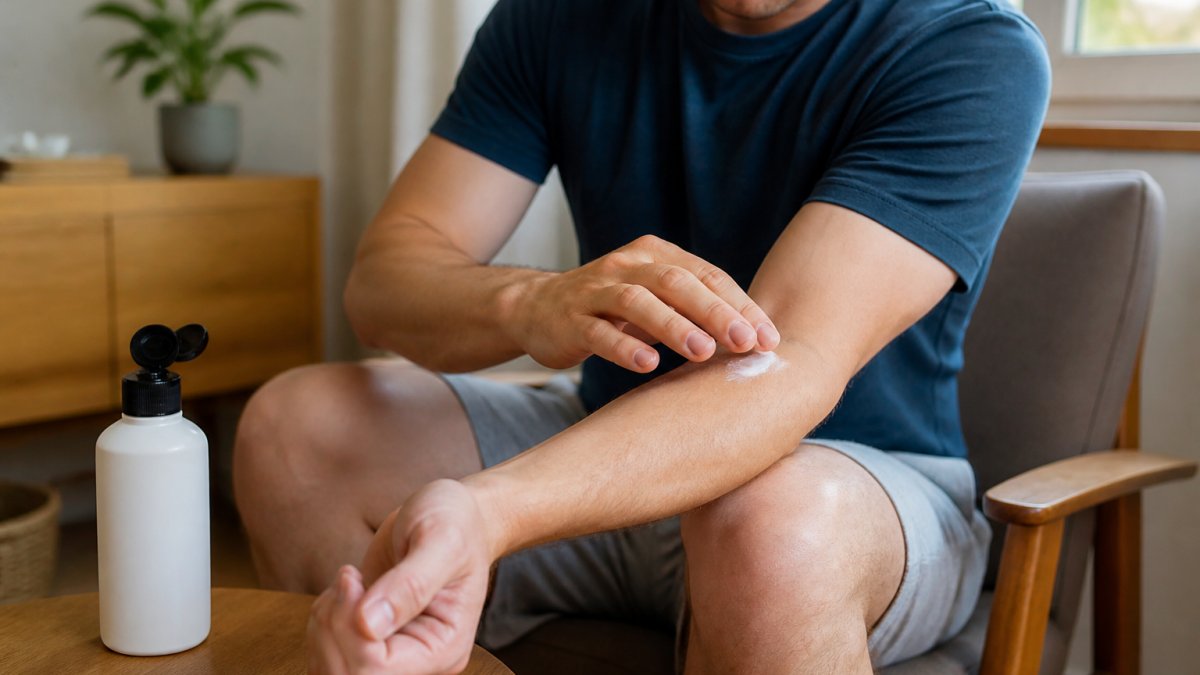
Topicals work well for:
- Sore muscles in the back, legs, and shoulders
- Tension in the neck and hands
- Localized joint pain
- Skin that feels dry or irritated during recovery
At Railroad Remedies (RXR), our CBD Relief Lotion 500mg combines full-spectrum CBD with organic coconut oil and shea butter in a non-greasy formula. For tougher pain, our CBD + CBC Relief Lotion 2000mg adds cannabichromene (CBC), a cannabinoid studied for its anti-inflammatory and analgesic properties.
Apply a small amount to the sore area and massage it in. Wait 20 to 30 minutes to judge the effect. Most people use it two to three times daily.
The Benefits of CBD and CBC Blends for Recovery Support
The benefits of CBD and CBC blends come down to how the two cannabinoids work together. CBC is a lesser-known hemp compound. Early lab work suggests it may support the body's inflammatory response and help extend the effects of CBD.
Why blends matter:
- CBC may boost the soothing effects of CBD
- Two cannabinoids may reach more pain pathways
- Blends often allow a lower CBD dose per application
- A lotion format keeps the effect local to the sore area
For people managing opioid withdrawal pain, a blend lotion fits into a daily routine without adding another pill to swallow. That simplicity matters when you are already juggling a treatment plan.
Common Mistakes to Avoid When Using CBD for Withdrawal
The biggest mistake is treating CBD as a substitute for medical care. It is not. Other common errors can undercut your results or put you at risk.
Watch out for these:
- Skipping your MAT doses because CBD makes you feel better
- Buying unverified products with no third-party lab results
- Taking high doses right away instead of starting low
- Ignoring drug-drug interactions with your prescriptions
- Expecting CBD to remove all withdrawal discomfort
- Stopping CBD abruptly without telling your doctor
Conclusion
Opioid withdrawal is hard, and finding relief without trading one problem for another takes patience. CBD shows real promise as a supportive tool, but it belongs in a plan built with your doctor, not in place of one. For the muscle aches and joint soreness that make withdrawal days longer, a topical option can help you stay comfortable between doses.
Railroad Remedies (RXR) makes CBD and CBD/CBC lotions with organic coconut oil, shea butter, and kukui nut oil. Our formulas absorb quickly, feel non-greasy, and come in a 500mg CBD version and a 2000mg CBD/CBC blend. Continue shopping with Railroad Remedies (RXR) and find a topical that fits your recovery routine.
Frequently Asked Questions
Is CBD effective for managing opioid withdrawal symptoms?
Research on CBD for opioid withdrawal is still early. Some small studies and animal research suggest cannabidiol may help reduce cravings and anxiety, but there is no FDA-approved CBD product for opioid withdrawal. Most standard treatments use medications like buprenorphine or methadone under medical supervision. CBD may be used as an adjunctive support, but it should not replace evidence-based care. Talk to your healthcare provider before adding CBD to your routine.
Can topical CBD provide relief for muscle aches during recovery?
Topical CBD for pain relief works by interacting with cannabinoid receptors in the skin and nearby tissues. It will not treat systemic withdrawal symptoms like nausea or sweating, but it can help with localized muscle aches and joint discomfort. Look for products with third-party testing and clear labeling. Apply a small amount to the affected area and wait 15-30 minutes to see how your body responds. Results vary by person.
What should I discuss with my healthcare provider before using CBD for withdrawal?
Bring up any medications you take, especially those processed by the liver, because CBD can interact with certain drugs. Ask about your specific withdrawal timeline and whether CBD fits into your overall plan. If you are using Medication-Assisted Treatment like buprenorphine or methadone, confirm that CBD will not interfere. Also discuss dosage, product quality, and whether any underlying conditions like liver disease could affect your safety.
Are there FDA-approved treatments for opioid withdrawal?
Yes. The FDA has approved medications including buprenorphine, methadone, and lofexidine to manage opioid withdrawal symptoms. These are standard of care and should be discussed with a healthcare provider. CBD is not FDA-approved for this purpose. Some people use CBD as an add-on to their prescribed plan, but it should never replace approved treatments. Always follow your provider's guidance and report any side effects.
