

CBD and Menthol for Nerve Relief: How They Work
Table of Contents
- How CBD and Menthol Work Together for Nerve Relief
- Understanding Neuropathic Pain vs. Muscle Pain
- The Menthol Cooling Sensation Mechanism Explained
- How to Use CBD Cream for Nerve Pain Effectively
- Benefits of CBC in Pain Relief Formulations
- Safety, Side Effects, and Skin Absorption
- Choosing a High-Quality CBD and Menthol Product
- Conclusion
Last Updated: August 24, 2026
How CBD and Menthol Work Together for Nerve Relief
CBD and menthol create synergistic effects for managing neuropathic pain through distinct but complementary mechanisms. CBD engages the endocannabinoid system to modulate pain signaling and inflammation, while menthol activates TRPM8 receptors on sensory neurons, creating a cooling sensation that reduces nerve hyperactivity. This dual approach addresses nerve pain from two angles: CBD dampens the inflammatory cascade centrally, while menthol provides immediate peripheral relief by desensitizing irritated nerve endings.
Railroad Remedies (RXR) leverages this synergy in formulations like their CBD/CBC 2000mg Pain Relief Lotion, which combines full-spectrum cannabinoids with menthol to target chronic nerve conditions. The non-greasy formula ensures deep absorption through the skin barrier, allowing both compounds to reach affected nerve tissue effectively.

Understanding Neuropathic Pain vs. Muscle Pain
Neuropathic pain originates from damaged or dysfunctional nerves themselves, creating burning, tingling, shooting, or electrical sensations. Muscle pain stems from tissue damage, inflammation, or tension, typically feeling like soreness or aching that improves with rest and reduced inflammation. The pain pathways are fundamentally different: muscle pain signals come from nociceptors responding to inflammation, while neuropathic pain involves nerve fibers misfiring or becoming hypersensitive.
This distinction matters enormously for choosing treatment. Standard pain creams designed for muscle soreness often provide minimal relief for nerve pain because they don't address underlying nerve dysfunction. A formulation targeting neuropathic pain must include compounds that stabilize nerve signaling and reduce neuroinflammation, exactly what CBD does through the endocannabinoid system. Menthol adds value for both types, but it's particularly effective for neuropathic conditions because it directly quiets hyperactive nerve fibers.
Many individuals experience both simultaneously: nerve pain from peripheral neuropathy combined with muscle tension from guarding against that pain. This overlap is where CBD menthol nerve relief formulations excel, addressing root nerve dysfunction while reducing secondary muscle inflammation.
The Menthol Cooling Sensation Mechanism Explained
Menthol's cooling effect is a precise neurological response that creates measurable pain relief. When menthol contacts skin, it binds to TRPM8 receptors, cold-sensitive ion channels on sensory neurons, triggering the sensation of coolness without actual temperature change (peer-reviewed research).
This mechanism works through gate control theory: the nervous system has limited bandwidth for processing simultaneous signals. When you activate cold-sensing pathways with menthol, those signals compete with pain signals for transmission to the brain. The brain prioritizes the stronger signal, the cooling sensation, which effectively gates out or reduces underlying nerve pain perception.
Menthol concentrations matter significantly for efficacy and safety. Topical products typically contain 1-10% menthol, with higher concentrations producing stronger cooling and more pronounced pain relief (peer-reviewed research). Concentrations above 10% can cause irritation, especially on sensitive or compromised skin. Railroad Remedies (RXR) formulations deliver effective menthol concentrations without excessive cooling that makes products uncomfortable.
Menthol also causes vasodilation, increasing blood flow to affected areas. Improved circulation delivers oxygen and nutrients to damaged tissue, supporting healing while helping CBD and other active ingredients penetrate deeper into nerve tissue. This combined effect, sensory gating plus improved circulation, explains why many users report relief within minutes of application.
How to Use CBD Cream for Nerve Pain Effectively
Proper application technique significantly impacts how effectively topical CBD and menthol products reach nerve tissue. Start with clean, dry skin, moisture can dilute the product and reduce absorption efficiency.
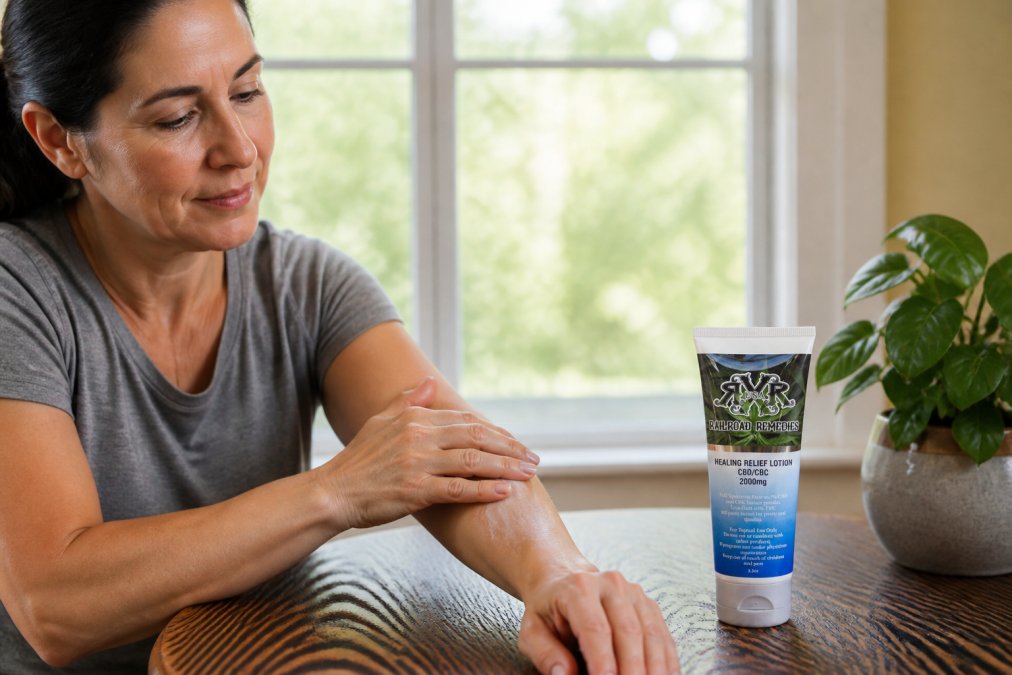
Apply a quarter-sized dollop for localized areas like hands or feet directly to the affected region. Gently massage using circular motions for 30-60 seconds. The non-greasy formulation of Railroad Remedies (RXR) CBD Relief Lotion 500mg means no residue on hands or clothes, making it practical for daytime use.

Apply twice daily, morning and evening, for consistent relief. Effects typically develop within 15-30 minutes and last 4-6 hours. For acute flare-ups, apply the product and gently wrap the area to enhance absorption. Some users apply before bed to allow overnight absorption, particularly effective for peripheral neuropathy affecting the feet when paired with a light compression sock.
Slightly warm skin enhances penetration. Avoid applying to broken skin, open wounds, or severe irritation unless directed by your healthcare provider.
Benefits of CBC in Pain Relief Formulations
Cannabichromene (CBC) is a lesser-known cannabinoid gaining recognition for unique anti-inflammatory and analgesic properties. Unlike CBD, CBC interacts with TRPV1 receptors and other pain-modulating pathways, creating complementary mechanisms of action. Research suggests CBC is particularly effective for inflammatory pain conditions by reducing pro-inflammatory cytokine production.
When CBC combines with CBD, the two cannabinoids work synergistically: CBD addresses endocannabinoid system dysfunction while CBC tackles inflammation through alternative pathways. Railroad Remedies (RXR) incorporates CBC in their 2000mg CBD/CBC Pain Relief Lotion specifically to enhance relief for treatment-resistant nerve pain. This combination allows lower individual doses of each cannabinoid while achieving superior pain modulation compared to CBD alone.
CBC's neuroprotective properties also matter. Evidence suggests CBC may protect nerve cells from further damage, crucial for progressive neuropathic conditions (peer-reviewed research). Local neuroprotective effects on peripheral nerve tissue reduce pain signal generation at the source. For individuals with multiple pain conditions, arthritis combined with neuropathy, for example, CBC's broader anti-inflammatory profile often provides more comprehensive relief than single-cannabinoid formulations.
Safety, Side Effects, and Skin Absorption
Topical CBD and menthol formulations are generally well-tolerated because they work primarily on local tissue rather than entering systemic circulation significantly. Skin irritation is the most common concern with menthol-containing products. Some individuals experience mild tingling or burning, particularly with sensitive skin or conditions like eczema. Start with lower-concentration products and test on a small area first.
Allergic reactions to topical CBD or menthol are rare but possible, usually from carrier oils rather than active compounds. Railroad Remedies (RXR) uses organic coconut oil, shea butter, and kukui nut oil. If you have known allergies to these ingredients, verify the formulation before use. Patch testing on inner arm skin for 24 hours can identify sensitivities.
Compromised skin from radiation dermatitis, severe eczema, or open wounds requires extra caution. Non-greasy formulations that absorb quickly are preferable because they minimize irritation while maximizing penetration to deeper nerve tissue.
Topical CBD doesn't typically produce systemic side effects like drowsiness or dry mouth associated with oral CBD because skin absorption is limited. However, if you're taking medications that interact with CBD systemically, consult your healthcare provider before using topical products, particularly with open wounds or occlusive dressings that might increase absorption.
Choosing a High-Quality CBD and Menthol Product
Quality varies dramatically across the CBD topical market. Third-party testing is non-negotiable. Reputable manufacturers have products tested by independent laboratories to verify cannabinoid content, check for contaminants like heavy metals or pesticides, and confirm labeled amounts actually exist. If a company won't provide third-party test results, that's a significant red flag.
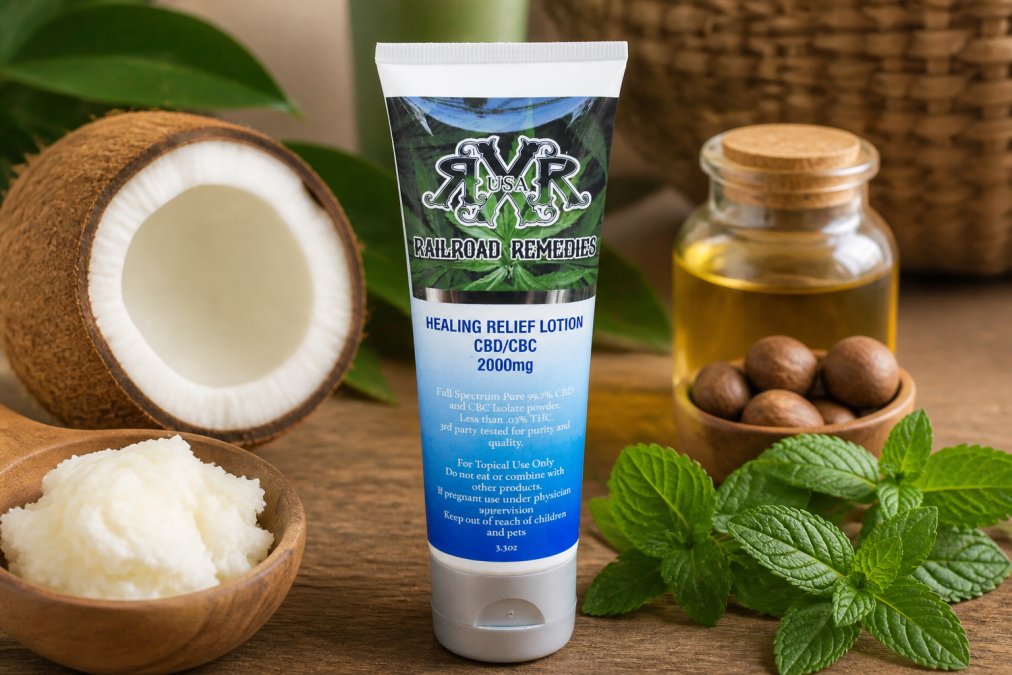
Ingredient transparency matters equally. Read the full ingredient list, not just marketing claims. Look for organic certifications on carrier oils. Railroad Remedies (RXR) products list organic coconut oil, shea butter, and kukui nut oil as primary carriers, all recognized for skin nourishment and non-greasy absorption. Avoid products with synthetic fragrances, parabens, or unnecessary additives.
The formulation determines efficacy. Products listing "CBD and menthol" don't guarantee therapeutic concentrations or synergistic formulation. The best products use full-spectrum CBD rather than isolate, combine CBD with complementary compounds like CBC, and include menthol at proven effective concentrations (typically 3-8% for topical nerve pain relief).
Pricing provides some guidance. Extremely cheap products often reflect low cannabinoid content or poor ingredients. The Railroad Remedies (RXR) CBD/CBC 2000mg Pain Relief Lotion at $69.99 reflects high cannabinoid content and quality ingredients, while their 500mg CBD Relief Lotion at $39.99 offers an accessible entry point. Compare cost per milligram of CBD along with ingredient quality.
Absorption speed and texture matter for daily usability. Non-greasy formulations absorbing within minutes are preferable to heavy creams leaving residue. Test products on a small area first to confirm texture and absorption work for your lifestyle.
Customer feedback from verified purchasers provides real-world insight, though individual responses vary. Look for reviews from people with similar conditions. Be skeptical of exclusively five-star reviews or marketing-sounding copy.
| Factor | What to Look For | Why It Matters |
|---|---|---|
| Third-party testing | Independent lab results available | Verifies actual CBD content and purity |
| Ingredient transparency | Full ingredient list with certifications | Determines safety and absorption quality |
| Full-spectrum vs. isolate | Full-spectrum formulations preferred | Includes synergistic cannabinoids and terpenes |
| Menthol concentration | 3-8% for topical nerve pain | Balances efficacy with safety and comfort |
| Absorption speed | Non-greasy, absorbs within 5-10 minutes | Enables practical daily use |
| CBD concentration | Minimum 500mg for localized application | Delivers therapeutic dosage to affected area |
| Carrier oil quality | Organic coconut, shea, or similar | Supports skin health and absorption |
Conclusion
Nerve pain demands treatment addressing both inflammatory components and underlying nerve dysfunction. CBD and menthol in well-formulated topicals provide exactly that: CBD modulates pain signaling through the endocannabinoid system while menthol creates immediate sensory relief through gate control mechanisms. When formulated with complementary ingredients like CBC, as in Railroad Remedies (RXR)'s 2000mg CBD/CBC Pain Relief Lotion, these topicals offer comprehensive relief many find more effective than single-ingredient alternatives or oral medications.
Success lies in choosing quality products with verified cannabinoid content, proper menthol concentrations, and organic carrier oils supporting skin health. Railroad Remedies (RXR) delivers all three through carefully formulated lotions, from the accessible 500mg CBD Relief Lotion to their maximum-strength 2000mg blend, ensuring genuine therapeutic benefit. Start your journey toward effective nerve pain management with a product you can trust.
Frequently Asked Questions
How long does it take for topical CBD and menthol to start working for nerve pain?
Most people feel the menthol cooling sensation within 5-15 minutes of application. The deeper analgesic effects of CBD typically develop over 20-45 minutes as the cannabinoids absorb through the skin. For chronic nerve pain, consistent daily use over 1-2 weeks often produces the most noticeable relief as CBD accumulates in affected tissues. Results vary based on skin thickness, pain severity, and product concentration.
How to use CBD cream for nerve pain to get the best results?
Apply a generous amount directly to the affected area and massage gently for 1-2 minutes to enhance absorption. Start with a lower amount and increase as needed. For best results, apply to clean, dry skin and avoid washing the area for at least 30 minutes. Use consistently 2-3 times daily, especially before bed or after activity that triggers pain. Keep the area uncovered when possible to allow the menthol cooling effect to work without interference.
What is the difference between CBD and CBC in pain relief formulations?
Both cannabinoids reduce inflammation and pain, but CBC (cannabichromene) offers enhanced anti-inflammatory properties and may work synergistically with CBD to amplify relief. CBC also shows neuroprotective potential and may support nerve signaling modulation. A 2000mg CBD/CBC blend combines both compounds' analgesic effects, making it more effective for severe or chronic nerve pain than CBD alone. CBC doesn't produce psychoactive effects and is well-tolerated in topical applications.
Is topical CBD and menthol safe for daily use on sensitive skin?
Topical CBD and menthol are generally safe for daily use, but menthol can irritate sensitive skin if concentrations are too high. Start with lower-concentration products and test on a small area first. Organic formulations with coconut oil and shea butter provide additional soothing and hydrating benefits that protect sensitive skin. If you have a history of dermatological sensitivity, radiation therapy effects, or active skin conditions like severe eczema, consult a healthcare provider before regular use.
This article was written using GrandRanker
