

CBD Lotion Drug Test Concerns: What You Need to Know
Table of Contents
- How Drug Tests Detect THC and Why CBD Lotion Raises Questions
- Transdermal Absorption of CBD: Does Lotion Reach Your Bloodstream?
- Full Spectrum vs Isolate CBD Drug Test Risk: What the Label Doesn't Tell You
- DOT Drug Testing Regulations CBD Users Should Understand
- Workplace Drug Screening Policies and Zero-Tolerance Rules
- How to Verify Your CBD Lotion With Batch-Specific COAs
- Metabolism, Application Frequency, and Individual Variance
- Conclusion
- Frequently Asked Questions
Last Updated: September 23, 2026
How Drug Tests Detect THC and Why CBD Lotion Raises Questions
Most people assume a topical lotion can't trigger a positive drug screen. That's usually right, but "usually" is doing a lot of work. When someone searches for cbd lotion drug test concerns, they're asking one thing: can something I rub on my knee show up in my urine? This guide from Railroad Remedies (RXR) covers how screening works, where the real risks hide, and how to check a product before you rely on it.
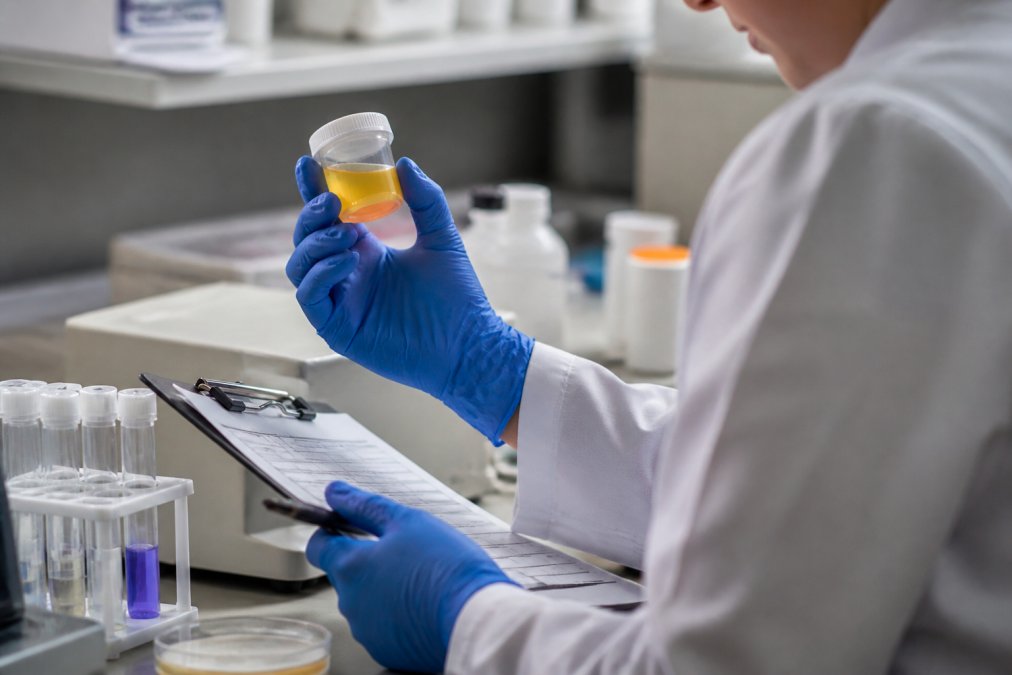
Urine Screening, Immunoassay, and Confirmatory GC-MS Testing
Initial urine screening typically uses an immunoassay, a fast, inexpensive test that flags anything resembling a drug metabolite. A positive immunoassay is presumptive, not final; most employers and labs confirm with gas chromatography-mass spectrometry (GC-MS), which identifies specific metabolites precisely.
Transdermal Absorption of CBD: Does Lotion Reach Your Bloodstream?
For most lotions, no. The skin is built to keep things out, and cannabidiol is a large, lipophilic molecule that struggles to cross the dermal barrier alone, so topical CBD products rarely produce detectable blood levels.
The Dermal Barrier and Why Most Topicals Stay Local
The stratum corneum, the outer layer of dead skin cells, is the primary barrier. Cannabinoid receptors in the skin respond to CBD applied topically, which is how localized relief works without meaningful bloodstream exposure. That local action is the entire point of a well-made lotion. It's also why the National Center for Complementary and Integrative Health notes that topical cannabinoid products behave very differently from inhaled or ingested forms.
Full Spectrum vs Isolate CBD Drug Test Risk: What the Label Doesn't Tell You
This is where the full spectrum vs isolate CBD drug test conversation gets uncomfortable. Full-spectrum products contain the full range of hemp cannabinoids, including trace THC. Isolate contains cannabidiol only. Broad-spectrum sits in between, with THC removed but other cannabinoids retained.
| Product Type | THC Content | Drug Test Risk | Best For |
|---|---|---|---|
| Isolate | None detected | Lowest | Test-sensitive users |
| Broad-spectrum | Trace, typically removed | Low | Broad benefit, low risk |
| Full-spectrum | Trace THC present | Moderate | Entourage effect seekers |
Trace THC, Metabolites, and False Positives
Legally sold hemp products may contain no more than 0.3% THC by dry weight under federal law. That ceiling is low, but not zero, and cumulative full-spectrum use can theoretically build metabolites over time. For a lotion applied to intact skin, systemic absorption is minimal, so practical risk is low, but not a guarantee.
DOT Drug Testing Regulations CBD Users Should Understand
DOT drug testing regulations CBD users need to know are stricter than most people expect. The Department of Transportation does not recognize a prescription or state medical card as a valid explanation for a positive test. There is no medical exemption.
Workplace Drug Screening Policies and Zero-Tolerance Rules
Private employers set their own rules, and many operate under a zero-tolerance policy that removes discretion entirely: a confirmed positive ends employment, period, no conversation about dosage, route, or intent.
How to Verify Your CBD Lotion With Batch-Specific COAs
A certificate of analysis (COA) is a third-party lab report showing what's actually in a product. Batch-specific COAs matter more than brand-level claims because cannabinoid content varies from run to run, a company can publish one clean report and sell you a different batch. The COA is the only document tying a specific bottle to a specific test result.
What a COA Actually Contains
A complete cannabinoid COA reports each cannabinoid separately, not as a single "CBD" number. You should see individual rows for cannabidiol (CBD), cannabichromene (CBC), cannabigerol (CBG), cannabinol (CBN), delta-9 THC, and often delta-8 THC and THCA. If a report lumps everything into one line, it isn't detailed enough to assess risk.
- "Not detected", the lab ran the test and found nothing above its reporting limit. This is the strongest result for a test-sensitive user.
- "< LOQ" (below limit of quantification), the compound may be present but below the level the lab can reliably measure. Practically safe, but not the same as zero.
- A specific number, such as "0.08%", the product contains a measurable amount of THC. Under federal law, hemp-derived products may contain no more than 0.3% THC by dry weight, so a number below that ceiling is legal but not necessarily risk-free for someone facing a drug screen.
Reading the Reporting Limit
Every lab has a reporting limit, sometimes called a limit of detection (LOD) or limit of quantification (LOQ). A COA saying "THC: not detected" with a reporting limit of 0.1% is far less reassuring than one at 0.001%. The lower the reporting limit, the more confidence you can place in a "not detected" result.
Checking Lab Independence and Accreditation
The testing lab should be independent of the brand. A report from a lab the brand owns or operates is not third-party testing in any meaningful sense. Look for labs holding ISO/IEC 17025 accreditation, the international standard for testing and calibration laboratories, which means the lab has been audited against recognized quality criteria.
Matching the Batch Number to Your Bottle
This is the step most people skip. A COA is only valid for the batch it tested. Find the lot or batch number on your product label, usually near the expiration date or on the bottom of the container, and confirm it matches the COA. If the brand only publishes a single "representative" COA for the whole product line, that report tells you nothing about your bottle.
CBD + CBC Relief Lotion 2000mg →
A Practical COA Checklist
- Cannabinoid profile lists CBD, CBC, and THC separately
- THC result is reported as "not detected" or below a clearly stated reporting limit
- The reporting limit is disclosed and is as low as reasonably achievable
- The batch or lot number matches the product you're holding
- The testing lab is independent and ISO/IEC 17025 accredited
- The report date is recent, ideally within the last year
- The COA is downloadable, not just a screenshot on a marketing page
This is the single best way to reduce your risk. Request the COA for the exact batch you're using, and if a brand won't provide it, that tells you something. Railroad Remedies (RXR) publishes third-party testing so you can verify what's in the bottle.
Metabolism, Application Frequency, and Individual Variance
Two people using the same lotion can produce different results. That's not a hedge, it's pharmacology. The variables that matter most are body composition, liver enzyme activity, application frequency, and surface area. Understanding each helps you reason about your own risk instead of guessing.
Body Fat and Cannabinoid Storage
THC and its metabolites are lipophilic, dissolving in fat rather than water. After any cannabinoid reaches circulation, a portion is taken up by adipose tissue and released slowly. Higher body fat means more storage capacity and a longer detection window; lower body fat may clear metabolites faster but can reach higher peak blood concentrations from the same dose.
Liver Enzymes and Metabolic Rate
Cannabinoids are processed primarily by cytochrome P450 enzymes in the liver, particularly CYP2C9 and CYP3A4. Genetic variation in these enzymes is common and changes how quickly an individual converts THC into detectable metabolites, including the carboxy-THC (THC-COOH) most urine screens target. Fast-metabolizing variants may clear an exposure more quickly; slow variants may retain detectable levels longer.
Application Frequency and Surface Area
This is the variable most people ignore, and the one you actually control. Applying a full-spectrum lotion once to a sore shoulder is very different from applying it four times a day to large areas of skin for months.
A Practical Way to Think About Your Own Risk
Ask yourself four questions:
- Is the product full-spectrum, broad-spectrum, or isolate? Full-spectrum carries the highest theoretical risk.
- How much surface area do you cover, and how often? Large areas, multiple times daily, over months, is the highest-exposure pattern.
- What does the batch COA say about THC? "Not detected" at a low reporting limit is the safest result.
- How much buffer do you have before a scheduled screen? If you can stop use well in advance, you reduce the chance that any accumulated metabolites are still detectable.
None of these factors guarantees an outcome on its own. But together they give you a more honest picture than a simple yes-or-no answer. The FDA consumer update on cannabis and CBD products is worth reading for the broader regulatory picture on how these products are classified and what testing requirements apply.
Conclusion
The real challenge with cbd lotion drug test concerns isn't the science, which mostly favors topical users. It's the uncertainty. Trace THC, cumulative use, and test-sensitive jobs raise the stakes, and guessing isn't good enough when your employment is on the line.
Frequently Asked Questions
Can CBD cream cause a drug test to fail?
Most CBD creams won't cause a failed drug test because the dermal barrier limits how much cannabidiol and any trace tetrahydrocannabinol reach your bloodstream. However, full-spectrum topicals may contain small amounts of THC. If you apply them frequently over large areas, trace amounts could accumulate. The safest approach is to choose broad-spectrum or isolate formulas and verify every batch with a certificate of analysis.
Can CBD lotion get into your bloodstream?
CBD lotion absorbs primarily into the skin and underlying tissue, not the bloodstream. The transdermal absorption of CBD through standard lotions is low because the dermal barrier blocks most large molecules. Transdermal patches designed for systemic delivery work differently. For typical lotions, the cannabinoids act locally on cannabinoid receptors in the skin and surrounding tissue rather than entering circulation in meaningful amounts.
Does full spectrum vs isolate CBD matter for drug testing?
Yes, it matters significantly. Full-spectrum products contain all hemp compounds, including trace THC, which is the metabolite drug tests detect. Broad-spectrum removes THC while keeping other cannabinoids. Isolate is pure CBD with no THC. If you face urine screening, choosing isolate or broad-spectrum products and checking third-party testing results reduces your risk of a false positive or trace detection.
What do DOT drug testing regulations say about CBD use?
Department of Transportation regulations prohibit marijuana use, including THC, for safety-sensitive employees. DOT rules do not recognize a prescription or recommendation for medical marijuana as a valid explanation for a positive test. Because CBD products are not FDA-approved medications and some contain trace THC, DOT-regulated workers should avoid full-spectrum CBD lotions and discuss any topical use with a medical review officer before testing.
