

CBD for Neuropathic Pain Relief Reviews: What Works
Table of Contents
- Why CBD Reviews for Neuropathic Pain Relief Are So Inconsistent
- CBD for Nerve Pain: What the Evidence Says About Effectiveness
- CBD Cream for Neuropathy: How Topicals Compare to Oral Products
- CBD Gummies for Neuropathy: What to Know About Edibles
- CBD Dosage for Nerve Pain: How to Titrate and What to Expect
- How to Evaluate CBD Products: Selection Criteria That Matter
- Frequently Asked Questions
Last Updated: October 6, 2026
Why CBD Reviews for Neuropathic Pain Relief Are So Inconsistent
If you've spent an evening scrolling through CBD for neuropathic pain relief reviews, you've probably noticed something strange: one person swears a tincture changed their life, and the next says it did nothing at all. Both can be telling the truth.
CBD for neuropathic pain sits at the intersection of two complicated things: a plant compound with genuinely mixed research behind it, and a nerve condition that behaves differently in every person. That combination produces reviews that swing wildly, and it means you should read them as clues, not verdicts.
What Clinical Studies Actually Show
The honest summary is that evidence for CBD in nerve pain is early and mixed. A Cochrane review of cannabis-based medicines for chronic neuropathic pain found that cannabis-based products may produce modest pain reductions for some people, but the authors rated the overall evidence quality as low to moderate and noted that many participants stopped treatment because of side effects.
That's not a ringing endorsement, and it's not a dismissal either. It means human studies point toward possible small benefits, while animal models suggest cannabinoids may calm nerve inflammation. Neither gives you a guaranteed outcome.
Why Individual Response Varies So Much
Three factors explain most of the variation you see in reviews:
- Product type. A CBD-only oil, a THC-containing product, and a balanced blend act differently in the body.
- Dose and delivery. Inhaled, oral, and topical products reach your system at very different rates.
- Your condition. Tingling, numbness, burning, and deep aching pain respond differently, and neuropathy has dozens of underlying causes.
A review written by someone with diabetic neuropathy in their feet tells you almost nothing about how you'll respond to shooting pain in your hands.
CBD for Nerve Pain: What the Evidence Says About Effectiveness
Effectiveness is where marketing and science part ways. Most reviews describe subjective relief: better sleep, less burning at night, calmer muscles. Those outcomes matter, but they're not the same as measured pain reduction, and they don't tell you which product type produced them.
What the research supports is cautious optimism, not certainty. The National Center for Complementary and Integrative Health overview of cannabis and cannabinoids makes this point directly, noting that evidence for most conditions remains limited and that product quality varies widely.
Separating Product Types From Evidence Strength
The single most useful thing you can do when reading reviews is stop treating "CBD" as one thing. CBD-only oils, THC-containing products, balanced blends, and topicals are studied separately, and the evidence is not equally strong across them. Here's how the categories actually stack up:
| Product Type | What the Evidence Suggests | Psychoactive Effect | Practical Trade-off |
|---|---|---|---|
| CBD-only (oral) | Early, mixed human data; most support comes from animal models of nerve inflammation | None | Avoids impairment, but the human evidence base is the thinnest |
| THC-containing (oral) | The strongest studied category for neuropathic pain, largely because most clinical trials used products with both compounds | Yes, dose-dependent | More studied relief, but impairment and side-effect dropout are real |
| Balanced CBD/THC | Moderate evidence; an oromucosal spray containing both cannabinoids is among the most studied formats | Mild to moderate | Middle ground on relief and tolerability |
| Topical CBD | Limited evidence for nerve pain specifically; plausible for localized surface symptoms | None | Acts where applied, not systemically |
Two caveats matter here. First, "strongest studied" does not mean "strong." Even the best-studied cannabis-based products produced modest average pain reductions in trials, and many participants stopped treatment because of side effects. Second, a product type with weaker evidence isn't useless, it may simply be understudied. CBD-only products are popular partly because they let people avoid impairment, and that's a legitimate reason to choose one even if the research lags.
Why Condition-Specific Evidence Matters
"Neuropathic pain" is an umbrella, and the evidence is not uniform underneath it. Diabetic peripheral neuropathy, chemotherapy-induced peripheral neuropathy, and post-stroke or post-surgical nerve pain are different conditions with different mechanisms, and studies rarely lump them together cleanly.
When you read a review, ask what condition the reviewer has. A detailed account from someone with diabetic foot pain is more relevant to you if that's your situation, and less relevant if yours is post-surgical.
CBD vs. THC: How They Differ for Nerve Pain
THC binds directly to cannabinoid receptors and produces the psychoactive effects people associate with cannabis. CBD interacts with those receptors indirectly and doesn't intoxicate. For neuropathic pain, THC-containing products have the stronger research base, largely because most clinical trials used products with both compounds.
CBD-only products appeal to people who want to avoid impairment. The trade-off is that the evidence for CBD alone in nerve pain is thinner.
CBD Cream for Neuropathy: How Topicals Compare to Oral Products
A topical CBD cream for neuropathy works where you apply it, not throughout your body. That's the key distinction. Oral products enter your bloodstream and reach nerves systemically; topicals absorb into skin and surrounding tissue and deliver little to the bloodstream.
For nerve pain, this matters. If your neuropathy is deep and widespread, a lotion won't reach it.
This is where our approach at Railroad Remedies (RXR) fits.
CBD Gummies for Neuropathy: What to Know About Edibles
CBD gummies for neuropathy are the most convenient option and the hardest to dose precisely.
Edibles also take longer to act, often 30 to 90 minutes, and the effects last longer than inhaled or topical products.
CBD + CBC Relief Lotion 2000mg →
Gummies make sense if you want a consistent, portable routine and you're patient enough to wait for onset. They make less sense if you need relief in the next 15 minutes.
CBD Dosage for Nerve Pain: How to Titrate and What to Expect
There is no standard CBD dosage for nerve pain. Clinical trials have used many amounts, and no agency has established an official dose for this use. Anyone quoting you a precise number is guessing.
What you can do is titrate systematically and track outcomes objectively, so you're making decisions from data instead of vibes. That's the approach most practitioners recommend, and it's the part most reviews skip.
A Practical Titration Framework
- Start low, often 5 to 10 mg of CBD per day for oral products
- Hold that dose for 5 to 7 days before changing anything
- Increase gradually, in small increments (for example, 5 mg at a time)
- Track your symptoms daily in a notebook or app
- Stop increasing once you notice consistent benefit or side effects
- Reassess after 4 to 6 weeks with your doctor
For topicals, the framework is different. You're not titrating a systemic dose; you're testing whether localized application helps. Apply a consistent amount to the same area, give it 20 to 30 minutes to absorb, and judge over several days rather than minutes.
Time to Response by Product Type
How long you wait before judging a dose depends on how you took it:
- Inhaled: effects in minutes, but shorter duration, useful for testing whether cannabinoids help you at all before committing to a daily oral routine
- Oral tincture: often 30 to 90 minutes to onset, with effects lasting several hours
- Edible or gummy: similar onset to tincture, sometimes slower, and longer duration, the most common source of accidental overconsumption
- Topical: localized, with onset measured in tens of minutes and no systemic buildup
A common pattern is that people quit an oral product after 30 minutes because they feel nothing, then take more, then feel overmedicated an hour later. Pick one route, stick with it for at least a week, and resist the urge to stack doses.
Track Outcomes, Not Impressions
Anecdotal reviews describe vague improvement. To know whether CBD is doing anything for you, track specific measures:
- Pain intensity: rate your typical and worst pain daily on a 0-10 scale
- Sleep: hours slept and how often you woke
- Function: can you walk further, grip objects, or sit through a meeting without shifting?
- Sensory symptoms: tingling, numbness, and burning are distinct, note which changes
- Side effects: drowsiness, dry mouth, digestive changes
After four to six weeks, look at the trend, not any single day. If pain scores, sleep, and function haven't moved, more CBD probably isn't the answer, and that's useful information to bring to your doctor.
How to Evaluate CBD Products: Selection Criteria That Matter
Product quality separates a useful purchase from an expensive placebo. Because CBD is lightly regulated, the label tells you less than you'd hope, and third-party testing is your best verification tool.
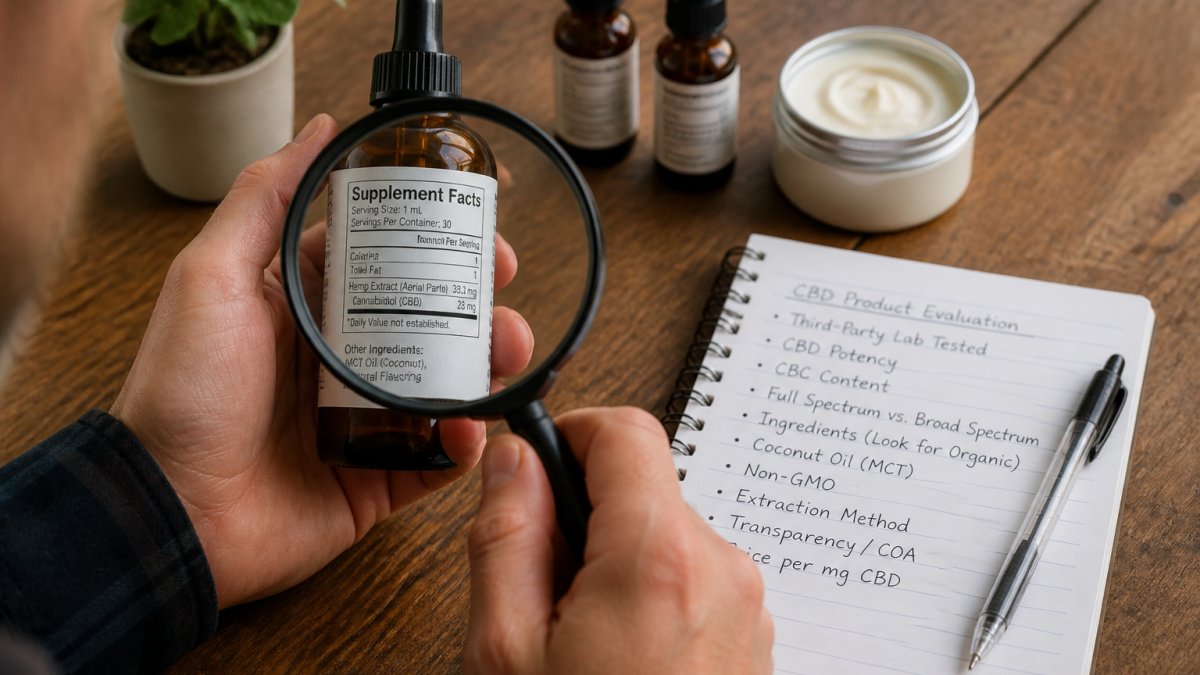
Use these criteria before you buy:
- Certificate of analysis. A current COA from an independent lab confirms cannabinoid content and screens for pesticides, heavy metals, and solvents.
- Extract type. Full-spectrum includes trace THC and other cannabinoids; broad-spectrum removes THC; isolate is CBD alone.
- Potency honesty. The label should match the lab result. Mismatches are common in this market.
- Carrier ingredients. Look for recognizable oils and butters rather than long lists of synthetics.
- Cost per milligram. Compare this, not the sticker price. A cheap bottle with weak potency is the expensive option.
Safety, Interactions, and When to Talk to Your Doctor
CBD is generally tolerated, but it isn't risk-free. Common side effects include drowsiness, dry mouth, diarrhea, and appetite changes.
The FDA consumer guidance on cannabis and CBD products notes that CBD can cause liver injury and interact with other drugs, and that products marketed with unproven medical claims should be treated with caution.
Talk to your doctor before starting CBD if you take prescription medication, have liver conditions, or are managing neuropathy from diabetes or chemotherapy. Bring the product label with you.
Managing nerve pain is a long game, and no single product wins it alone. What you can control is the quality of what you apply and how carefully you track your response.
Frequently Asked Questions
What form of CBD is best for neuropathy?
There is no single best form. Oral products like CBD gummies or oils provide whole-body effects but take 30 to 90 minutes to kick in. Topical creams and lotions work faster on localized areas but have limited reach into deep nerve tissue. Many people use a combination: a topical for targeted relief during the day and an oral product for broader, longer-lasting support. The right choice depends on where your nerve pain is and how quickly you need relief.
How much CBD should I take for nerve pain?
Clinical studies have used doses ranging from 2.5 mg to 50 mg of CBD daily, often alongside THC. For over-the-counter CBD products, a common starting point is 10 to 25 mg per day, taken consistently for at least two weeks before adjusting. Keep a simple log of what you take and how you feel. If you are on prescription medications, especially blood thinners or anti-seizure drugs, talk to your doctor before starting CBD.
Can CBD help with neuropathic pain?
Some clinical studies suggest CBD may reduce nerve pain, but the evidence is mixed. A 2020 review found modest effects in some patients, while other studies showed no significant difference from placebo. Results vary widely by individual, product type, dose, and condition. CBD is not a proven treatment for neuropathy, and it should not replace prescribed therapies. Think of it as a possible addition to your pain management routine, not a cure.
Can CBD products interact with medications?
Yes. CBD can interact with medications processed by the liver's cytochrome P450 enzymes, including blood thinners like warfarin, anti-seizure drugs, and some antidepressants. These interactions can raise drug levels in your blood and increase side effects. If you take prescription medication, especially for nerve pain or a heart condition, talk to your doctor or pharmacist before adding CBD to your routine.
