

CBD Cream for Chronic Muscle Soreness: A 2026 Guide
Table of Contents
- How CBD Cream Works for Chronic Muscle Soreness
- Best CBD Cream for Muscle Pain: What to Look For
- How to Use CBD Cream for Muscle Pain: Application Techniques
- CBD Topical for Pain Relief: Clinical Evidence
- CBD Cream Side Effects and Safety Considerations
- Railroad Remedies CBD Cream: Premium Options for Chronic Muscle Soreness
- Conclusion
Last Updated: July 25, 2026
How CBD Cream Works for Chronic Muscle Soreness
CBD cream for chronic muscle soreness has gained attention as athletes and individuals managing chronic pain explore topical cannabinoid solutions. This guide from Railroad Remedies (RXR) explores how these creams work physiologically, what research shows, and how to choose and use them effectively. CBD, or cannabidiol, is a non-psychoactive compound from cannabis that interacts with your body's pain and inflammation systems. When applied topically, it works locally on skin and underlying tissues rather than entering your bloodstream significantly.
The Endocannabinoid System and Topical Relief
Your body's endocannabinoid system (ECS) regulates pain, inflammation, and immune responses through receptors in your skin, muscles, and nerve endings. When you apply CBD cream to affected areas, cannabidiol interacts with these ECS receptors locally, potentially reducing inflammatory signals and pain perception at the application site. Research from the National Center for Biotechnology Information documents how cannabinoids modulate inflammatory responses through ECS activation. The ECS receptors, primarily CB1 and CB2, regulate cytokine production and immune cell activity. When CBD engages these receptors in your muscles and skin, it may suppress the inflammatory cascade following intense exercise or chronic injury. The localized approach means CBD concentration in your target tissue can be higher than systemic absorption would achieve, making it ideal for addressing specific areas like a sore shoulder or lower back.
Transdermal Absorption and Bioavailability
CBD's effectiveness depends on how well it penetrates the skin barrier. As a fat-soluble compound, CBD can cross the stratum corneum (your skin's outer layer) under the right conditions. Most CBD creams remain in the epidermis and dermis rather than entering systemic circulation, which is beneficial for localized pain relief. Formulation matters significantly: creams with penetration enhancers like menthol, essential oils, or specific carrier oils show better absorption than basic formulations. Temperature and skin condition also affect absorption, warm skin with good blood flow absorbs topicals more effectively, which is why many users find CBD cream most effective after a warm shower or light exercise when blood vessels are dilated.
Best CBD Cream for Muscle Pain: What to Look For
Choosing the right CBD cream requires evaluating the type of CBD used, supporting ingredients, third-party testing verification, and how the product performs for your specific use case.
Full-Spectrum vs. Broad-Spectrum vs. Isolate
Full-spectrum CBD creams contain the entire plant profile, CBD plus other cannabinoids like CBG and CBC, with trace THC (typically less than 0.3 percent). This combination, called the "entourage effect," allows cannabinoids to work synergistically. For muscle pain, full-spectrum formulations often perform better because minor cannabinoids like CBC have their own anti-inflammatory and analgesic properties.
Broad-spectrum products contain multiple cannabinoids with THC removed, offering some entourage effect benefits without THC concerns. CBD isolate contains only pure cannabidiol and is the least expensive but won't deliver the same pain-relieving results as full-spectrum for the same dose. Railroad Remedies (RXR) offers both options: their [CBD Relief Lotion 500mg](https://4ch1j6-1c.myshopify.com/products/cbd-relief-lotion-500mg) uses full-spectrum CBD, while their premium CBD/CBC 2000mg Pain Relief Lotion combines full-spectrum CBD with added CBC for enhanced anti-inflammatory support.
Key Ingredients: Menthol, Arnica, and Organic Botanicals
Beyond cannabinoids, supporting ingredients determine how well a CBD cream performs. Menthol is the most effective complementary ingredient, it activates TRPM8 receptors on nerve endings, creating a cooling sensation that provides immediate relief and may reduce pain perception. Quality CBD creams include menthol at 2-5 percent concentration.
Arnica montana extract has been used traditionally for muscle soreness and bruising, with modern research supporting its use for reducing inflammation and swelling after exercise-induced muscle damage. Organic carrier oils like coconut oil, shea butter, and kukui nut oil improve absorption of cannabinoids, provide deep skin hydration, and deliver their own anti-inflammatory benefits. Coconut oil contains lauric acid with antimicrobial and anti-inflammatory properties. Avoid creams with heavy silicones or paraffin-based oils if you have sensitive skin or apply cream under clothing. Railroad Remedies (RXR) formulations use a balanced blend of organic coconut oil, shea butter, and kukui nut oil that absorbs quickly without leaving a sticky film.
Third-Party Testing and Certificate of Analysis
A certificate of analysis (COA) from an independent third-party lab confirms that CBD content matches the label claim and the product is free from contaminants like heavy metals, pesticides, and microbial pathogens. When reviewing a COA, check for CBD potency, full cannabinoid profile, contaminant screening, microbial testing, and solvent residue testing. Brands that refuse to provide COAs are red flags, you should access testing information before purchasing.
How to Use CBD Cream for Muscle Pain: Application Techniques
Correct application technique, frequency, and skin preparation determine whether you'll experience meaningful relief.
Targeted Application for Specific Muscle Groups
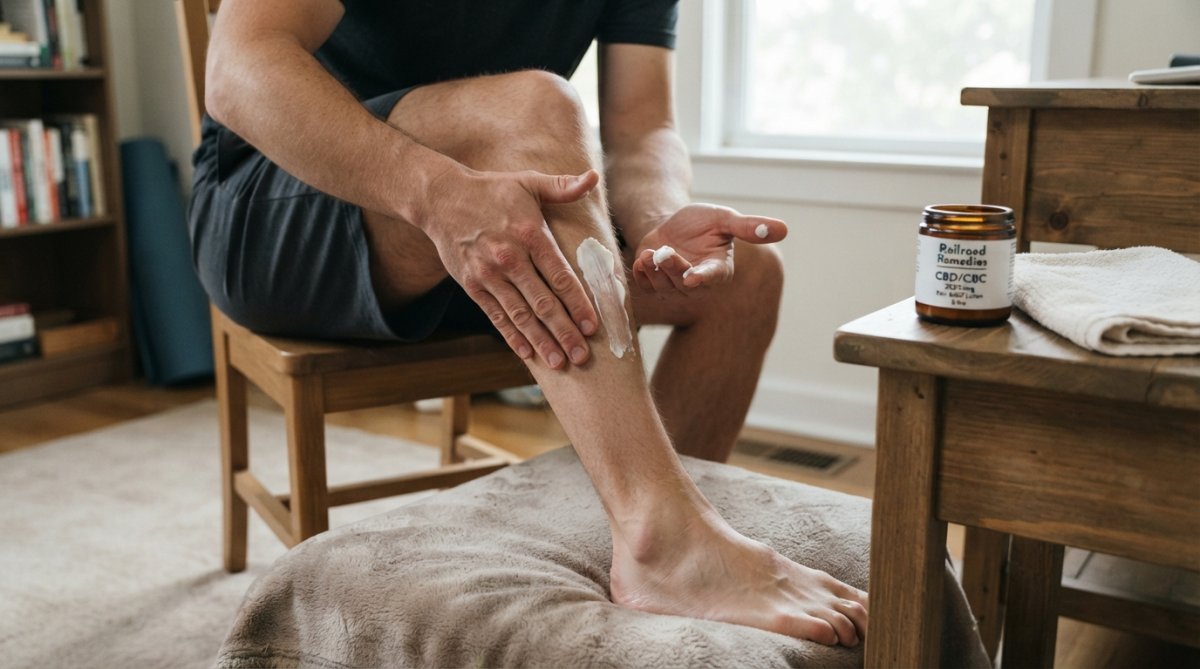
Apply CBD cream exactly where you need it. For neck and shoulder tension, apply a quarter-sized amount directly to the affected area and massage gently in circular motions for 1-2 minutes. For lower back pain, apply a half-dollar size amount and work it into muscles on either side of your spine, avoiding the spine itself. For knee pain or arthritis, apply a dime-sized amount around the joint, working it into surrounding muscles and ligaments. Apply enough cream to cover the affected area thoroughly, but not so much that it sits without absorbing, a thin, even layer works best.
Dosage Guidelines and Frequency
Unlike oral CBD, topical dosing isn't measured in milligrams per body weight. For mild to moderate muscle soreness, applying a standard amount once or twice daily often provides adequate relief. For chronic pain or severe soreness, applying three times daily, morning, midday, and evening, allows consistent cannabinoid presence in affected tissue. Most users notice initial relief within 15-30 minutes, with peak effects around 60-90 minutes. Effects typically last 4-6 hours, which is why multiple daily applications are common for chronic conditions. Consistency matters more than perfection, applying cream daily for two weeks provides better results than sporadic use.
Patch Testing and Skin Sensitivity Protocols
Before regular use, perform a patch test, especially if you have sensitive skin or history of dermatitis. Apply a small amount to an inconspicuous area like your inner forearm and wait 24-48 hours for any redness, itching, burning, or rash. Menthol sensitivity is common; if you react, look for menthol-free CBD creams. For individuals with radiation therapy-related skin sensitivity or conditions like eczema or psoriasis, start with a lower-potency cream on a small test area first. If you're using other topical medications like corticosteroid creams, consult your healthcare provider before adding CBD cream.
CBD Topical for Pain Relief: Clinical Evidence
What Research Shows About Topical CBD
Clinical evidence for topical CBD is more limited than for oral CBD, but existing studies support its use for localized inflammation and pain. Research from the Journal of Clinical Medicine documents CBD's interaction with pain signaling pathways and inflammatory mediators. Studies show topical CBD reduces inflammatory cytokine production in skin and underlying tissues. CBD's interaction with serotonin receptors, vanilloid receptors (TRPV1), and adenosine signaling all contribute to pain modulation. When applied topically, these mechanisms are localized to the application site, which is advantageous for targeting specific areas of soreness. Topical CBD works best for inflammatory pain like muscle soreness and arthritis-related pain rather than neuropathic pain like sciatica or diabetic neuropathy.
CBD for DOMS and Post-Workout Muscle Soreness
Delayed onset muscle soreness (DOMS) develops 24-72 hours after intense or unfamiliar exercise from microscopic muscle fiber damage and subsequent inflammatory response. This is where CBD cream shows promise, the inflammatory phase of DOMS is exactly what topical CBD addresses. Athletes applying CBD cream during the DOMS window report faster recovery and reduced pain severity. For post-workout use, apply cream immediately after exercise and again 24 hours later when DOMS typically peaks.
CBD Cream Side Effects and Safety Considerations
Interactions with Other Topical Medications
The primary concern with using CBD cream alongside other topicals is potential interaction or reduced efficacy. If you're using a topical corticosteroid cream, applying CBD cream to the same area may reduce the steroid's absorption. The safest approach is to apply them to different areas or separate them by 2-3 hours. Topical NSAIDs like diclofenac work through different mechanisms than CBD, but applying both to the same area could irritate skin. Sunscreen and moisturizers can generally be used with CBD cream, apply sunscreen first, wait for it to set, then apply CBD cream.
Non-Psychoactive and THC-Free Assurance
CBD itself is non-psychoactive and won't produce intoxication regardless of dose. Full-spectrum CBD creams contain trace amounts of THC (less than 0.3 percent under federal law), but topical application delivers minimal systemic absorption, even full-spectrum creams won't produce psychoactive effects. If you're subject to drug testing, broad-spectrum CBD creams (THC-removed) eliminate this risk while still providing entourage effect benefits. All Railroad Remedies (RXR) products are derived from hemp and comply with federal legal limits for THC content. Their full-spectrum formulations contain less than 0.3 percent THC and are tested by third-party labs to verify compliance.
Railroad Remedies CBD Cream: Premium Options for Chronic Muscle Soreness
CBD/CBC 2000mg Pain Relief Lotion: Maximum Strength Formula
The CBD/CBC 2000mg Pain Relief Lotion at $69.99 for a 3.3-ounce jar represents the premium option for individuals managing chronic muscle soreness or severe inflammation. This formula combines 2000 milligrams of full-spectrum CBD with added cannabichromene (CBC), a minor cannabinoid with distinct anti-inflammatory and analgesic properties that most competitors don't include. CBC is underutilized in the CBD market despite research supporting its effectiveness for pain and inflammation. The formulation uses organic coconut oil as the base, combined with shea butter and kukui nut oil for deep hydration and rapid absorption. Unlike many CBD creams that leave greasy residue, this lotion absorbs within 5-10 minutes, making it suitable for daytime use under clothing. For chronic conditions like arthritis-related muscle pain or persistent DOMS from intense training, the 2000mg formula provides sufficient potency that you won't need excessive amounts per application.
CBD Relief Lotion 500mg: Balanced Support
The CBD Relief Lotion 500mg at $39.99 offers a more accessible entry point for users new to topical CBD or those with mild to moderate muscle soreness. This full-spectrum formula includes the same organic base oils as the premium option, ensuring the same quality of absorption and skin nourishment. For someone with occasional muscle soreness or testing whether CBD cream works for their pain profile, this option makes financial sense. It's also appropriate for individuals with sensitive skin who want to start with lower concentration before potentially upgrading to the 2000mg version.
Cost-Per-Milligram Analysis and Value
| Product | Price | Size | CBD Content | Cost per mg CBD | Best For |
|---|---|---|---|---|---|
| Railroad Remedies 500mg | $39.99 | 3.3 oz | 500mg | $0.080 | Mild soreness, testing CBD |
| Railroad Remedies 2000mg | $69.99 | 3.3 oz | 2000mg | $0.035 | Chronic pain, severe inflammation |
The Railroad Remedies (RXR) 2000mg formula offers better value per milligram than the 500mg option and includes CBC, which adds therapeutic value beyond just CBD potency. For someone managing chronic muscle soreness, the 2000mg formula's superior potency and CBC inclusion justify the higher upfront cost.
Conclusion
Choosing the right CBD cream for chronic muscle soreness requires understanding how CBD works locally on inflammation, evaluating ingredient quality and cannabinoid content, and matching product potency to your specific pain severity. The most common mistake is selecting based on price alone without considering potency, third-party testing, or supporting ingredients like menthol and arnica that enhance pain relief.
Railroad Remedies (RXR) offers two evidence-based options: the 500mg formula for accessible entry into topical CBD, and the premium 2000mg formula with added CBC for individuals managing chronic or severe muscle pain. Both formulations use organic ingredients, absorb without greasy residue, and include third-party testing to verify potency and purity. Start with a patch test, apply consistently during the acute inflammation phase of muscle soreness, and adjust frequency based on your response. Most users experience meaningful relief within the first week of regular use, with improvements continuing over 2-3 weeks as CBD accumulates in local tissue.
Frequently Asked Questions
How does CBD cream help with chronic muscle soreness?
CBD cream works by interacting with the endocannabinoid system (ECS) through topical application. When applied to sore muscles, cannabidiol activates ECS receptors in the skin and underlying tissues, triggering anti-inflammatory responses that reduce joint inflammation and muscle tension. The topical approach delivers localized relief directly to affected areas without systemic absorption, making it ideal for chronic muscle soreness and delayed onset muscle soreness (DOMS). Many users report faster relief compared to oral CBD due to direct tissue contact.
What's the difference between full-spectrum, broad-spectrum, and CBD isolate creams?
Full-spectrum CBD cream contains all cannabinoids, terpenes, and plant compounds from the hemp plant, including trace amounts of THC (under 0.3% federally). Broad-spectrum removes THC while keeping other beneficial compounds. CBD isolate contains only pure cannabidiol. For chronic muscle soreness, full-spectrum and broad-spectrum formulas often provide superior pain management due to the entourage effect, where multiple compounds work synergistically. Full-spectrum is non-psychoactive at topical doses and offers enhanced anti-inflammatory benefits.
Are there side effects from using CBD cream for muscle pain?
Topical CBD cream is generally well-tolerated with minimal side effects since it doesn't enter the bloodstream significantly. Some users experience mild skin irritation, redness, or allergic reactions to other ingredients like menthol or arnica. Skin sensitivity varies, especially for those with radiation therapy history or dermatological conditions. Always perform a patch test on a small area first. CBD cream is non-psychoactive and THC-free (in properly tested products), so it won't cause cognitive effects. Interactions with other topical medications are rare but possible, consult a healthcare provider if using multiple topical treatments.
How often should I apply CBD cream for chronic muscle soreness?
Most users apply CBD cream 2-3 times daily for optimal pain management, though frequency depends on soreness severity and product potency. For chronic conditions, consistent daily application often yields better results than sporadic use. Start with once daily to assess how your skin responds, then increase frequency as needed. Allow 15-20 minutes between applications to different areas. A typical application uses a quarter-sized amount per muscle group. Results may take 5-7 days of consistent use to become noticeable, as topical relief builds with regular application.
Why should I choose CBD cream with CBC over standard CBD-only formulas?
Cannabichromene (CBC) is a lesser-known cannabinoid with distinct anti-inflammatory and analgesic properties that complement CBD's effects. When combined in products like Railroad Remedies' 2000mg CBD/CBC blend, CBC enhances pain relief and reduces inflammation more effectively than CBD alone. This synergistic combination targets chronic muscle soreness through multiple mechanisms, making it ideal for users who haven't found relief with standard CBD creams. The added benefit justifies the premium pricing for those seeking maximum strength relief.
This article was written using GrandRanker
