

CBD and CBC Oil for Pain Management: A Comparison
Table of Contents
- Understanding CBD and CBC: Core Differences for Pain Relief
- How CBD and CBC Interact with the Endocannabinoid System
- Full Spectrum CBD Oil with CBC: Why Combination Matters
- Entourage Effect CBD CBC: Synergistic Benefits Explained
- Anti-Inflammatory and Analgesic Properties for Common Pain Conditions
- How to Use CBD and CBC Oil for Pain: Dosage and Application Methods
- Best CBD CBC Oil for Pain Reviews: Railroad Remedies Options
- Safety, Side Effects, and Drug Interaction Warnings for CBD and CBC Oil
CBD and CBC Oil for Pain Management: A Comparison
Last Updated: July 22, 2026
When pain persists despite conventional treatments, many people turn to natural alternatives. According to National Institutes of Health research on cannabinoid pharmacology, both CBD and CBC interact with the body's endocannabinoid system in distinct ways that may support pain relief and reduce inflammation. This guide explores how CBD and CBC oil work together for pain management, their individual benefits, and why combining these cannabinoids may deliver superior results compared to using either alone.
Understanding CBD and CBC: Core Differences for Pain Relief
Both cannabidiol (CBD) and cannabichromene (CBC) are non-intoxicating compounds derived from cannabis plants, but they work through different mechanisms. CBD interacts with CB1 and CB2 receptors throughout the nervous system and immune tissues. CBC shows particular affinity for TRPV1 receptors, pain-sensing channels that respond to heat and inflammatory signals. This fundamental difference means CBD and CBC oil offers a more comprehensive approach to discomfort than either compound alone.
What is CBD?
Cannabidiol (CBD) is a non-psychoactive cannabinoid that modulates endocannabinoid system function without producing the "high" associated with THC. CBD's analgesic properties stem from its ability to influence serotonin signaling, reduce inflammatory cytokine production, and interact with CB1 and CB2 receptors. Rather than binding directly with high affinity, CBD modulates receptor sensitivity and promotes the body's natural production of endocannabinoids.
What is CBC?
Cannabichromene (CBC) is an increasingly studied cannabinoid that activates TRPV1 receptors directly. These receptors are critical pain sensors found throughout the peripheral and central nervous system. When activated by CBC, they modulate pain signaling and contribute to anti-inflammatory responses. Research suggests CBC may be particularly effective for neuropathic pain, where traditional pain relief options often fall short.
How CBD and CBC Interact with the Endocannabinoid System
Your endocannabinoid system (ECS) is a signaling network present in virtually every tissue, maintaining homeostasis through two primary receptors: CB1 receptors (concentrated in the nervous system) and CB2 receptors (concentrated in immune tissues). CBD increases anandamide availability, your body's own pain-regulating molecule, and activates serotonin and glycine receptors, both of which dampen pain signaling. CBC works through TRPV1 channels, which sense pain, heat, and inflammatory molecules. This dual-pathway approach engages multiple protective mechanisms simultaneously. When CB2 receptors on immune cells are activated, they suppress pro-inflammatory cytokines like TNF-alpha and IL-6. When CB1 receptors in the spinal cord are engaged, they reduce pain signal transmission to the brain.
Full Spectrum CBD Oil with CBC: Why Combination Matters
Full-spectrum CBD oil contains not just CBD, but also minor cannabinoids (including CBC), terpenes, flavonoids, and other plant compounds. When all these compounds work together, they produce effects greater than the sum of their parts, the entourage effect. A full-spectrum oil with CBC engages pain signaling through multiple pathways: CBD's serotonin and CB2 activation, CBC's TRPV1 sensitization, plus contributions from terpenes like myrcene (sedating and anti-inflammatory) and beta-caryophyllene (which directly activates CB2 receptors). Research from Frontiers in Neurology's analysis of cannabinoid synergy suggests that full-spectrum preparations produce superior outcomes compared to isolates, particularly for chronic pain conditions.
The Entourage Effect: CBD and CBC Working Together
The entourage effect describes how cannabinoids, terpenes, and plant compounds produce greater therapeutic effects when combined than when isolated. CBC activates TRPV1 receptors on pain-sensing neurons, making them less responsive to painful stimuli. Simultaneously, CBD increases circulating anandamide levels, which activate CB2 receptors on immune cells, suppressing inflammatory cytokine production. The result is dual suppression of pain signals at both the peripheral level (where pain originates) and the immune level (where inflammation drives pain).
Entourage Effect CBD CBC: Synergistic Benefits Explained
The synergistic benefits of combining CBD and CBC extend beyond pain relief to sleep quality, anxiety reduction, and overall inflammatory control. Pain signaling pathways are interrupted at multiple points: peripheral nerve sensitization (CBC), central pain processing (CBD), and immune-mediated inflammation (both). For someone with arthritis, this means not just pain reduction but also improved joint function and better sleep. For someone with neuropathic pain, it means both the burning sensation (addressed by CBC's TRPV1 action) and the inflammatory component (addressed by CBD's CB2 activation) are being treated.
Anti-Inflammatory and Analgesic Properties for Common Pain Conditions
The anti-inflammatory and analgesic properties of cannabinoids make them particularly relevant for conditions where conventional pain relief has limitations. NSAIDs damage the stomach lining with chronic use. Opioids carry addiction risk. CBD and CBC address these gaps through different mechanisms.
Arthritis and Joint Pain
Arthritis involves both inflammatory and mechanical pain components. CBD and CBC together address multiple components: CBD's CB2 activation suppresses inflammatory cytokines (TNF-alpha, IL-1, IL-6), while CBC's TRPV1 action desensitizes pain neurons responding to mechanical stress. Topical application is particularly effective for joint pain. Railroad Remedies (RXR) offers a 500mg CBD Relief Lotion ($39.99) for standard joint pain support and a maximum-strength 2000mg CBD/CBC blend ($69.99) for advanced arthritis relief.
Neuropathic Pain and Fibromyalgia
Neuropathic pain, arising from nerve damage or sensitization, is notoriously difficult to treat because the problem isn't inflammation but aberrant nerve signaling. CBC's TRPV1 activation becomes particularly valuable here. When TRPV1 receptors are overstimulated, they drive the pain signal. CBC desensitizes these receptors, reducing their responsiveness. CBD adds neuroprotective effects: it reduces neuroinflammation, promotes neuroplasticity, and modulates descending pain inhibitory pathways. For fibromyalgia's widespread pain, systemic approaches like tinctures may be more appropriate. Railroad Remedies (RXR) offers flavored CBD tinctures (Morning Star Berry, Polar Express Peppermint, Pacific Sunrise Peach, each $105.00) that provide systemic CBD support with full-spectrum CBC benefits.
How to Use CBD and CBC Oil for Pain: Dosage and Application Methods
The effectiveness of CBD and CBC oil depends heavily on application method, dosage, and consistency. Different delivery methods suit different pain types: topicals for localized pain, tinctures for systemic pain, and combinations of both for comprehensive relief.
Topical Application: Lotions and Creams
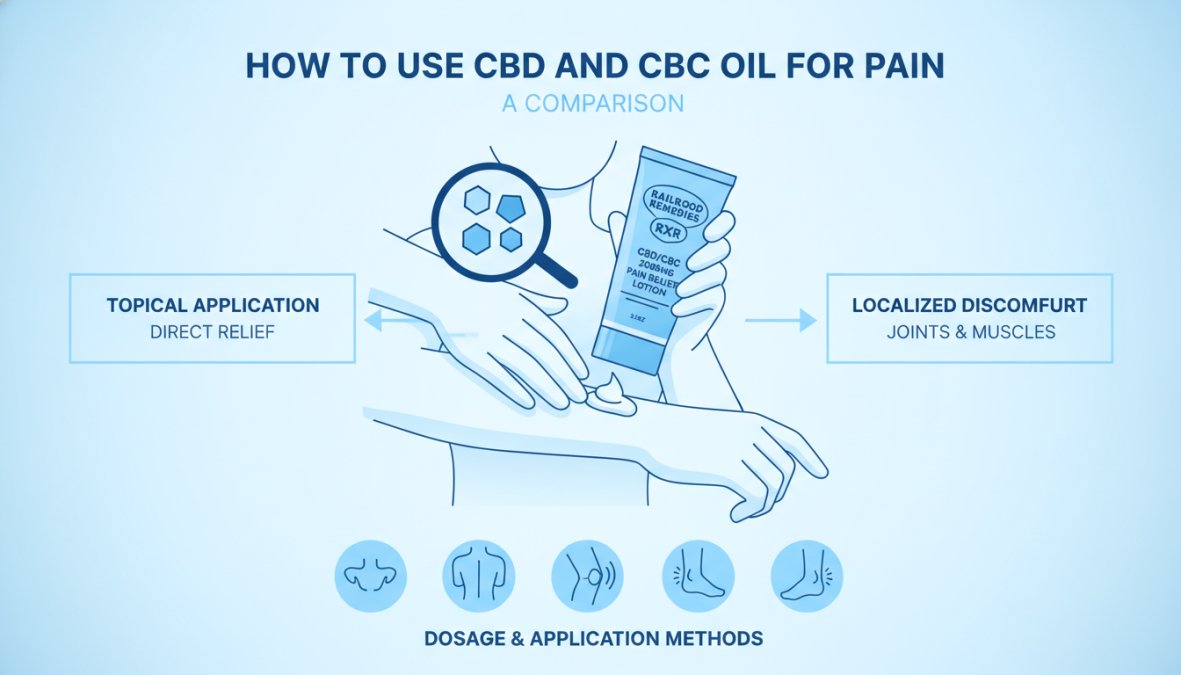
Topical application delivers cannabinoids directly to the affected area, bypassing first-pass metabolism and allowing high local concentrations. For arthritis, joint pain, and localized muscle soreness, topical creams are often the most effective approach. Apply a generous amount of lotion, roughly a quarter-sized dollop for a joint, and massage using circular motions for 1-2 minutes to enhance absorption. Most users report feeling effects within 15-30 minutes, with peak effects at 60-90 minutes. Reapply every 4-6 hours as needed.
Tinctures and Sublingual Use
Tinctures provide systemic CBD and CBC delivery, making them ideal for widespread pain and fibromyalgia. Sublingual administration allows absorption through mucous membranes, bypassing first-pass liver metabolism and producing faster, more potent effects than swallowing. Standard dosing for CBD tinctures ranges from 5-20mg CBD per dose, taken once or twice daily. To use a tincture sublingually: place the desired amount under your tongue, hold for 60-90 seconds without swallowing, then swallow. Effects typically begin within 15-30 minutes and peak at 1-2 hours.
Finding Your Optimal Dosage Ratio
The optimal dosage ratio of CBD to CBC depends on your pain type, body weight, and individual cannabinoid sensitivity. Most full-spectrum formulations contain roughly 10-20 parts CBD to 1 part CBC, reflecting the natural ratio in cannabis plants.
| Pain Type | Recommended Approach | Starting Dose | Titration |
|---|---|---|---|
| Localized arthritis/joint pain | Topical lotion, 2000mg CBD/CBC blend | Quarter-sized dollop (2-3x daily) | Increase amount if needed after 1 week |
| Widespread pain/fibromyalgia | Systemic tincture + topical as needed | 10mg CBD sublingually once daily | Increase by 5mg every 3-5 days |
| Neuropathic pain (hands/feet) | Topical lotion, high-CBC formula | Quarter-sized dollop (2-4x daily) | Increase frequency before increasing amount |
| Post-injury acute pain | Combination topical + systemic | 5mg CBD tincture + topical lotion | Increase both as pain improves |
Consistency matters more than dose. Most people notice meaningful pain reduction within 2-4 weeks of consistent use. A general guideline is 0.25mg CBD per pound of body weight as a starting point.
Best CBD CBC Oil for Pain Reviews: Railroad Remedies Options
Railroad Remedies (RXR) offers three primary product categories for pain management: maximum-strength topical blends, standard-strength topical relief, and systemic tinctures.
Maximum Strength: 2000mg CBD/CBC Blend
The flagship product for serious pain management is Railroad Remedies (RXR)'s 2000mg CBD/CBC Pain Relief Lotion ($69.99 for 3.3oz). This formula uniquely incorporates CBC alongside CBD, delivering synergistic benefits. The formulation uses organic coconut oil as a base, combined with shea butter and kukui nut oil for enhanced skin hydration and absorption. What distinguishes this product is the inclusion of CBC, addressing neuropathic pain and sensitized pain pathways that CBD alone may not fully resolve. Users report that the lotion absorbs without greasiness.
Standard Relief: 500mg CBD Lotion
For those new to topical cannabinoids or managing mild-to-moderate localized pain, Railroad Remedies (RXR)'s 500mg CBD Relief Lotion ($39.99) provides an accessible entry point. The 500mg potency is appropriate for joint pain, muscle soreness, and mild arthritis. While it lacks the added CBC of the maximum-strength formula, the full-spectrum base still contains minor cannabinoids and terpenes that contribute to the entourage effect.
Systemic Support: CBD Tinctures
For pain that's widespread or difficult to address topically, Railroad Remedies (RXR)'s CBD tinctures, available in Morning Star Berry, Polar Express Peppermint, and Pacific Sunrise Peach flavors, each at $105.00, provide systemic cannabinoid delivery. When sourced from full-spectrum extracts, these tinctures deliver CBC and other minor cannabinoids alongside CBD, maximizing the entourage effect for pain management.
Safety, Side Effects, and Drug Interaction Warnings for CBD and CBC Oil
While CBD and CBC are generally well-tolerated, common side effects of CBD include drowsiness, dry mouth, reduced appetite, and diarrhea. These are typically mild and dose-dependent. More concerning are drug interactions. CBD inhibits CYP3A4 and CYP2C19 enzymes in the liver, which metabolize many medications. Medications of concern include immunosuppressants, blood thinners, heart medications, anti-seizure medications, statins, and antiarrhythmics. If you're taking any of these medications, consult your healthcare provider before using CBD or CBC oils.
Pregnancy and breastfeeding: Limited research exists on CBD and CBC safety during pregnancy and lactation. The conservative approach is to avoid these cannabinoids until more data is available.
Third-party testing: When selecting any CBD or CBC product, verify that it has been third-party tested and that a Certificate of Analysis (CoA) is publicly available. This document confirms cannabinoid content, verifies that THC levels are below 0.3%, and screens for contaminants like pesticides, heavy metals, and microbial pathogens.
Pain management doesn't have to mean choosing between inadequate relief and medication side effects. CBD and CBC oil offers a natural, multi-pathway approach that addresses both inflammatory and neuropathic pain components. Railroad Remedies (RXR) delivers this through rigorously formulated topical lotions and systemic tinctures, incorporating both CBD and CBC to maximize the entourage effect. Start with a lower dose, be consistent, and give the cannabinoids 2-4 weeks to produce their full effect. Most users discover that CBD and CBC oil, when properly dosed and applied, delivers the breakthrough relief that conventional options failed to provide.
Frequently Asked Questions
What is the difference between CBC and CBD for pain management?
CBD (cannabidiol) primarily interacts with CB2 receptors and TRPV1 receptors to reduce inflammation and pain signals. CBC (cannabichromene) has a unique affinity for TRPV1 receptors and may offer enhanced anti-inflammatory properties. While CBD is more widely researched, CBC shows therapeutic potential for pain relief when combined with CBD through the entourage effect, creating synergistic benefits that neither cannabinoid achieves alone.
Can you take CBD and CBC together for pain, and what is the entourage effect?
Yes, combining CBD and CBC creates the entourage effect, where cannabinoids work synergistically to enhance overall therapeutic potential. When used together, they interact with the endocannabinoid system more effectively than individually. This synergistic benefit improves bioavailability and pain relief efficacy. Railroad Remedies' 2000mg CBD/CBC blend is specifically formulated to maximize this entourage effect for superior pain management and anti-inflammatory results.
How do I use CBD and CBC oil for pain, and what dosage should I start with?
Topical lotions like Railroad Remedies' pain relief formulas are applied directly to affected areas 2-3 times daily. Tinctures are taken sublingually (under the tongue) for systemic effects. Start with lower dosages and gradually increase as needed. For topicals, begin with a small amount; for tinctures, follow product instructions. The optimal dosage ratio varies by individual, pain type, and severity. Consult a healthcare provider before starting, especially if taking medications.
Are there any side effects or drug interactions with CBD and CBC oil for pain?
CBD and CBC are generally well-tolerated with minimal side effects, though some users report dry mouth, fatigue, or appetite changes. Both cannabinoids may interact with medications metabolized by cytochrome P450 enzymes (including blood thinners, NSAIDs, and certain pain medications). If you're on chronic medications or have conditions like radiation therapy effects, consult your healthcare provider before use to avoid potential drug interactions.
Why is Railroad Remedies' 2000mg CBD/CBC blend more expensive than standard CBD creams?
The 2000mg CBD/CBC formula costs more because it combines two therapeutic cannabinoids at maximum strength, includes organic ingredients (coconut oil, shea butter, kukui nut oil), and delivers enhanced anti-inflammatory and analgesic properties through the entourage effect. You're paying for superior formulation, higher potency, premium organic sourcing, and third-party testing verification, delivering better pain relief than standard single-cannabinoid options.
This article was written using GrandRanker
