

Anti-Inflammatory Cream for Sensitive Skin: A Guide
Table of Contents
- Understanding Anti-Inflammatory Cream for Skin Inflammation
- How Topical Anti-Inflammatories Work on Sensitive Skin
- Key Ingredients for Soothing Sensitive Skin Naturally
- Pain-Relief vs. Cosmetic Anti-Inflammatories: What's the Difference?
- When to See a Dermatologist About Skin Inflammation
- Patch Testing and Safe Application for Sensitive Skin
- Choosing the Right Anti-Inflammatory Cream for Your Needs
- Frequently Asked Questions
Last Updated: September 1, 2026
Understanding Anti-Inflammatory Cream for Skin Inflammation
Anti-inflammatory cream for sensitive skin is a topical formulation designed to reduce redness, swelling, and discomfort while protecting a compromised skin barrier. At Railroad Remedies (RXR), we recognize that sensitive skin requires a different approach than standard skincare, one that addresses inflammation at the source while avoiding irritants that trigger further reactions.
Skin inflammation manifests differently depending on its cause: eczema creates intense itching and flaking, rosacea produces persistent redness and visible blood vessels, contact dermatitis results from exposure to irritants or allergens, and radiation therapy or arthritis can leave skin raw and hypersensitive. Each condition demands a targeted response, yet they share a common need: a formula that calms without aggravating.
The challenge is that many conventional anti-inflammatory products contain fragrances, alcohol, or synthetic preservatives that worsen the very inflammation they're meant to treat. A truly effective anti-inflammatory cream for sensitive skin must work at the dermal level while maintaining a gentle, non-irritating surface formula. This requires careful ingredient selection: natural compounds like shea butter, colloidal oatmeal, and aloe vera have long histories of soothing irritated skin, while newer options like cannabidiol (CBD) and cannabichromene (CBC) offer anti-inflammatory pathways that don't rely on systemic absorption. The best formulations combine multiple mechanisms, barrier repair, inflammation reduction, and hydration, in a single application.
How Topical Anti-Inflammatories Work on Sensitive Skin
Topical anti-inflammatories function through several distinct mechanisms. Unlike oral medications that enter the bloodstream, topical formulations work primarily at the skin surface and within the upper dermal layers.
Traditional topical NSAIDs like ibuprofen cream inhibit cyclooxygenase (COX) enzymes, reducing prostaglandin production that drives inflammation (peer-reviewed research). However, these products carry risks for sensitive skin and don't address the underlying moisture deficit that often accompanies sensitivity.
Natural anti-inflammatory agents operate differently. Shea butter contains fatty acids and plant sterols that reinforce the skin barrier while reducing inflammatory markers. Colloidal oatmeal provides soothing and barrier-repair benefits through compounds called avenanthramides (peer-reviewed research). Aloe vera contains polysaccharides that hydrate while delivering mild anti-inflammatory effects. CBD and CBC represent a newer category, interacting with endocannabinoid receptors in skin tissue to modulate inflammatory responses without systemic effects. For chronic nerve pain or arthritis-related skin inflammation, Railroad Remedies (RXR)'s CBD/CBC 2000mg blend combines multiple pathways: cannabinoid signaling, barrier repair through organic oils, and deep hydration through shea butter.

The critical distinction: topical anti-inflammatories work locally, on the skin they contact. This makes them ideal for targeted problems like a patch of eczema, localized rosacea flares, or arthritis affecting specific joints.
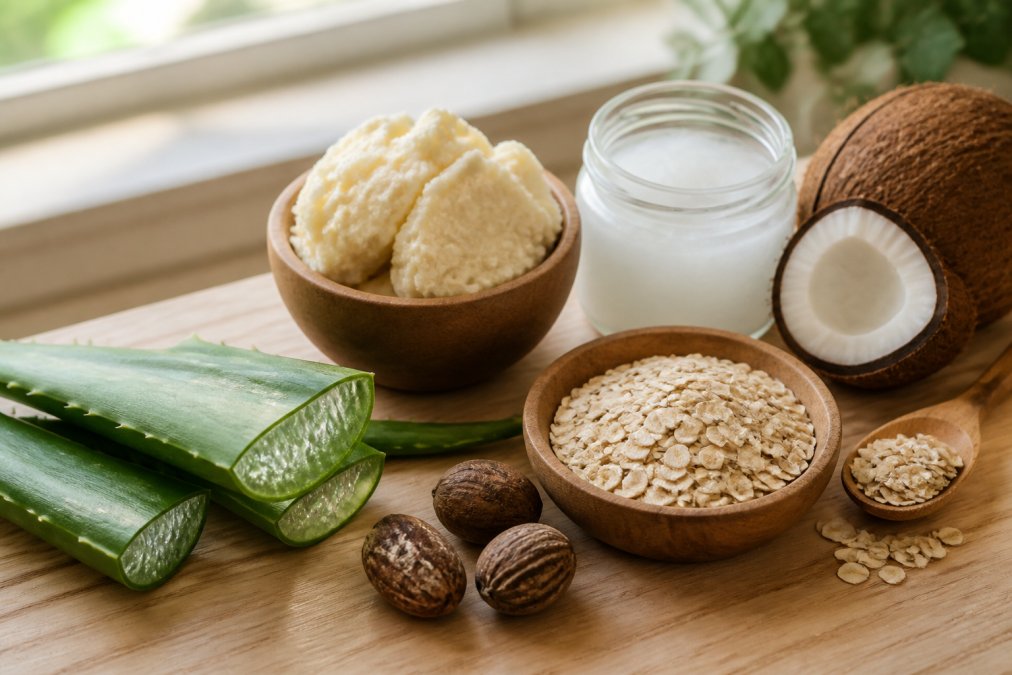
Key Ingredients for Soothing Sensitive Skin Naturally
The most effective anti-inflammatory creams for sensitive skin rely on a foundation of proven natural ingredients backed by dermatological research.
Shea butter stands out as a cornerstone ingredient. Rich in oleic, stearic, and linoleic acids, it repairs the skin barrier while delivering anti-inflammatory benefits. Unlike heavier oils, high-quality shea butter absorbs without leaving a greasy residue and is hypoallergenic and non-comedogenic.
Colloidal oatmeal provides dual benefits: the avenanthramides in oats reduce inflammatory markers directly, while the oatmeal itself creates a protective barrier. It's particularly effective for eczema and contact dermatitis.
Aloe vera delivers hydration through polysaccharides while reducing inflammatory cytokines. The most effective formulations use aloe vera leaf extract rather than the latex, which can irritate sensitive skin.
Niacinamide (vitamin B3) strengthens the skin barrier by increasing ceramide production and reduces redness with mild anti-inflammatory effects. It's gentle enough for daily use on sensitive skin.
Ceramides are lipid molecules naturally present in healthy skin that work to repair barrier function, especially important for eczema-prone skin where barrier dysfunction is the underlying problem.
Allantoin is a naturally derived compound that promotes skin repair and has mild anti-inflammatory properties, often used in medical-grade skincare formulations for sensitive skin.
CBD and CBC are plant-derived cannabinoids that modulate inflammatory responses through endocannabinoid receptors in skin tissue. Railroad Remedies (RXR)'s formulations use full-spectrum CBD combined with CBC for enhanced efficacy with a non-greasy absorption profile suitable for daily use.
The Benefits of Shea Butter for Skin
Shea butter deserves particular attention because it bridges skincare and anti-inflammatory therapy. For sensitive skin, it offers several distinct advantages: it's naturally hypoallergenic and rarely triggers allergic reactions, it's occlusive without clogging pores, crucial for sensitive skin struggling with transepidermal water loss, and it contains vitamins A and E for skin repair and antioxidant protection. Shea butter is fragrance-free in its pure form and non-comedogenic, making it suitable even for oily or combination sensitive skin.
For someone with radiation therapy side effects or arthritis patients whose skin overlies inflamed joints, shea butter allows active anti-inflammatory compounds like CBD/CBC to penetrate while protecting the already-irritated surface.
Pain-Relief vs. Cosmetic Anti-Inflammatories: What's the Difference?
Understanding this distinction determines whether you're making an informed choice or accidentally buying the wrong category.
Pain-relief anti-inflammatory creams typically contain active pharmaceutical ingredients like ibuprofen, ketoprofen, or diclofenac. These are classified as over-the-counter drugs and are formulated to penetrate the skin and reach underlying tissue inflammation, useful for arthritis pain, muscle soreness, or joint inflammation. The tradeoff: they often contain preservatives and additives that can irritate sensitive skin.
Cosmetic anti-inflammatory creams contain ingredients like shea butter, aloe vera, niacinamide, and ceramides. Classified as cosmetics under FDA regulations, they're gentler, fragrance-free options designed for daily use and sensitive skin tolerance. They work more gently and may take longer to show results, better for chronic maintenance than acute pain relief.
CBD/CBC products occupy a middle ground. Railroad Remedies (RXR)'s formulations interact with endocannabinoid receptors in skin tissue, delivering anti-inflammatory effects through a biological pathway rather than physical barrier repair alone. The non-greasy, easily absorbed formula makes them suitable for sensitive skin while providing meaningful inflammation reduction. For someone with chronic nerve pain who can't tolerate NSAIDs, a CBD/CBC topical like Railroad Remedies (RXR)'s 2000mg blend offers targeted relief without systemic absorption or stomach issues.
When to See a Dermatologist About Skin Inflammation
See a dermatologist if your skin inflammation doesn't improve after 2-3 weeks of consistent topical treatment, if severe itching disrupts sleep or causes bleeding from scratching, or if inflammation spreads rapidly or appears in multiple areas simultaneously (the American Academy of Dermatology). Seek immediate care if you develop signs of infection: warmth, pus, increasing redness despite treatment, or fever accompanying skin symptoms.
Dermatologists can perform patch testing to identify specific allergens, prescribe prescription-strength topical corticosteroids if over-the-counter options aren't sufficient, and distinguish between conditions that look similar but require different treatment. For radiation therapy side effects, work with both your oncology team and a dermatologist to coordinate care.
For pet owners considering topical relief for aging or injured dogs, veterinary consultation is essential. While some human anti-inflammatory creams are safe for pets, others are toxic when ingested. Railroad Remedies (RXR) products are formulated for human use; always consult your veterinarian before applying any topical to your pet.
Patch Testing and Safe Application for Sensitive Skin
Patch testing is the gold standard for determining whether a new topical product will irritate your sensitive skin before committing to regular use.

How to patch test:
- Choose an inconspicuous area like the inner forearm, behind the ear, or inside the elbow.
- Apply a small amount (about the size of a pea) to clean, dry skin.
- Leave it uncovered for 24-48 hours. Avoid washing that area or exposing it to water.
- Monitor for any reaction: redness, itching, burning, swelling, or rash.
If no reaction occurs after 48 hours, the product is likely safe for broader use.
Safe application guidelines:
- Start with the lowest recommended amount.
- Apply to clean, dry skin.
- Use gentle patting motions rather than rubbing.
- Apply to affected areas only.
- Avoid sensitive areas like around the eyes unless the product specifically states it's safe.
- Don't layer multiple active products.
- Wash hands immediately after application unless treating your hands.
- Allow the product to fully absorb before dressing or covering the area.
For radiation therapy side effects, apply anti-inflammatory cream gently to affected areas, avoiding any areas with open wounds or severe blistering. If using Railroad Remedies (RXR)'s CBD Relief Lotion (500mg) or the stronger CBD/CBC 2000mg blend, apply once or twice daily as tolerated. Most users find evening application works well.

Choosing the Right Anti-Inflammatory Cream for Your Needs
Selecting the right anti-inflammatory cream requires matching product characteristics to your specific situation.
For mild, occasional inflammation: A basic cosmetic anti-inflammatory cream with shea butter, niacinamide, and ceramides is often sufficient and typically costs $15-30.
For chronic inflammation or arthritis: Railroad Remedies (RXR)'s CBD Relief Lotion (500mg) at $39.99 provides a balanced approach with enough CBD to deliver anti-inflammatory effects. The organic coconut oil base with shea butter ensures deep hydration alongside inflammation management.
For severe, treatment-resistant inflammation: Railroad Remedies (RXR)'s CBD/CBC 2000mg Pain Relief Lotion at $69.99 combines full-spectrum CBD with CBC for enhanced anti-inflammatory and analgesic properties, designed for chronic pain conditions, arthritis, or radiation therapy side effects.
For sensitive skin with a history of reactions: Prioritize fragrance-free, hypoallergenic formulations. Patch test first and avoid products with alcohol, synthetic preservatives, or essential oils.
For athletes managing muscle soreness: A non-greasy formula that absorbs quickly is essential. Railroad Remedies (RXR) formulations are engineered to absorb rapidly without leaving residue.
For radiation therapy side effects: Work with your oncology team and dermatologist. Avoid products with alcohol or strong fragrances. Shea butter-based formulations provide meaningful comfort without interfering with medical treatment.
| Situation | Recommended Strength | Why | Price Point |
|---|---|---|---|
| Mild, occasional redness | Cosmetic (basic ingredients) | Gentle, preventive, suitable for daily use | $15-30 |
| Chronic inflammation, arthritis | CBD 500mg | Balanced anti-inflammatory + barrier repair | $39.99 |
| Severe pain, treatment-resistant inflammation | CBD/CBC 2000mg | Maximum strength with enhanced efficacy | $69.99 |
| Sensitive skin history | Fragrance-free, hypoallergenic | Minimizes irritation risk | Varies |
| Athletic recovery | Fast-absorbing, non-greasy | Doesn't interfere with activity | $30-60 |
Choosing an anti-inflammatory cream for sensitive skin means prioritizing both efficacy and tolerability. The best choice balances your specific condition, skin sensitivity level, and budget. For most people managing chronic inflammation or sensitivity, a formulation combining proven natural ingredients with targeted anti-inflammatory compounds delivers results without compromise. Railroad Remedies (RXR) offers both entry-level and maximum-strength options designed specifically for sensitive skin, allowing you to start gently and escalate only if needed. Get started with Railroad Remedies (RXR) and experience the difference that carefully formulated, non-greasy anti-inflammatory relief can make.
Frequently Asked Questions
What is the best anti-inflammatory cream for sensitive skin?
The best anti-inflammatory cream for sensitive skin prioritizes fragrance-free, hypoallergenic formulas with dermatologist-tested ingredients like shea butter, colloidal oatmeal, and niacinamide. Look for products that support barrier repair and avoid common irritants. CBD-based formulations like Railroad Remedies' CBD Relief Lotion 500mg ($39.99) combine these soothing agents with organic coconut oil and shea butter, making them suitable for reactive skin types without the greasiness of traditional creams.
How long does it take for anti-inflammatory cream to work on sensitive skin?
Most anti-inflammatory creams begin reducing redness and irritation within 15-30 minutes of application, though full benefits typically emerge after consistent use over 3-7 days. Sensitive skin may respond more gradually than resilient skin types. Barrier repair ingredients like ceramides and emollients work cumulatively, so daily application produces better results than sporadic use. If inflammation persists beyond two weeks, consult a dermatologist to rule out underlying conditions.
What ingredients should sensitive skin avoid in anti-inflammatory creams?
Sensitive skin should avoid fragrance, essential oils, alcohol, sulfates, parabens, and synthetic dyes, which can trigger irritation and compromise the skin barrier. Additionally, avoid high concentrations of active ingredients like retinol or acids unless specifically recommended by a dermatologist. Focus instead on non-comedogenic, pH-balanced formulas with proven calming complexes. Railroad Remedies products are formulated without these common irritants, using organic bases like coconut oil and jojoba oil for safe, effective relief.
Is CBD cream effective for skin inflammation?
CBD topicals show promise for reducing inflammation through interaction with skin cannabinoid receptors, though clinical evidence is still emerging. CBD is valued for calming properties and may support transepidermal water loss reduction, helping maintain skin barrier function. The Railroad Remedies CBD/CBC 2000mg Pain Relief Lotion ($69.99) combines CBD with Cannabichromene (CBC), known for enhanced anti-inflammatory and analgesic properties. For sensitive skin, start with lower-strength formulas and patch test first to ensure tolerance.
This article was written using GrandRanker
